
Interacting with the parts of a door every day, but do you know what makes up the anatomy of a door? Understanding each part helps you maintain, choose, and secure your doors. Here’s a quick look at the most common parts of a door and their basic functions:
Part | الوصف |
|---|---|
Active Leaf/Door | The door that opens first and contains the main hardware. |
Inactive Leaf/Door | The door that opens second, with a strike for the active door’s lock. |
Frame | Surrounds the door on three sides and anchors it to the wall. |
Head (Of Frame) | The top horizontal part of the frame. |
The vertical sides of the frame. | |
Hinges | Metal plates that let the door swing open or closed. |
Lock or Lock Set | The latch assembly that keeps the door secure. |
Strike | The metal plate that holds the lock bolt. |
Closer | The device that closes the door automatically. |
Knowing the parts of a door makes it easier to spot problems early, keep everything working smoothly, and improve energy efficiency. When you understand the parts of a door, you can make better choices and avoid costly repairs.
الوجبات الرئيسية
- Understanding door parts helps you maintain and secure your doors effectively.
- Choosing the right materials for your door can improve energy efficiency and security.
- Regular checks on door components can prevent costly repairs and enhance your home’s safety.
Core Parts of a Door
When you look at any door, you see more than just a panel that swings open and closed. The main parts of a door work together to provide strength, security, and style. Understanding these components helps you choose the right door for your home and keep it in good shape.
Door Frame
The frame forms the backbone of the door structure. It surrounds the door on three sides and anchors it to the wall. You find three main door frame parts: the head (or header) at the top, and two jambs on the sides. The sill or threshold sits at the bottom, especially on الأبواب الخارجية, to seal out drafts and moisture.
Here’s a quick look at the main structural parts and their functions:
Part | Function |
|---|---|
Head/Header | Supports the top of the door and keeps the frame square. |
Jambs | Hold the hinges and strike plate, guiding the door as it opens and closes. |
Sill/Threshold | Seals the bottom of the frame, blocking weather and drafts. |
Door Stops | Prevent the door from swinging through the frame and help create a tight seal. |
Casing/Trim | Covers gaps between the frame and wall, adding a finished look. |
You see different materials used for frames. Wood gives a classic look and good insulation, but it may need more upkeep. Fiberglass frames resist moisture and insects, making them a smart choice for الأبواب الخارجية. Steel frames offer strength and security, with low maintenance and excellent insulation.
Tip: For exterior doors, choose a frame material that stands up to weather and boosts security.
Door Slab (Door Panel)
The slab is the main part you push or pull. It fills the opening and provides privacy, security, and style. You find slabs in many sizes and thicknesses, depending on where you use them.
نوع الباب | Standard Height | Standard Widths | Standard Thickness |
|---|---|---|---|
Interior | 78″, 80″, 84″, 96″ | 24″, 28″, 30″, 32″, 36″ | 1⅜”, 1¾” |
Exterior | 80″, 84″, 96″ | 30″, 32″, 36″, 42″ | 1¾” |
Interior slabs are often lighter and thinner. Exterior slabs are thicker and heavier for better insulation and security. You also find different core types inside the slab. Solid wood gives great insulation and soundproofing. Solid core slabs use a composite fill for strength. Steel and fiberglass slabs often have polystyrene or polyurethane cores for energy efficiency.
Door Hinges
Hinges connect the slab to the frame and let it swing open and closed. You usually see three hinges on a standard door, but heavier doors may need more. The hinge stile is the edge of the slab where the hinges attach.
The type of hinge affects how smoothly the door moves and how long it lasts. Ball bearing butt hinges reduce friction, making the door easier to open and close. They also last longer than standard hinges. Heavy-duty hinges support heavier slabs and stand up to frequent use.
Note: For high-traffic areas or heavy exterior doors, choose heavy-duty or ball bearing hinges for better performance.
Door Stop Moulding
Door stop moulding runs along the inside edges of the frame. It stops the slab from swinging through the opening and helps create a tight seal when the door is closed. This moulding adds an extra layer of insulation, blocking drafts, noise, and even light from sneaking through the gaps.
Prevents the door from swinging past the frame.
Improves insulation and privacy.
Enhances security by keeping the door firmly in place.
You find door stop moulding on both interior and exterior doors, but it plays a bigger role in exterior doors by helping to keep out weather and improve energy efficiency.
How the Main Parts of a Door Work Together
All these components fit together to form a strong, secure, and functional door structure. The frame holds the slab in place. Hinges let the slab move. The stop moulding keeps the slab secure and helps seal the opening. Each part supports the others, making sure your door works smoothly and keeps your home safe.
When you understand the main parts of a door, you can spot problems early, choose the right materials, and keep your doors working their best.

Functional Door Components
When you look at front door parts, you see more than just a slab and frame. The core components that keep your home secure and easy to access include the lockset, door handles and knobs, and the strike plate. These parts work together to create a strong locking mechanism and smooth operation.
Lockset
The lockset is the main locking mechanism on your door. It combines the lock, latch, and often a deadbolt into one unit. You find locksets in mechanical, digital, and smart versions. Most front door parts use a lockset with a deadbolt for extra security. The deadbolt slides a solid metal bar into the frame, making it much harder to force open.
ANSI Grade | Security Level | Installation Requirements |
|---|---|---|
Grade 1 | Highest security, tough to pick or break | Withstands 800,000 cycles, 360-pound weight, six door strikes |
Grade 2 | Moderate security, good for homes | Lasts at least 25 years, 600,000 cycles |
Grade 3 | Basic security, minimal protection | Basic function, no special anti-pick features |
Tip: For your front door, choose a Grade 1 lockset with a deadbolt for the best protection.
Door Handles and Knobs
You use a door knob or handle every time you enter or leave. These front door parts come in many styles and finishes, such as modern, vintage, round, or egg-shaped. Popular brands include Schlage, Baldwin, and Kwikset. A door knob or handle should feel sturdy and match the look of your home. Many front door parts combine a handle with a deadbolt for extra safety.
- Common styles: round, egg-shaped, crystal, Victorian
- Finishes: matte, polished, antique, satin
Strike Plate
The strike plate is a metal piece on the frame that catches the latch or deadbolt. This small part plays a big role in door security. When you lock the door, the deadbolt slides into the strike plate, holding the door closed. A strong strike plate helps prevent forced entry.
To install a strike plate:
Remove the old plate with a screwdriver.
Check the fit and chisel space if needed.
Align the latch hole with the plate.
Screw the new plate in place.
Test the lock and deadbolt to make sure they work smoothly.
Note: Upgrading to a reinforced strike plate can make your front door parts much more secure.
These core components—lockset, door handles and knobs, and strike plate—work together to keep your home safe and your door easy to use.
Interior vs. Exterior Door Parts
Interior Door Parts Explained
You use interior doors to separate rooms and create privacy. These doors often feature lighter materials and simpler hardware. Common hardware components include:
Door handle set: This set includes a knob or lever, sometimes with a key lock, and a second handle that turns without a key.
Dummy sets: These work well for doors that do not need to turn, such as closets or cabinets.
Passage sets: You find these in areas like dens or basements. They do not have locks and can be knobs or levers.
Interior doors focus on ease of use and style. You rarely see advanced security features or heavy insulation. In a commercial door setting, passage sets and dummy sets help manage access in offices or public spaces.
Exterior Door Parts Explained
Exterior doors protect your home from weather and unwanted entry. You see stronger materials and advanced hardware. The table below highlights key differences:
الميزة | الأبواب الخارجية | الأبواب الداخلية |
|---|---|---|
Purpose | Provide security and withstand environmental elements | Used for privacy and space separation |
المواد | Made from durable materials for weather resistance | Can be lightweight and less durable |
Insulation | Designed to offer insulation and temperature barriers | Not primarily designed for insulation |
Security Features | Often include deadbolts and reinforced frames | Generally have simpler locking mechanisms |
Exterior doors serve as the main barrier against the outside. You benefit from sturdy locks, reinforced frames, and weatherstripping that seals gaps and improves energy efficiency. In a commercial door application, these features become even more important for safety and durability.
Tip: Choose exterior doors with weather-resistant finishes and strong locks to boost security and comfort.
Specialty Door Components (Sliding, Folding, Fire-Rated Doors)
Specialty doors require unique components to meet specific needs:
Materials: Fire-rated doors use fire-resistant cores and intumescent seals.
Automatic closure: Fire doors close automatically when triggered by alarms.
Testing and certification: Fire doors undergo rigorous fire resistance testing.
Hardware: Sliding and folding doors use specialized track systems, while fire doors feature fire-rated hardware.
You see these specialty components most often in commercial door installations, where safety standards and space-saving designs matter. Fire-rated doors protect against fire hazards, while sliding and folding doors maximize space and flexibility.
Door Hardware and Accessories
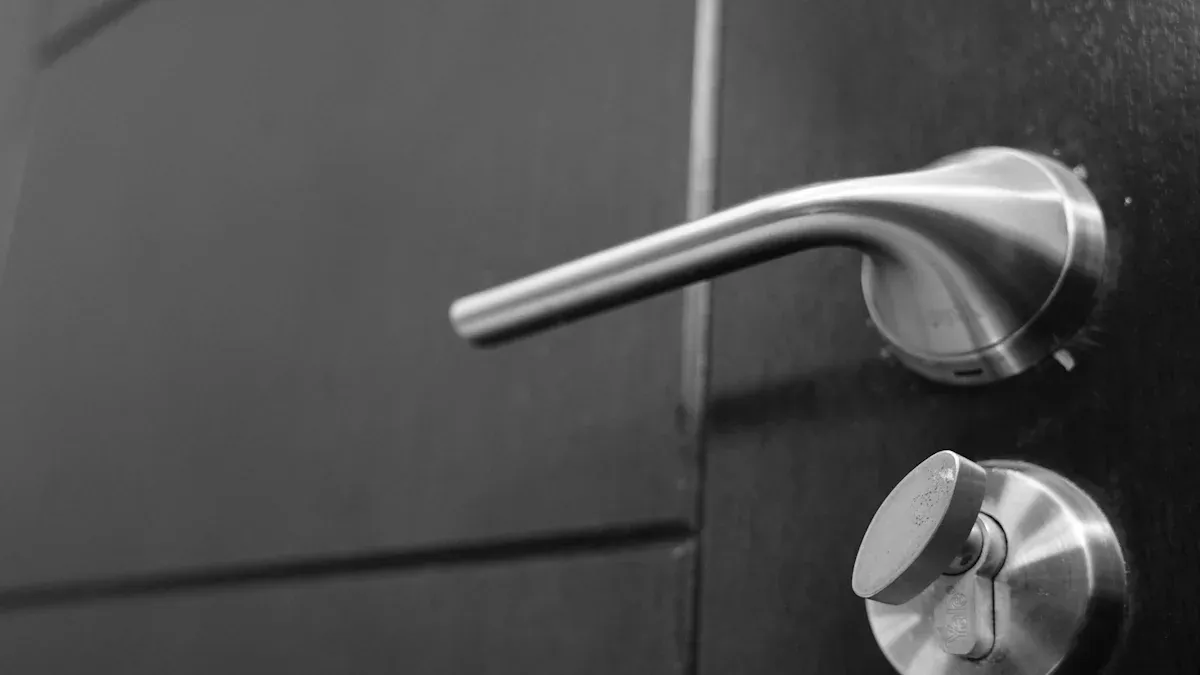
Door Handles and Pulls
You interact with door handles and pulls every day. These pieces of door hardware make opening and closing doors easy and comfortable. You find many types, each designed for a specific purpose or style. The table below shows common options and their uses:
النوع | الوصف |
|---|---|
Privacy Knobs | Lock for privacy in bedrooms or bathrooms. |
Passage Knobs | Allow easy access, no lock, for hallways or closets. |
Entry Knobs | Provide security and style for front doors. |
Dummy Knobs | Decorative, used on double doors or closets. |
Keyed Entry Levers | Secure exterior doors with a keyhole. |
Straight Pull Handles | Sleek, modern look for interiors. |
Heavy-Duty Pull Handles | Built for strength, used in commercial settings. |
You also see cup pulls for closets and cremone bolt handles for elegant designs. Choosing the right door hardware improves both function and appearance.
Door Knockers and Peepholes
Door knockers and peepholes add security and style to your entryway. A door knocker with a built-in 160-degree viewer lets you see visitors clearly before opening the door. This wide-angle view helps you decide who to let in, making your home safer. Peephole door knockers serve as both a decorative accent and a security feature, giving you peace of mind.
Tip: Install a peephole or a knocker with a viewer to boost entryway security.
Door Closers
Door closers play a key role in safety and energy efficiency. This door hardware ensures that doors close securely after each use. You keep drafts out and maintain a stable indoor temperature, which lowers heating and cooling costs. Door closers also help prevent unauthorized access and meet fire safety codes in commercial buildings.
Door closers reduce energy loss by sealing doors quickly.
They improve security by making sure doors latch every time.
When you select the right door hardware, you protect your space, save energy, and add comfort.
Common Door Component Materials
When you choose door components, the material matters for both performance and appearance. Each material offers unique benefits for your door hardware, frame, and slab. You see these materials used in both interior and exterior doors.
Material Type | Performance Characteristics | |
|---|---|---|
Solid Wood | $200 – $5,000+ | Beautiful, classic, good natural insulator, high maintenance for exterior. |
Engineered/Composite | $40 – $500+ | Often used for interior doors, includes hollow and solid core options. |
Steel Doors | $100 – $2,700 | Strong, secure, energy-efficient, can dent, needs paint touch-ups to prevent rust. |
Aluminum Doors | $100 – $2,280 | Lighter than steel, won’t rust, modern look, poor insulator unless it has thermal breaks. |
Fiberglass Doors | $400 – $5,000+ | Durable, energy-efficient, low maintenance, can mimic wood grain. |
Composite Doors | $27 – $1,500+ | Durable and low maintenance, can refer to solid core engineered wood or blends of materials. |
You find that solid wood doors give a classic look and feel. They work well for decorative entry doors but need regular care. Fiberglass and steel doors offer better energy efficiency and lower maintenance. Fiberglass can even look like real wood. Aluminum doors provide a modern style and resist rust, but they need thermal breaks for insulation.
Tip: Proper sealing and weatherstripping can cut your heating and cooling needs by up to 40%. You can also save about 11% on energy costs with good insulation.
Many homeowners choose engineered or composite doors for interior spaces. These door panels come in hollow or solid core options. Solid core doors block sound better and last longer.
Solid wood: Best for style and tradition.
Steel: Top choice for security and strength.
Fiberglass: Great for durability and energy savings.
You should match your door material to your needs for insulation, security, and style. This choice helps your door components last longer and perform better.
How to Choose the Right Door Components
Selecting the right door components helps you improve security, comfort, and style in your home. You should start by thinking about your needs. If you want better insulation or protection from harsh weather, choose materials that offer strength and energy efficiency. The table below shows common options and what you should consider:
المواد | المزايا | Considerations |
|---|---|---|
خشب | Classic charm, natural beauty | Requires regular maintenance |
Fiberglass | Excellent insulation, dent and rust resistance, mimics wood appearance | Higher initial cost |
Steel | Strength, security, withstands harsh weather | Can be heavy, may require specific finishes |
Composite | Durability, minimal maintenance, range of finishes | May vary in quality |
You can boost comfort and lower energy bills by choosing door hardware and components with high energy efficiency ratings. These features help minimize heat transfer and may qualify you for tax credits or rebates.
When you want maximum security, follow these steps:
Choose solid materials like fiberglass or steel for durability.
Look for multi-point locking systems for enhanced security.
Consider impact-resistant glass or door viewers for added safety.
Style matters too. The design of your door influences curb appeal. Pick a door that matches your home’s architecture. You can select from classic wooden doors or modern fiberglass and metal designs.
Avoid common mistakes when choosing door parts:
Not checking the swing direction.
Skipping sealant application.
Using incorrect fasteners.
Overlooking insulation and threshold corrections.
Disregarding local building codes.
Poor hardware selection.
Failing to account for flooring and humidity.
Not testing the door after installation.
You make better choices when you understand door terminology and hardware options. This knowledge helps you create a safe, comfortable, and attractive entryway.
Understanding door components and hardware helps you choose the right door, maintain it, and improve security. You save money by spotting issues early and making repairs yourself.
Regular checks prevent costly repairs.
Knowledge of door terminology helps with DIY projects.
المزايا | الشرح |
|---|---|
Enhanced security | Proper hardware lowers break-in risk. |
Long-term savings | Good installation reduces energy costs. |
الأسئلة الشائعة
What is the difference between a door slab and a door frame?
You use the door slab as the main panel that swings open. The door frame surrounds the slab and anchors it to the wall.
How do I know which door hardware fits my door?
You measure the thickness of your door and check the backset. Most door hardware packages list compatible sizes and door terminology for easy selection.
Can I replace just one part of my door components?
Yes. You can replace individual door components like hinges, handles, or the lockset without changing the entire door. Always match the new part to your existing hardware.