When choosing kitchen cabinets, the decision often comes down to two timeless favorites: Shaker style cabinets and flat-panel cabinets. Both are highly popular, both look great in the right space—but they create very different visual and functional experiences. So the real question homeowners and designers keep asking is: Shaker Style Cabinets vs. Flat Panel: Which Is Better?
In this guide, we break down the key differences between Shaker and flat-panel cabinets, from design and durability to maintenance, cost, and long-term value. Whether you’re planning a modern minimalist kitchen or a warm, transitional space, this side-by-side comparison will help you confidently choose the cabinet style that best fits your home, lifestyle, and budget.
Principais conclusões
Shaker cabinets offer a classic look and are versatile for various kitchen styles, making them a popular choice among homeowners.
Flat panel cabinets provide a modern, minimalist aesthetic and are easy to clean, ideal for busy households.
Consider your kitchen’s design and your personal style when choosing between Shaker and flat panel cabinets to ensure a perfect fit.
Shaker cabinets tend to increase home resale value more than flat panel cabinets, appealing to a broader range of buyers.
Evaluate your budget and maintenance preferences, as flat panel cabinets are generally more affordable and require less upkeep.
What Are Shaker Style Cabinets?
You often see shaker style cabinets in kitchens that value both tradition and practicality. These cabinets trace their roots to the Shaker religious community of the 19th century. The Shakers believed in simplicity, utility, and honest craftsmanship. Their approach to woodworking focused on using local wood and minimizing waste. You benefit from these values today when you choose shaker cabinets for your home.
Interior design experts highlight several defining features that set shaker cabinets apart. The most recognizable detail is the five-piece door with a recessed center panel. This simple design gives your kitchen a clean and timeless look. You also get sturdy construction and long-lasting materials, which means your cabinets will stand up to daily use.
Tip: Shaker cabinets work well in many kitchen styles, from classic farmhouse to modern minimalist. Their versatility makes them a popular choice for homeowners who want flexibility in design.
Here is a quick overview of the main features:
Recurso | Descrição |
|---|---|
Simple Design | Five-piece door with recessed center panel |
Sturdy construction and long-lasting materials | |
Versatility | Complements classic, transitional, and modern kitchens |
Solid Hardwood Composition | Most use high-quality hardwood |
Ease of Maintenance | Straightforward design makes cleaning easy |
You will notice that shaker cabinets often use solid hardwood, which adds strength and durability. The straightforward design also makes maintenance simple. You can wipe down the shaker perimeter and panels without worrying about intricate details trapping dust.
When you select shaker style cabinets, you bring a piece of history into your kitchen. You also choose a cabinet style that respects natural resources and offers practical storage solutions. Shaker cabinets give you a blend of tradition, quality, and adaptability that fits many lifestyles.
What Are Flat-Panel (Slab) Cabinets?
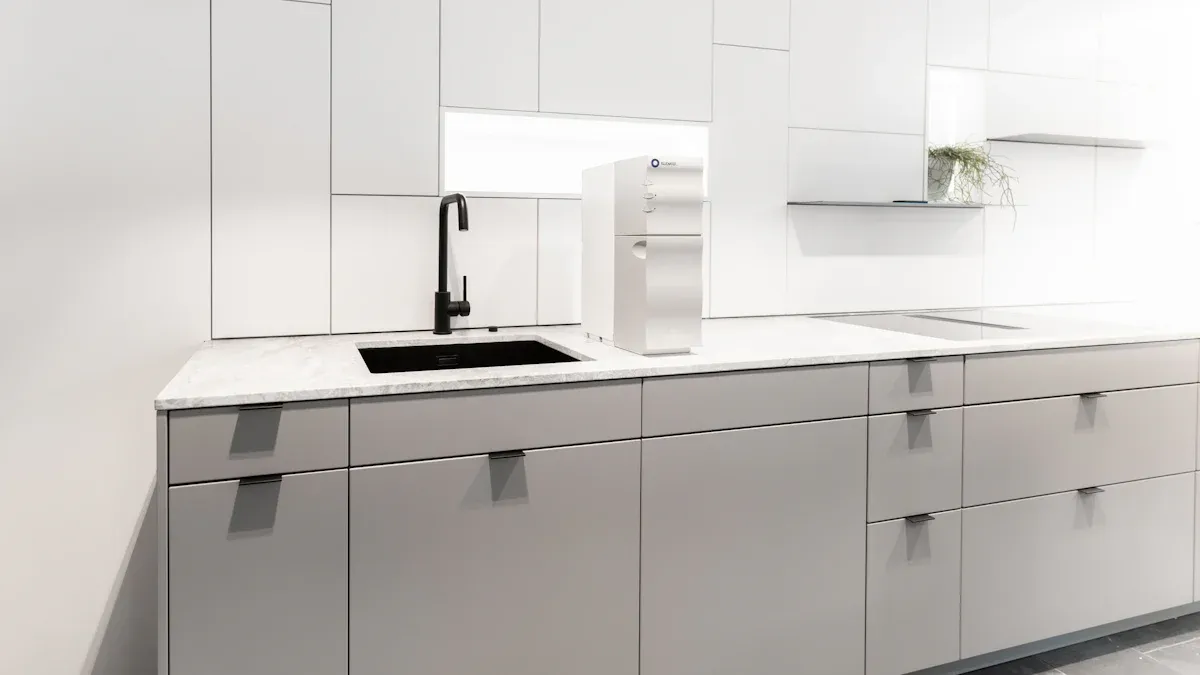
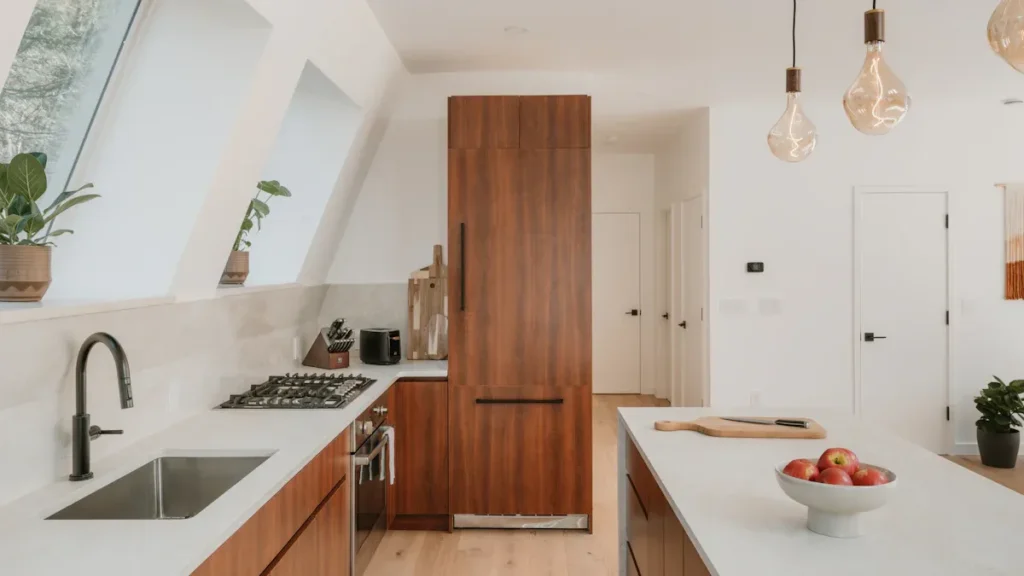
You see flat panel cabinets in kitchens that embrace modern design. These cabinets feature a smooth, unadorned surface. You will not find raised frames, beveled edges, or intricate details. The result is a clean look that fits well with contemporary spaces. Over the past decade, flat panel cabinets have become more popular. Homeowners like their minimalistic style and easy maintenance. You can wipe down flat panel cabinet doors quickly because the surface does not trap dust or grease.
The main difference between shaker and slab cabinets is that shaker cabinets have a recessed center panel for depth and detail, while slab cabinets have flat, smooth surfaces that create a sleek, modern look.
Flat panel cabinets work well in many kitchen layouts. You can use them for a flat panel island to create a seamless appearance. Designers often choose handle-free flat panel options for a true minimalist effect. You get a kitchen that feels open and uncluttered.
Here are some key characteristics of flat panel cabinets:
Minimalist design
Easy to clean due to smooth surfaces
Modern appeal
- Versatile for various kitchen styles
Flat panel doors offer flexibility. You can select different finishes, such as matte, glossy, or wood veneer. These choices let you match your cabinets to your overall kitchen theme. You may notice that flat panel cabinets suit small spaces because they do not add visual bulk. You can pair them with bold hardware or keep the look simple with handle-free flat panel designs.
Flat panel cabinets give you a streamlined look. You can use slab cabinets to create a kitchen that feels fresh and up-to-date. Many homeowners choose flat panel cabinet doors for their durability and easy care. You can enjoy a kitchen that looks stylish and stays clean with minimal effort.
Shaker Cabinets: Pros and Cons
Pros of Shaker Cabinets
When you choose shaker style cabinets, you invest in a design that has stood the test of time. These cabinets offer a blend of strength, function, and classic design aesthetics. Many homeowners appreciate their solid construction. Advanced joinery methods, such as dovetail joints and mortise-and-tenon construction, make shaker cabinets especially sturdy. You can count on them to handle daily use in busy kitchens. Their robust build resists warping and breaking, so your kitchen cabinets stay beautiful and functional for years. This durability and maintenance advantage makes them a smart choice for families who want cabinets that last.
Shaker style cabinets also bring a timeless aesthetic appeal to your home. Their clean lines and simple profiles fit well in both traditional and transitional spaces. You can easily match them with different hardware and finishes, which gives you flexibility if you want to update your kitchen’s look later. Many people find that shaker cabinets add value to their homes because buyers recognize their quality and classic style.
Note: Shaker cabinets work well if you want a balance between tradition and modern trends. They offer a neutral backdrop that lets other kitchen features stand out.
Cons of Shaker Cabinets
However, shaker cabinets do have some drawbacks. You should consider these before making your final decision. The table below highlights the most common disadvantages:
Disadvantage | Descrição |
|---|---|
Maintenance Challenges | Flat surfaces and sharp corners show dents and scratches easily. |
Aesthetic Limitations | Classic design may not suit ultra-modern kitchens. |
Cost Considerations | High-quality shaker cabinets can be expensive. |
Cleaning Challenges | Recessed panels can trap dust and grease, requiring extra cleaning effort. |
Limited Customization | Traditional designs limit creative options. |
Trend Risks | Popularity may lead to a predictable look over time. |
Durability Concerns | Low-quality versions may sag or warp. |
You might notice that slab vs shaker cabinets offer different strengths. Shaker style cabinets excel in durability and maintenance, but you may find their design less suited to ultra-modern spaces. If you want a kitchen with lasting value and a welcoming aesthetic, shaker cabinets remain a top choice.
Flat-Panel Cabinets: Pros and Cons
Flat-panel cabinets—also known as slab cabinets—are a popular choice for modern and contemporary kitchens. Their clean lines and minimalist appearance make them visually striking, but they also come with practical considerations. Below is a clear, SEO-friendly breakdown of the advantages and disadvantages of flat-panel cabinets.
Pros of Flat-Panel Cabinets
- Modern, minimalist design
Flat-panel cabinets feature a smooth, unadorned surface, making them ideal for modern, contemporary, and minimalist interiors. - Easy to clean and maintain
With no frames, grooves, or decorative trim, flat-panel cabinets collect less dust and grease, simplifying everyday cleaning. - Versatile finishes and materials
Available in wood veneer, laminate, acrylic, and lacquer finishes, flat-panel cabinets adapt easily to different design preferences. - Visually expands small spaces
The sleek surface creates a streamlined look that helps kitchens feel larger and less cluttered. - Perfect for handleless hardware
Flat-panel cabinets work well with push-to-open systems and integrated pulls, enhancing a seamless, modern aesthetic.
Cons of Flat-Panel Cabinets
- Less decorative detail
Compared to Shaker cabinets, flat-panel designs may feel too plain for traditional or transitional kitchens. - Surface imperfections are more visible
Fingerprints, scratches, and dents tend to show more clearly on flat, smooth surfaces—especially in high-gloss finishes. - Can feel cold or sterile
Without texture or detailing, flat-panel cabinets may lack warmth unless paired with the right materials and colors. - Limited long-term trend appeal
While stylish, flat-panel cabinets are more trend-driven and may not offer the same timeless appeal as Shaker-style cabinetry.
Shaker vs. Flat Panel Cabinets: Side-by-Side Comparison
Design & Visual Style
When you compare shaker style cabinets vs. flat panel, you notice clear differences in design aesthetics. Shaker cabinets feature recessed center panels and clean lines, which give your kitchen cabinets a timeless look. You can use them in both traditional and contemporary spaces. Flat panel cabinets, sometimes called slab cabinets, have a modern and minimalist aesthetic. Their flat surfaces and lack of decorative elements make them popular in urban and industrial kitchens.
Shaker style cabinets offer versatility and visual interest.
Flat panel cabinets create a sleek, elegant foundation for minimalist decor.
Slab vs shaker cabinets highlight the contrast between classic and modern styles.
Trim, Finish & Detailing
You see more options for trim and detailing with shaker cabinets. Flat panel cabinets focus on simplicity. The table below shows key differences:
Recurso | Shaker Cabinets | Flat-Panel Cabinets |
|---|---|---|
Construção | Five-piece with intricate detailing | Simple, flat design |
Installation | More complex | Easier due to simplicity |
Maintenance | More care needed | Easy to clean |
Aesthetic | Traditional appeal | Modern, minimalist look |
Custo | Generally more expensive | Typically cheaper |
Durability & Construction
Shaker cabinets stand out for their robust construction. You can rely on them to resist wear and tear. Flat panel cabinets may show damage more easily, but you can keep them durable with proper care.
Space Perception & Layout Fit
Flat panel cabinets work well in small kitchens. Their slab fronts and minimalist design help maximize space and reflect light, making your kitchen feel larger. Shaker style cabinets add character but may not create the same sense of openness.
Hardware Compatibility
You have many hardware choices for shaker style cabinets. They pair well with almost any finish, from brushed brass to matte black. Flat panel cabinets also offer flexibility, but hardware often defines their overall look.
Tipo de gabinete | Recommended Hardware Pairings |
|---|---|
White Shaker | Any countertop or hardware finish |
Lighter countertops, brighter hardware | |
Warm Stained | Brass pulls, creamy quartz or stone |
Cool Cabinets | Chrome, nickel, matte black pulls |
Maintenance & Cleaning
Shaker cabinets need more frequent cleaning because dust collects in the recessed panels. Flat panel cabinets are easier to maintain. Their smooth surfaces make them ideal for high-traffic areas.
Tipo de gabinete | Requisitos de manutenção |
|---|---|
Shaker Cabinets | Frequent cleaning for panels and grooves |
Flat Panel Cabinets | Simple wipe-down for smooth surfaces |
Tip: For shaker cabinets, use a damp cloth weekly and a soft-bristled toothbrush for grooves. For flat panel cabinets, a quick wipe keeps them looking fresh.
Cost & Budget Range
Shaker style cabinets are usually more affordable than raised panel options, but costs vary with wood type and finish. Flat panel cabinets often cost less due to their simple design and lower labor requirements. You can choose either style based on your budget and desired look.
Shaker or Flat Panel Cabinets: Which Should You Choose?
Best for Traditional, Transitional & Farmhouse Kitchens
You want your kitchen to reflect warmth and timeless charm. Shaker style cabinets fit seamlessly into traditional, transitional, and farmhouse kitchens. Their five-piece door construction with a recessed center panel creates a refined yet minimalist look. This design acts as a blank canvas, allowing you to pair it with rustic hardware or modern finishes. Interior designers often choose shaker cabinets because they adapt to classic styles and blend with newer trends.
The following table shows which cabinet style works best for each kitchen type:
Kitchen Style | Recommended Cabinet Style |
|---|---|
Traditional | Recessed and raised panel doors |
Transitional | Shaker doors |
Farmhouse | Rustic elements blending with modern designs |
Shaker cabinets offer solid construction and resist wear, making them ideal for busy kitchens. If you appreciate classic design and do not mind spending extra time on cleaning, you will enjoy the charm these cabinets bring.
Tip: Shaker style cabinets provide versatility. You can update your kitchen’s look by changing hardware or paint color without replacing the cabinets.
Best for Modern, Contemporary & Minimalist Spaces
You may prefer a sleek and uncluttered kitchen. Flat panel cabinets suit modern, contemporary, and minimalist kitchens. Their smooth surfaces and handleless designs create a streamlined appearance. You see clean lines and simplicity, which help foster a calm and organized atmosphere. Leading architects recommend flat panel cabinets for minimalist kitchens because they maximize functionality and offer a sophisticated backdrop.
Consider these features that make flat panel cabinets popular in modern spaces:
Clean lines and simplicity
Smooth surfaces without intricate details
Neutral colors and high-quality materials
Handle-free options for a seamless look
Flat panel cabinets require less maintenance, which benefits busy households with young children. If you want a kitchen that feels open and modern, this style will meet your needs.
The table below summarizes key factors to help you decide:
Fator | Shaker Cabinets | Flat-Panel Cabinets |
|---|---|---|
Design Aesthetics | Timeless appeal, versatile for various styles | Modern, minimalist look with flat surfaces |
Cost Considerations | Generally higher price due to craftsmanship | More cost-effective option |
Durability and Maintenance | Solid construction, resistant to wear and tear | Durable with proper care |
Personal Preference | Depends on individual taste and kitchen aesthetic | Reflects a modern style preference |
You should choose armários de cozinha that match your lifestyle and design goals. Shaker cabinets work best for classic and transitional spaces. Flat panel cabinets excel in modern and minimalist kitchens.
You have learned that shaker style cabinets and flat panel cabinets offer unique strengths. Your priorities shape the best choice for your kitchen.
Shaker style cabinets provide a timeless investment and broad appeal.
Flat panel cabinets deliver a sleek, modern look with easy maintenance.
You should use a long-term value analysis to guide your decision.
Take the comparison and choose cabinets that match your style, budget, and needs.
PERGUNTAS FREQUENTES
What is the main difference between Shaker cabinets and flat panel cabinets?
Shaker cabinets have a five-piece door with a recessed center panel. Flat panel cabinets, also called slab cabinets, feature a smooth, single-piece surface. You see Shaker cabinets in classic kitchens and flat panel cabinets in modern spaces.
Are Shaker cabinets harder to clean than flat panel cabinets?
You may find Shaker cabinets require more cleaning because dust collects in the grooves. Flat panel cabinets have smooth surfaces, so you can wipe them down quickly. Both styles stay fresh with regular care.
Do flat panel cabinets cost less than Shaker style cabinets?
Flat panel cabinets usually cost less. Their simple design reduces labor and material expenses. Shaker cabinets often use solid hardwood and detailed construction, which increases the price.
Which cabinet style increases home resale value more?
Shaker cabinets appeal to more buyers and often boost resale value. Flat panel cabinets attract buyers who prefer modern kitchens. You should choose the style that fits your home’s overall design.
Can I mix Shaker and flat panel cabinets in one kitchen?
You can mix Shaker and flat panel cabinets for a custom look. Designers often use Shaker cabinets for main storage and flat panel cabinets for islands or accent walls. This combination adds visual interest.