
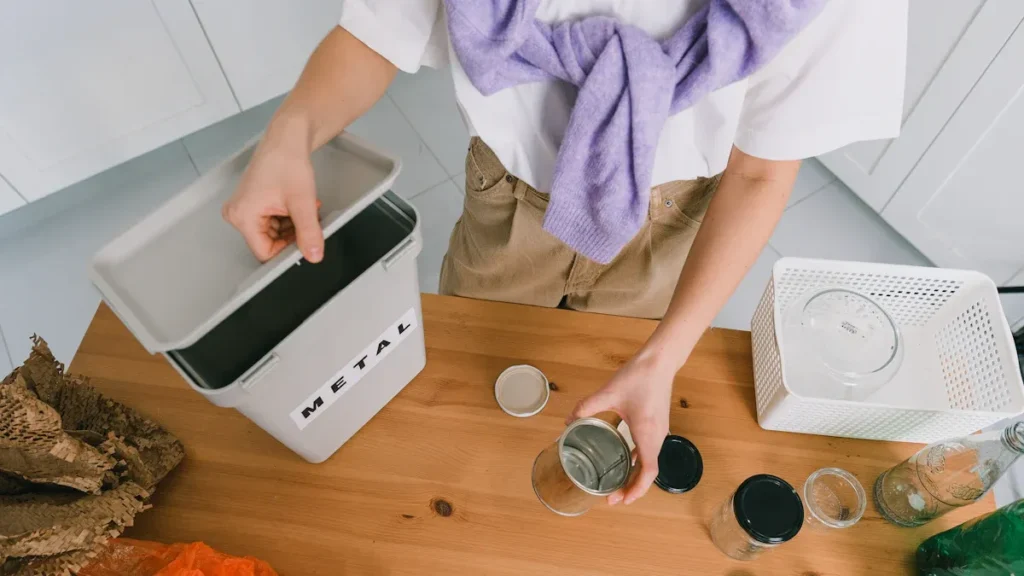
The average kitchen trash can size ranges from 12 to 16 gallons, with 13 gallons recognized as the standard kitchen trash can size for most homes. Households that compost and recycle often find a 7–10 gallon bin suitable, while those including food waste in regular trash benefit from a 12–16 gallon option. Large families or homes combining all waste types may need bins up to 30 gallons. The size of your kitchen greatly affects your choice, as larger spaces can fit bigger bins without limiting movement, but smaller kitchens require compact solutions to keep daily routines efficient. Matching the right bin with compatible bags ensures practical waste management.
Wichtigste Erkenntnisse
- The standard kitchen trash can size is 13 gallons, ideal for most households. This size fits common trash bags and balances capacity with space.
- Measure your kitchen space before buying a trash can. Ensure the bin fits well without blocking walkways or cabinets for easy access.
- Consider your household size and waste volume. Larger families may need bins up to 30 gallons, while singles or couples can use smaller 7-10 gallon options.
- Choose a trash can type that suits your needs. Options like step-on, pull-out, or sensor bins offer convenience and help maintain cleanliness.
- Match your trash bags to your can’s size for a secure fit. Proper bag compatibility prevents spills and makes waste disposal easier.
Introduction: Why Trash Can Size Matters in Your Kitchen
Choosing the right kitchen trash can size is important for keeping your kitchen clean and organized. The average kitchen trash can size falls between 12 and 16 gallons. Most homeowners select a 13-gallon bin, which is the standard kitchen trash can size found in major retail stores. This size matches the most common kitchen trash bags, making it a practical choice for daily use.
A properly sized trash can helps maintain a tidy kitchen. It reduces the time spent emptying the bin and keeps counters free from clutter. Selecting the right size also makes it easier to separate waste, which helps with recycling and composting. Homeowners often prioritize trash can size because it supports a cleaner home and simplifies kitchen maintenance.
Below is a quick reference table showing the recommended capacity for different household sizes:
Household Size | Recommended Capacity (Gallons) |
|---|---|
Single Person | 7–10 |
Couple | 10–13 |
Small Family (3–4) | 12–16 |
Large Family (5+) | 20–30 |
Tip: Measure your kitchen space before choosing a trash can. This ensures the bin fits well and does not block walkways or cabinets.
The right kitchen trash can size depends on your household’s needs and kitchen layout. Picking a bin with the recommended capacity helps keep your kitchen efficient and pleasant to use.
Standard Kitchen Trash Can Sizes
Common Gallon Capacities (10–16 gallons)
The average kitchen trash can size for most homes falls between 10 and 16 gallons. This range covers the needs of many households, from singles to small families. The 13-gallon bin is the most popular choice because it fits standard kitchen trash bags and handles daily waste well.
Here is a table showing common kitchen trash can capacities and their best uses:
Size (Gallons) | Am besten für |
|---|---|
4–6 gallons | Small kitchens, under-sink bins |
7–13 gallons | |
14–20 gallons | Large families or high-usage kitchens |
21+ gallons | Commercial kitchens or shared spaces |
Choosing the right kitchen trash can size helps keep your kitchen tidy and makes waste removal easier.
Typical Dimensions (Height × Width × Depth)
Kitchen trash cans come in different shapes and sizes. Most standard bins measure between 24 and 36 inches in height, 15 to 20 inches in width, and 12 to 16 inches in depth. These dimensions fit well in most kitchen layouts.
To find the best fit, follow these steps:
- Measure the floor space’s width and depth where you plan to place the bin.
- Add 8–12 inches to allow the lid to open fully.
- Check the height of nearby cabinets or counters.
- Measure the width of doorways or cabinet openings if you plan to tuck the bin inside.
Pro tip: Use painter’s tape to outline the area for your trash can. This helps you see how much space it will take up before you buy.
For small or awkward spaces, consider these solutions:
Tip Description | Reasoning |
|---|---|
Mounted under the counter | Keeps scraps off the worktop and is convenient |
Simple upright design | Fits tight corners without taking up much space |
Pull-out bins | Hidden when closed, accessible when needed |
Mounted on the cabinet | Keeps floors clear and easy to clean |
Smaller bin for quick cleanups | Practical for tight spaces and easy to manage |
Selecting the right size and style ensures your kitchen stays organized and efficient.
Factors to Consider When Choosing a Kitchen Trash Can
Kitchen Space & Layout
Kitchen space plays a major role when selecting a trash can size. Homeowners should measure the available area before making a decision. A small kitchen may require a compact bin, while a spacious kitchen can accommodate a larger model. Placement matters as well. Some bins fit under the sink or inside a cabinet, while others stand upright in a corner. The layout affects how easy it is to access and empty the trash can.
Here is a table showing important factors for different kitchen layouts:
Faktor | Beschreibung |
|---|---|
Primary Use Case | Think about the main purpose of the trash can in your kitchen. |
Storage Space | Check the available space for the trash can size you want. |
Lid Type | Choose between a lid or open-top for cleanliness and convenience. |
Farbe | Pick a color that matches your kitchen and is durable. |
Usage Frequency | Decide how often you will use the trash can to find the best type. |
Tip: Use a tape measure to check the space before buying a new trash can.
Household Size & Trash Volume
The number of people in a household affects the average kitchen trash can size needed. A single person may need a small bin, while a large family requires a bigger capacity. More people produce more waste, so the trash can size should match the volume. Families who cook often or entertain guests may need a larger bin to avoid frequent emptying.
Type of Trash Can (Step-On, Pull-Out, Sensor)
There are several types of kitchen trash cans. Step-on bins open with a foot pedal, which keeps hands clean. Pull-out bins hide inside cabinets and save floor space. Sensor trash cans open automatically, offering convenience and reducing contact. Each type suits different kitchen layouts and user preferences.
Below is a simple chart converting gallons to liters for common kitchen trash can sizes:
Gallons | Liters |
|---|---|
8 | 30 |
10 | 38 |
13 | 50 |
16 | 60 |
20 | 75 |
Choosing the right kitchen trash can size depends on space, household size, and the type of bin. Matching the capacity to your needs helps keep the kitchen clean and organized.
Small vs. Large Kitchen Trash Cans
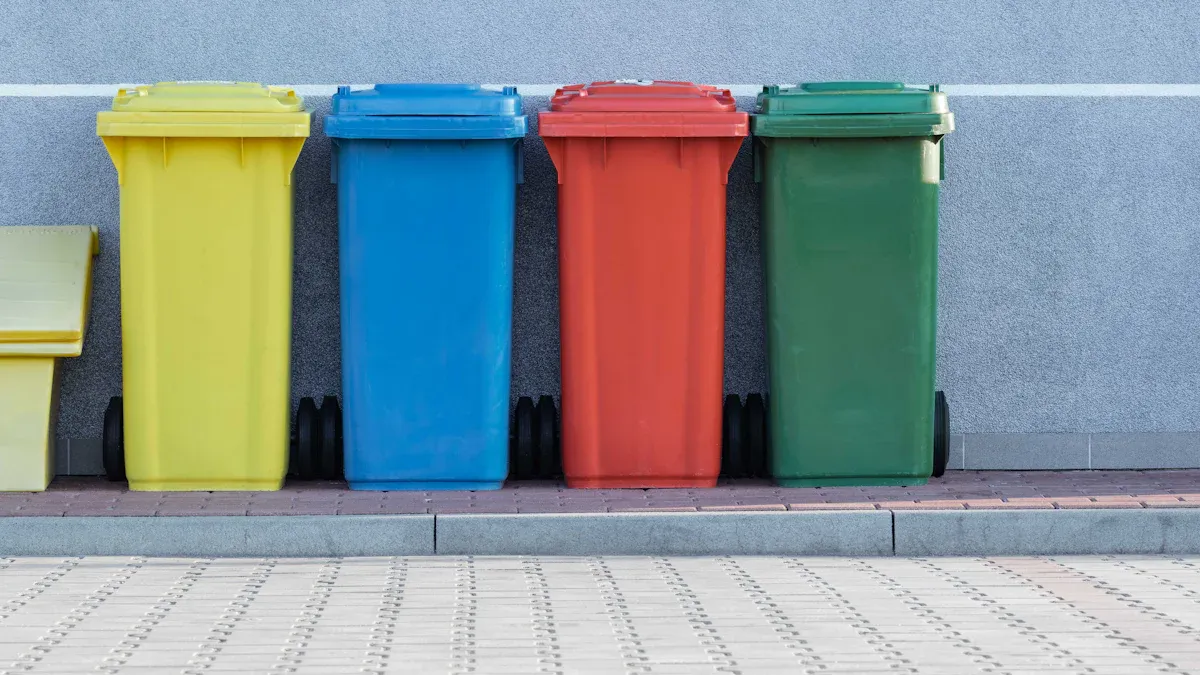
Pros and Cons of Smaller Trash Cans
Small trash cans offer several benefits for the kitchen. They fit well in tight spaces and can be placed under the sink or in a cabinet. This helps keep the kitchen looking neat and organized. Small bins are easy to move and can be located near food prep areas for quick access. Many people choose a small trash can to keep waste out of reach from pets and children. Enclosed designs help control odors and hide trash from view.
However, small trash cans have some drawbacks. They fill up quickly and need to be emptied more often. This can be inconvenient for busy households. Some small bins may not keep waste as secure as larger, heavier models.
Advantages of small trash cans:
Save space in compact kitchens
Easy to hide for a tidy look
Convenient for food prep areas
Can be placed out of reach of pets and kids
Help control odors with enclosed lids
Disadvantages:
Limited capacity means frequent emptying
May not be as secure as larger bins
Pros and Cons of Larger Trash Cans
Larger trash cans are a good choice for families or anyone who cooks often. They hold more waste, so you do not need to empty them as often. This makes them practical for busy kitchens. Large bins are often sturdy and can keep trash away from pets and children if they have a secure lid.
On the other hand, large trash cans take up more space. They may not fit well in small kitchens. If not emptied regularly, they can develop odors.
Advantages of large trash cans:
Hold more waste, less frequent emptying
Good for large families or high-traffic kitchens
Often more secure with heavy lids
Disadvantages:
Take up more floor space
Can cause odors if not cleaned often
Tip: To keep any trash can clean and odor-free, sprinkle baking soda in the bottom, use essential oils on a paper towel, or clean the bin with eco-friendly soap and water. Wipe down with bleach monthly to kill bacteria.
To maximize space and efficiency, install a bin under the sink or use a pull-out model with extra storage for cleaning supplies. Some bins even have a built-in cutting board for meal prep. Choosing the right size for your household helps keep the kitchen organized and supports good waste management. The average kitchen trash can size works well for most homes, balancing capacity and space.
Choosing the Right Trash Can Size
Capacity and Needs
Capacity is the first factor to consider when choosing the right trash can size for your kitchen. The number of people in your home and your daily habits affect how much waste you produce. Small households often use bins with a 7–10 gallon capacity, while medium families need 12–16 gallons. Large families or homes that cook often may require a 20-gallon or larger bin. Think about how often you take out the trash. If you prefer less frequent trips, a larger bin may suit your needs.
Shape and Design
Shape and design play a big role in how well a trash can fits your kitchen. Slim or rectangular bins work well in tight spaces or under counters. Wide bins are less likely to tip over and can hold more waste. Some designs include pull-out or mounted options for better space management. Choose a style that matches your kitchen layout and makes daily use easy.
Bag Compatibility
Bag compatibility ensures that your trash bags fit securely and prevent spills. A bag that is slightly larger than the bin allows for an overhang, making it easier to cinch and remove. This helps keep the area clean and makes disposal simple. Always check the recommended bag size for your chosen trash can.
Lid and Material Options
Lid type and material affect both hygiene and durability. Stainless steel and plastic are popular choices because they are easy to clean and resist damage. Hinged lids offer better sanitation since you do not need to touch the lid with messy hands. Some bins feature touchless lids or step pedals for added convenience. Wider bins and sturdy materials help prevent tipping and dents.
Waste Sorting Choices
Modern trash cans offer features for sorting waste. Dual or triple compartments allow you to separate recyclables, compost, and general trash. Airtight lids and odor control systems, such as carbon filters, help keep your kitchen fresh. Soft-close mechanisms prevent slamming, and motion sensor lids provide hands-free use. These features make sorting and disposal more efficient.
Tip: Match your trash can features to your household habits. Families who recycle or compost benefit from multi-compartment bins, while busy kitchens may prefer touchless or odor-control options.
Matching Trash Bags with Your Trash Can Size
Gallon Compatibility
Selecting the right trash bag for your kitchen trash can starts with matching the bag’s gallon size to your bin’s capacity. Most kitchen trash cans use bags ranging from 13 to 16 gallons. Using a bag that is too small can lead to spills, while an oversized bag may slip into the can or look untidy. Always check the manufacturer’s label for both the can and the bag to ensure a proper match.
A quick reference for matching bag size to can capacity:
Trash Can Capacity (Gallons) | Recommended Bag Size (Gallons) |
|---|---|
7–10 | 8–10 |
12–13 | 13 |
14–16 | 16 |
20+ | 20–30 |
Tip: Measure your trash can’s height and width to confirm the best bag fit, especially if your can has a unique shape.
Bag Strength and Fit Tips
Bag strength plays a big role in how well your trash can handles daily waste. Thicker bags resist tearing and are better for heavy or sharp items. The table below shows common bag thicknesses and their best uses:
Bag Thickness | Application | Merkmale |
|---|---|---|
1.0-1.2 mil | Heavier kitchen waste | Ideal for durability |
1.5-2.0 mil | Outdoor or heavy-duty use | Perfect for tough applications |
Low-Density | Heavy, wet trash | Superior resistance to punctures/tears |
To ensure a snug and secure fit, follow these steps:
Measure your trash can’s dimensions before buying bags.
Choose a bag with the right capacity for your household’s waste.
Select bag thickness based on the type of trash you throw away.
Pick the right material—low-density bags work well for sharp or wet waste.
Look for features like drawstrings or eco-friendly materials.
Match the bag style (star seal, gusseted, or flat) to your can’s design.
Additional tips for keeping bags in place:
Use extra-large rubber bands to secure the bag around the rim.
Tie one corner of the bag in a knot before placing it in the can.
Clamp the bag to the rim with large binder clips for added hold.
Choosing the right bag ensures your kitchen stays clean and waste is managed efficiently.
Conclusion: Choosing the Right Kitchen Trash Can Size for Your Home
Selecting the right kitchen trash can size helps keep your home clean and organized. The best choice depends on your household size, daily habits, and available space. Most homes find that a 13-gallon bin works well for regular use. This size fits standard bags and holds enough waste for several days.
Recent consumer surveys show that the ideal trash can size varies by household. The table below summarizes these findings:
Household Size | Recommended Trash Can Size |
|---|---|
1-2 people | 10 gallons |
3+ people | 13 gallons or larger |
Measuring your kitchen before buying a new bin prevents problems later. Check the height, width, and depth of the spot where you plan to place the can. Make sure the lid can open fully without hitting cabinets or walls. If your kitchen is small, consider a slim or pull-out model to save space.
Bag compatibility is also important. Choose bags that match your bin’s capacity for a secure fit and easy removal. Strong bags help prevent leaks and spills, making cleanup simple.
When choosing a trash can, think about your family’s habits. A large family or frequent cook may need a bigger bin. Smaller households can use a compact model to save space. Features like step pedals, odor control, and divided compartments add convenience.
Tip: Review your needs and measure your space before making a purchase. The right size will make daily chores easier and keep your kitchen looking its best.
A well-chosen trash can supports a tidy, efficient kitchen. Take time to compare options and select a model that fits your lifestyle.
The standard kitchen trash can size for most homes is 13 gallons. Homeowners can make the best choice by following these steps:
Identify the number of people in the household.
Observe the type of waste produced.
Consider how often trash is taken out.
Measure the space in the kitchen for the bin.
Review all key factors before buying. A well-chosen trash can keeps your kitchen clean and efficient.
FAQ
What is the standard kitchen trash can size?
The standard kitchen trash can size is 13 gallons. This size fits most kitchen trash bags and works well for average households. It balances capacity and space, making it a popular choice for many kitchens.
How do I know which trash bag size fits my kitchen trash can?
Check your trash can’s gallon capacity. Most kitchen trash cans use 13-gallon bags. Measure the height and width of your bin. Choose a bag that matches or slightly exceeds these dimensions for the best fit and bag compatibility.
Can I use a large trash can in a small kitchen?
A large trash can may not fit well in a small kitchen. Measure your available space before buying. Consider slim or pull-out designs to maximize efficiency without sacrificing capacity or blocking walkways.
What materials are best for kitchen trash cans?
Stainless steel and heavy-duty plastic are common choices. Stainless steel resists odors and is easy to clean. Plastic bins are lightweight and affordable. Both materials offer durability and come in various dimensions to suit different kitchen layouts.
How often should I clean my kitchen trash can?
Clean your kitchen trash can at least once a month. Use soap and water or a mild disinfectant. Regular cleaning prevents odors and keeps your kitchen sanitary, especially if you use a larger bin or handle food waste.