
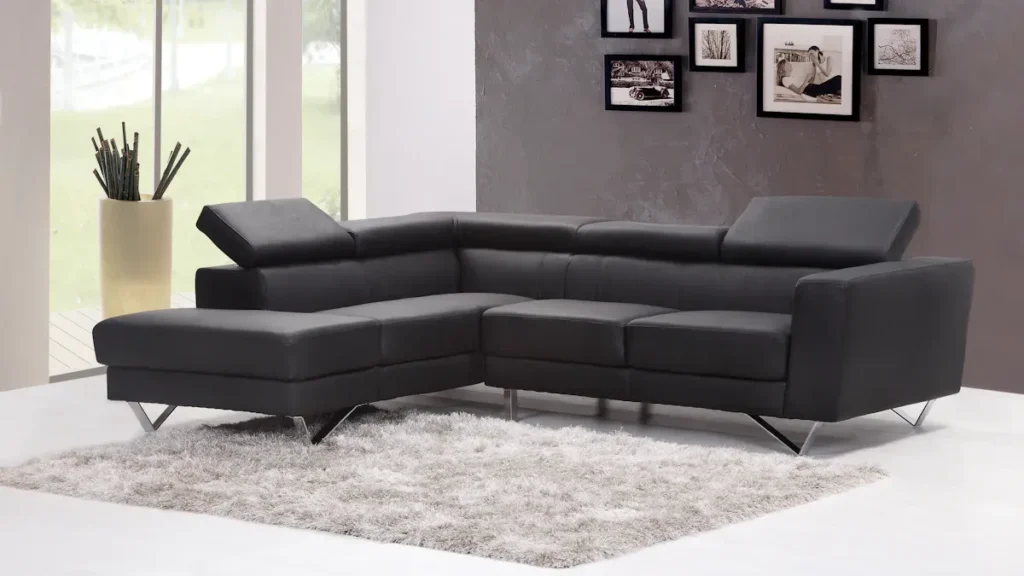
The best sofa size depends on your living room’s size, shape, and how you use it every day. Many people make mistakes. Some buy a sofa just because it looks nice in the store. Others forget to check the depth and size for their own space. The table below lists the most common mistakes when picking a couch:
| Common Mistake | Descrição |
|---|---|
| Buying Based on Showroom Appearance Without Verifying Actual Dimensions | Big furniture can be too large for small rooms. |
| Measuring Wall Length But Forgetting Sofa Depth | This can make rooms feel tight and block paths. |
| Choosing a Sofa That’s Too Small for Your Space | Big rooms can look empty and unfinished. |
| Ignoring the Proportion Between Your Sofa & Other Furniture | The room can look uneven or strange. |
| Blocking Natural Traffic Patterns Through Your Room | It can be hard to walk around the room. |
A helpful guide on picking the right size can help you avoid these problems. It will help you make your home comfy and nice to look at.
Principais conclusões
- Measure your living room and all entry points before buying a sofa. This ensures the sofa fits comfortably in your space.
- Follow the two-thirds rule for proportion. Your sofa should be about two-thirds the length of the wall it sits on for a balanced look.
- Choose the right sofa size based on your room type. Compact sofas work best in small spaces, while larger rooms can accommodate sectionals.
- Avoid common mistakes by double-checking measurements. This prevents buying a sofa that is too big or too small for your living area.
- Consider color and style as they affect how spacious your room feels. Light colors can make a room appear larger.
Sofa Size Guide Basics
Key Sofa Measurements
Choosing the right sofa size starts with understanding standard sofa dimensions. The standard size of a sofa depends on the type and the space available in your living room. Here is a helpful chart showing standard sofa sizes for small, medium, and large rooms:
| Sofa Type | Length (inches) | Depth (inches) | Height (inches) |
|---|---|---|---|
| Standard Sofa | 71 – 86 | 20 – 25 | 32 – 36 |
Most living rooms in North America use sofas that are between 240–280 cm wide, with seat depths over 60 cm. European sofas are usually smaller, with widths of 200–220 cm and moderate seat depths. This couch size guide helps you compare options and pick the best fit for your home.
Standard Sofa Dimensions Chart
The chart above shows the standard sofa dimensions you will find in most stores. The standard size of a sofa works well for many homes, but always check the sofa dimensions before buying. A good couch size guide will help you match the sofa size to your room.
Understanding Sofa Depth and Height
Sofa depth and height affect both comfort and space planning. Standard sofa size depth is about 35 inches, but depths between 32 and 40 inches help keep walkways clear. Seat depth matters too. A seat depth of 21 to 22 inches fits most people, while deeper seats (28 to 35 inches) are better for taller people or lounging. Sofa height ranges from 26 to 36 inches. Higher backs give more support, while lower backs look modern. Seat height usually falls between 15 and 20 inches, with 17 to 18 inches being most common.
- Sofa depth affects how much space you have to move.
- Sofa height changes how the room looks and feels.
- Seat depth and height make sitting more comfortable.
The Two-Thirds Rule for Proportion
The two-thirds rule helps you keep your living room balanced. Interior designers suggest that your sofa should be about two-thirds the length of the wall it sits on. For example, if your wall is 84 inches wide, your sofa should be around 55 inches long. This rule also works for art above the sofa. Art should cover 60% to 75% of the sofa width. This creates a pleasing look and keeps the room from feeling crowded or empty.
Tip: Always use a guide to check sofa dimensions and follow the two-thirds rule for the best results.
How to Measure Your Living Room for a Sofa
Measuring Wall Length and Floor Area
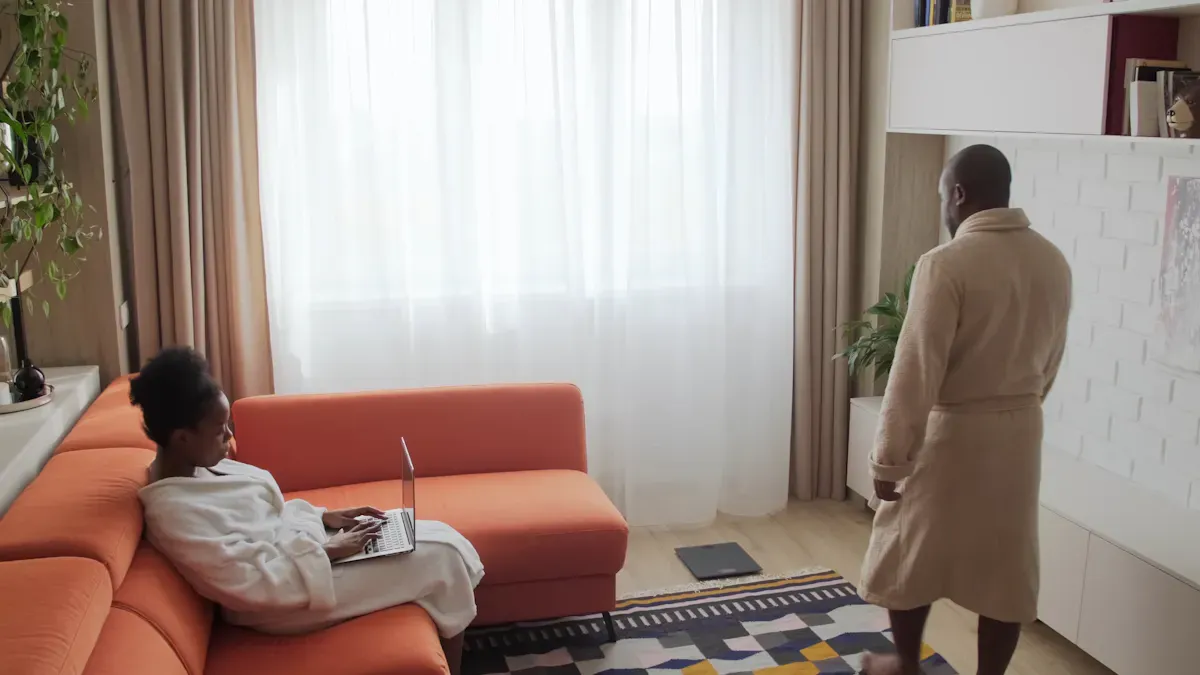
Learning how to measure your space is the first step in choosing the right sofa size. Start by measuring your room for a standard sofa size. Use a tape measure to check the wall length where you want to place the sofa. Write down the distance from one end of the wall to the other. This is how to measure a wall for a sofa. Next, measure the floor area. Mark the spot where the sofa will sit. Measure the distance to doors, windows, and walkways. Make sure there is at least 30 inches of space for main walking paths. This helps people move around the living room easily.
If your living room has an unusual shape, adapt your measurements. Customizing the sofa placement can help you use the space better. Always consider both the floor space and how the sofa will look in the room. A large sofa can take up a lot of visual space, so measure carefully. When you measure your space, include the distance between the sofa and other furniture. This keeps the room from feeling crowded.
Tip: Draw a simple floor plan on paper. Mark the wall and floor measurements. This helps you see how the sofa will fit.
Checking Doorways and Hallways
Before you buy a sofa, measure every access point. This includes the front door, inside doors, hallways, and stairs. Use a tape measure to check the width and height of each doorway. Most sofas need at least 30 to 36 inches of hallway width to fit through. If a door is only 28 inches wide, a standard sofa may not fit. Measure the diagonal depth of the sofa too. This is important for moving the sofa through tight spaces. To do this, measure from the top back corner of the sofa frame to the bottom front corner. This step is a key part of how to measure for a sofa.
Note: Write down all your measurements. Double-check them before you order or move the sofa.
Allowing Space for Airflow and Rugs
When you measure your space, leave 3 to 5 inches between the sofa and the wall. This improves airflow and makes the room feel more open. Do not push the sofa directly against the wall. Good airflow helps keep the room cool and comfortable. It also protects your walls and furniture.
Area rugs play a big role in sofa placement. Rugs help define zones in your living room. When you measure your space for a sofa, make sure the rug fits well. Leave 12 to 24 inches of rug showing around the sofa. For sectionals, the rug should go under all front legs and extend at least 12 to 18 inches beyond the edges. The coffee table should sit fully on the rug. This is how to measure your space for a sofa and rug together.
A good rule is to have the sofa cover about two-thirds of the rug’s surface. This anchors the seating area and makes the room look balanced. When you measure a wall for a sofa, check that the sofa and rug work together. This keeps the space looking neat and stylish.
Tip: Use painter’s tape to outline the sofa and rug on the floor. This helps you see how everything will fit before you buy.
Choose the Right Size Sofa for Your Space
Small Living Room Sofa Sizes
Choosing a sofa that fits a small living room can be a challenge. The right couch makes the room feel open and comfortable. For rooms around 130 square feet or less, a loveseat or a compact 3-seater is the best choice. These sofas usually measure between 60 and 75 inches wide. A 70-inch sofa with slim arms can look more spacious than a bulky 80-inch couch. Sofas with exposed legs also help the room feel bigger.
- Pick a loveseat or compact sofa under 75 inches in length.
- Look for apartment-sized sofas, which are 68 to 80 inches long and 32 to 36 inches deep.
- Choose sofas with exposed legs to create a sense of openness.
- Avoid oversized or deep-seated sofas, as they can make the room feel crowded.
A standard sofa size for a small space should not be too deep. Most people find a seat depth of 20 to 22 inches comfortable. Taller people may want a deeper seat, but for most, a shallower depth works best. This approach helps maximize seating without overcrowding the room. When you choose the right size sofa, you make the most of your space and keep the room looking balanced.
Tip: Use a loveseat or a compact 3-seater to create a cozy seating area that fits a small living room.
Standard and Large Room Sofa Options
Medium and large living rooms offer more flexibility. In a medium-sized room, such as 12 by 18 feet, a standard 3-seater is ideal. These sofas usually measure 80 to 90 inches wide. You can add accent chairs for extra seating. For large rooms over 300 square feet, consider using a sectional or two standard 3-seaters. This prevents the room from looking empty.
Here is a table showing the typical sizes for different types of sofas:
| Sofa Type | Seating Capacity | Standard Width (Inches) | Standard Width (CM) |
|---|---|---|---|
| Loveseat | 2 People | 55″ – 65″ | 140 – 165 cm |
| Standard Sofa | 3 People | 78″ – 90″ | 198 – 229 cm |
| Sectional (L-Shaped) | 4-6+ People | 90″+ | 229+ cm |
A standard three-seat sofa is about 90 inches wide and 38 inches deep. This size gives enough room for three people to sit comfortably. In large spaces, sectionals or pairs of standard 3-seaters help fill the area and provide plenty of seating. Always check the standard sofa size to make sure it matches your room.
Note: In open-concept layouts, place the sofa away from the wall. Leave 30 to 36 inches behind the sofa to keep sight lines clear. In traditional layouts, center the sofa on a focal point or place it against a long wall.
Sectionals and Modular Sofas
Sectionals and modular sofas offer flexibility for many room layouts. Modular sectionals can be rearranged into different shapes, such as L-shape or U-shape. You can also separate them into individual seats. This makes them a good choice for both small and large spaces. Modular sectionals fit well in open-concept living areas and smaller apartments. You can move the pieces to create zones or make more room for guests.
Traditional sectionals have a fixed shape. They may not work in every room, especially if you want to change the layout often. Modular sofas are more adaptable. You can tuck them into corners or reconfigure them as needed. This helps with matching sofa size to different room sizes and needs.
- Modular sectionals can be rearranged into L-shape, U-shape, or separated into seats.
- They are suitable for small spaces and open-concept rooms.
- Traditional sectionals have a fixed layout and may not fit every space.
When you select a sectional, check the standard sofa size for each piece. Make sure the total length and depth fit your room. Sectionals are great for families or people who like to host gatherings. They provide lots of seating without needing extra couches.
Guide: Always measure your room and check the sofa size before buying a sectional or modular sofa. This ensures the sofa fits your space and meets your needs.
Common Sofa Measurement Mistakes to Avoid
Overestimating or Underestimating Space
People often make mistakes when picking a sofa. They sometimes do not measure their space the right way. If you think your room is bigger than it is, you might get a sofa that is too big. This can make your room feel crowded and hard to walk in. If you think your room is smaller than it is, you might get a sofa that is too small. Then, there will not be enough seats for everyone. Measuring your space the right way is important for comfort and use. Here are some mistakes people make a lot:
- Not measuring the spot where the sofa will go
- Not checking if the sofa size fits the space
- Forgetting to look at sofa measurements before buying
A good guide will tell you to measure both the length and width of your room. This helps you pick a sofa that fits well.
Ignoring Access Points
Another mistake is not thinking about doors, hallways, or stairs. People sometimes forget the sofa has to fit through these places to get into the living room. If you do not measure these spots, you might buy a sofa that cannot fit inside your home. Stores see these problems a lot:
- Not measuring doorways and hallways
- Not checking the sofa’s diagonal size
- Forgetting about stairs or elevators in apartments
Always check every doorway and hallway before you buy a sofa. This easy step can save you trouble and time.
Forgetting Room Flow and Proportion
Room flow and proportion help make your living room nice and comfy. If you have to walk around furniture, the room does not work well. Bad proportions can make a room feel stressful or not welcoming. The table below shows what happens when room flow and proportion are not right:
| Evidence | Descrição |
|---|---|
| Poor proportions trigger subtle stress | Discomfort can affect mood and behavior in the living room. |
| Balance between width and length | Good proportions create a welcoming space, while poor ones feel cramped. |
Measuring and planning the right way helps you keep things balanced. This makes your living room look good and easy to use.
Visual Guide to Sofa Placement
Using Tape or Cardboard to Outline
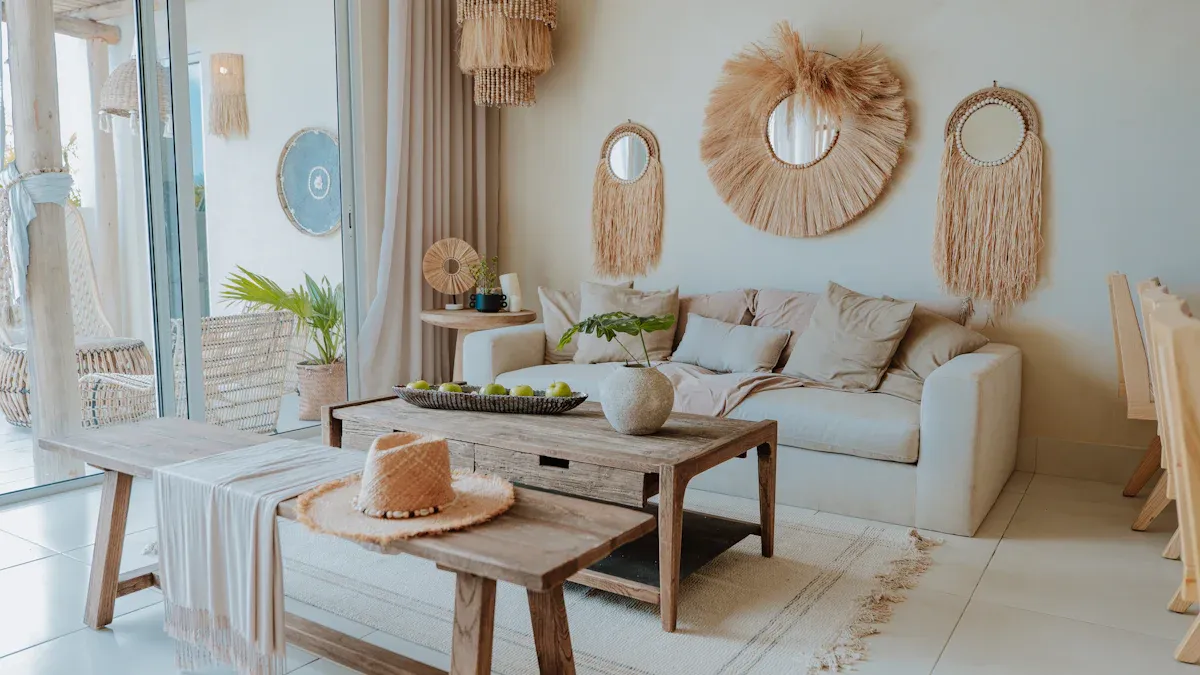
A simple way to plan your living room is to use painter’s tape or cardboard. This method helps you see how the sofa will fit before you move anything heavy.
- Measure the sofa you want to buy.
- Use painter’s tape to mark the outline on your floor.
- Include the chaise or any corner pieces in your outline.
- Stack pillows or boxes to match the seat height. This shows how much room the sofa will take up.
Using blue painter’s tape to outline where a piece of furniture could be placed on the floor is a simple yet effective way to feel the flow of a new arrangement without moving anything.
Try living with the outline for a few days. Walk around it and see if you have enough space for walking and other furniture. This low-tech solution gives you a clear idea of the sofa’s size and how it will affect your space.
Digital Tools for Visualization
Technology can help you picture your new sofa in your living room. Many furniture stores offer digital tools that make this easy.
- Augmented Reality (AR) apps let you see a life-sized sofa in your actual room using your phone or tablet.
- Interactive 3D models and 360-degree images show the sofa from all angles.
- Virtual staging tools allow you to upload a photo of your room and add the sofa to see how it fits.
These tools give a true-to-scale view, so you can check if the sofa’s size works in your space before you buy.
Considering Color and Style
Color and style choices can change how big or small your sofa looks in the room. Light colors like cream and beige reflect light and make the walls seem farther apart. Matching the sofa color to your wall color can blur the edges, making the room feel larger.
- Light shades can visually expand a space by up to 30%.
- Dark colors absorb light and make the sofa look heavier, which can make the room feel smaller.
- In large rooms, a dark sofa can create a cozy feeling.
A good guide will remind you that color and style are just as important as size when choosing a sofa for your living room.
Choosing the right sofa for your living room starts with a few simple steps:
- Measure your room and every entry point, including doors and hallways.
- Understand the size and shape that fits your space best.
- Match the sofa to your room’s layout for comfort and style.
- Avoid common mistakes by double-checking all measurements.
Careful planning helps your sofa fit perfectly and keeps your living space balanced and inviting.
PERGUNTAS FREQUENTES
How do I know if a sofa will fit in my living room?
Measure the wall and floor area where you want to place the sofa. Use painter’s tape to outline the spot. Check doorways and hallways to make sure the sofa can get inside.
What is the best sofa size for a small apartment?
A loveseat or compact sofa works well in small apartments. Choose a size between 60 and 75 inches wide. This keeps your room open and comfortable.
How much space should I leave around my sofa?
Leave at least 3 to 5 inches between the sofa and the wall. Make sure there is enough space for people to walk around easily. This helps your room feel open.
Can I use a sectional in a small space?
Yes, you can use a small sectional in a small space. Pick a modular design that fits your room’s layout. Move the pieces to create the best seating area.
Does sofa color affect how big my room looks?
Light colors make a room look bigger and brighter. Dark colors can make the room feel smaller and cozier. Choose a color that matches your style and the look you want.