
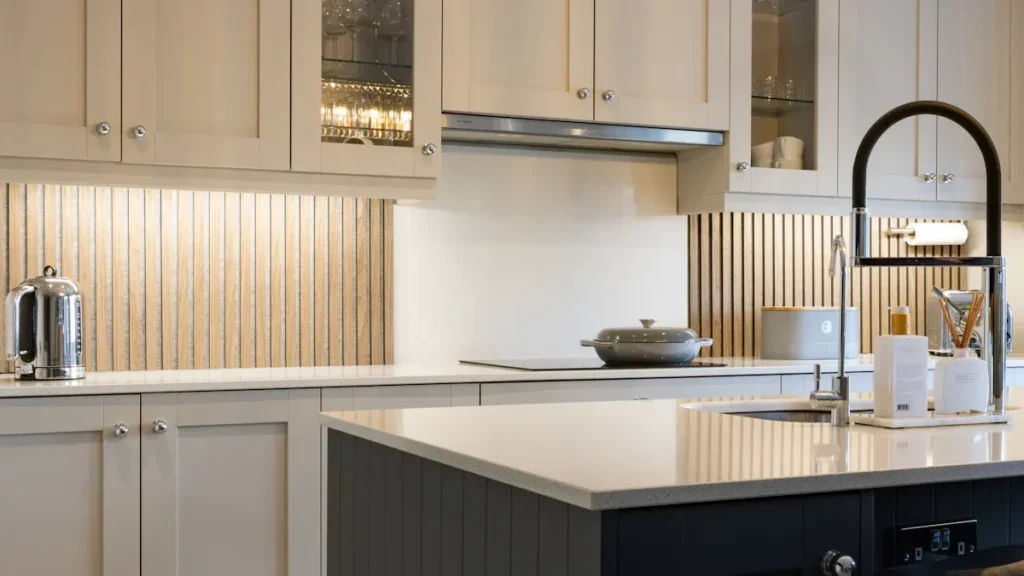
In the US, kitchen cabinet costs typically range from $2,500 to $25,000+ in 2026. High-end custom builds exceed $50,000. Measuring average cost per linear foot from $100 to $1,200+ simplifies budget planning.
You can select between Ready-to-Assemble (RTA), stock, semi-custom, and custom cabinets. Luxury custom cabinets feature unique materials and custom finishes.
Understanding price drivers helps evaluate the cost of kitchen cabinets. Local labor rates, professional installation, material availability, import tariffs, and project timeline requirements determine final price costs. Selecting quality cabinets ensures long-term home value gains despite rising project costs.
Principais conclusões
- Kitchen cabinet costs range from $2,500 for basic options to over $50,000 for custom builds.
- Selecting Ready-to-Assemble or stock cabinets saves you significant money compared to custom options.
- Refacing existing cabinet boxes cuts total renovation expenses compared to a complete replacement.
- Setting aside a 15 percent contingency budget protects you from unexpected installation fees.
2026 US Kitchen Cabinet Cost Benchmarks
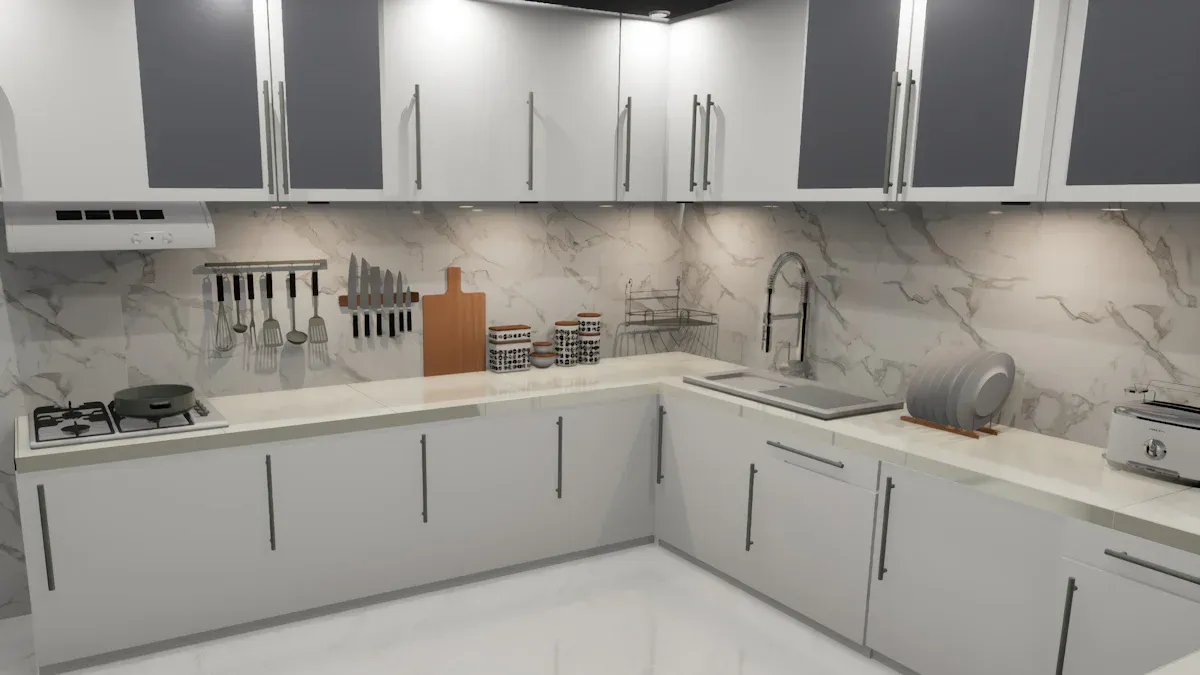
The national average cost for kitchen cabinets in the US starts at $2,500 to $3,000 for basic stock setups. High-end custom work reaches up to $50,000+ for fully custom installations. Before starting construction, you need clear benchmark price figures to set a realistic budget. Final expenses depend heavily on material selection, layout complexity, and timelines. Tracking these factors closely keeps the budget in check, with prices varying based on specific cabinetry tiers and build quality.
Average Pricing Per Linear Foot
Measuring cabinets by linear foot creates an average baseline for overall budgeting. Stock or Ready-to-Assemble cabinets feature an average installed price from $100 to $300 per linear foot. A typical 20 linear feet layout results in a total price range from $2,000 to $6,000 for basic options. Proper estimation keeps your kitchen remodel cost within control. These entry-level products provide functional storage while keeping preliminary material expenditures minimal for price-conscious buyers.
Mid-tier cabinetry options offer additional design flexibility and sturdy material choices for a home kitchen remodel. These modified units range between $150 and $300 per linear foot in basic supplier guides. Specific supplier tables mark these mid-tier options between $300 and $600 per linear foot when factoring in premium finishes. These costs reflect varying factory modification options, custom paint colors, and specialized cabinet box construction features.
Full custom builds require a larger financial investment due to specialized hand craftsmanship and premium hardwood selections. Custom options cost from $300 to $1,200 per linear foot. True custom builds range from $500 to $1,200 per linear foot in specialized price tables. A custom project provides tailored dimensions and personalized finishes. Master cabinetmakers build each custom box to exact room specifications, though extended fabrication time increases final project pricing.
Project Estimates by Kitchen Layout Size
Layout dimensions directly impact the total cost of kitchen cabinets across all project tiers. A standard 10×10 kitchen requires about 20 linear feet of cabinetry. Ready-to-Assemble cabinets for this layout range from $2,500 to $7,500. High-quality mid-tier units cost between $4,000 and $6,000 for the same layout size. Overall cabinet collections cost from $1,999 to $4,300 across standard lines. Careful planning ensures accurate project estimation and prevents unexpected financial overruns during installation.
Custom installations in a 10×10 space require higher spending due to intricate manufacturing requirements. A standard 10×10 custom layout involves installed custom costs between $10,000 and $24,000 for approximately 20 cabinets. Custom materials alone cost $12,000 to $18,000 for full kitchen setups. Custom builds fully installed range from $15,000 to $20,000 in typical 2026 benchmark projects. Large custom projects reach $20,000 to $30,000+ when adding luxury storage accessories and premium solid wood doors.
Understanding average kitchen cabinet costs aids accurate financial planning across every remodeling stage. Knowing the average cost of kitchen cabinets helps set realistic goals. A realistic budget must include both material and installation costs. Professional installation ensures seamless alignment across uneven wall surfaces and floor levels. Overall cabinet costs in the US directly reflect material grades and construction quality. Total average cost figures help owners evaluate full renovation expenses accurately.
Breakdown of Kitchen Cabinet Costs by Tier
To accurately estimate kitchen cabinet costs in the US, you must evaluate distinct market tiers. Project planning becomes easier when buyers evaluate standard factory lines against high-end personalized alternatives. Every cabinetry tier provides different levels of design flexibility, build durability, and overall product value while managing overall project costs. Knowing these manufacturing differences helps you make better decisions when getting quotes from contractors. Knowing product differences prevents costly buying mistakes. Selecting quality cabinets protects long-term property investments.
RTA and Stock Cabinetry Options
Budget-conscious buyers often select Ready-to-Assemble (RTA) units or standard stock cabinets to minimize upfront renovation expenses. Factory lines offer standardized sizes, basic wood veneers, and simple door styles that work well in traditional room layouts. Buyers handle self-assembly for flat-pack RTA models, which lowers initial labor costs significantly. These products arrive in compact boxes for convenient home delivery.
| Pricing Metric | Value Range (2026) |
|---|---|
| Installed Rate per Linear Foot | $100 – $300 |
| Total Expense for a Standard 10×10 Layout | $1,200 – $4,400 |
| Reported Savings vs. Custom Cabinetry | 50% – 75% |
RTA builds deliver substantial savings compared to custom builds. Homeowners save money by assembling flat-pack boxes personally using common household tools. Stock units arrive fully built from factories in standard width increments. These budget entry options suit quick kitchen updates, rental properties, and basic room refreshes without creating unexpected construction costs. Choosing pre-finished components speeds up installation schedules for busy households.
Semi-Custom and Fully Custom Solutions
Mid-range remodeling projects utilize modified factory options for better structural fit and individual style preferences. Homeowners buy semi-custom cabinets to access unique factory paint shades, modified box depths, and specialized interior storage inserts. Higher material costs reflect thicker box panels, solid hardwood drawer boxes, and heavy-duty full-extension drawer glides.
| Valuation Metric | Semi-Custom Line | Stock Line |
|---|---|---|
| Median Price (per unit) | $222 | $146 |
| Upper Quartile Price (P75 per unit) | $363 | $224 |
| Installed Rate Range (per linear foot) | $200 – $500/LF | $120 – $250/LF |
Semi-custom choices offer a solid average price balance between mass-produced stock collections and premium custom lines. Factory adjustments allow precise alignment along irregular wall surfaces and uneven kitchen corners. This flexibility helps integrate built-in appliances seamlessly.
Fully custom projects provide ultimate design freedom for luxury home remodels and complex room layouts. Master cabinetmakers build custom cabinets to exact room dimensions without sticking to rigid factory size increments. Homeowners select custom wood species, hand-applied glazes, specialized door profiles, and custom integrated organizer hardware.
Fully custom setups require more time and higher budgets due to specialized shop production. Cabinetmakers build specific doors, face frames, and side panels to order, followed by precise on-site fitting.
Homeowners evaluate the cost of kitchen cabinets alongside long-term property ownership goals and future resale considerations. Custom work demands higher initial financial outlay spending during construction. However, an average tailored installation yields superior structural durability and timeless aesthetic appeal over time. Careful financial planning ensures homeowners choose the ideal tier for their remodeling budget. Professional installation guarantees perfectly square box alignment across uneven floor joists and ceiling lines. A smart choice balances upfront product cost against total expected home value improvements.
Key Material and Design Price Drivers
Material selection serves as a major line item during project planning. Cabinet materials directly impact overall material costs and total kitchen remodel costs. Budget-friendly projects often utilize engineered options like particleboard or MDF with laminate doors to keep initial expenses firmly under control.
| Material | Average Cost (Per Linear Foot) |
|---|---|
| Particleboard | $75 – $150 |
| MDF (Medium-Density Fiberboard) | $100 – $280 |
| Plywood | $150 – $400 |
Mid-range renovations achieve the gold standard by combining plywood cabinet boxes with solid wood doors. This strategy provides long-term value without reaching luxury custom pricing. Higher material costs naturally drive up the total cost of custom cabinets for homeowners seeking custom craftsmanship.
Material Choices That Drive Kitchen Remodel Costs
Selecting specific interior box materials shapes long-term cabinet performance. MDF resists humidity expansion, whereas plywood offers superior structural hold for heavy stone counters. Choosing premium custom hardwoods increases custom material costs considerably during a major kitchen remodel.
Custom cabinetmakers craft custom boxes using specialized solid wood species. Standard factory lines rely on mass-produced engineered boards. Careful planning helps owners balance aesthetic goals against total project costs.
Door Styles Finishes and Hardware Upgrades
Door construction details heavily influence the final cabinet price. Shaker styles represent mid-range pricing. Raised panel doors cost slightly more due to extra milling. Recessed panel variants add 10% to 25% over base Shaker prices. Glass insert doors add $80 to $250 per door, while mullion doors add a premium upcharge of $200 to $500 per door.
- Solid-Color Paint: Adds 10% to 20% over baseline stain finish.
- Glazed or Two-Tone Finishes: Adds 10% to 15% to total finish expense.
- Soft-Close Upgrades: Adds $5 to $15 per hinge and $15 to $30 per drawer glide.
Decorative hardware adds extra custom style variations. Builder-grade hardware runs $4 to $12 per piece, whereas custom designer hardware costs $40 to $150+ per piece. Custom finish treatments and custom hardware choices ultimately raise the total price for custom cabinets.
Installation Labor and Hidden Expenses

Labor Fees and Overall Kitchen Remodel Cost Factors
Professional cabinet installation determines long-term structural alignment. Stock cabinet installation standard labor charges average $100 to $650 per linear foot. Precision custom cabinet labor costs reach $500 to $1,200 per linear foot. Skilled tradespeople set precise labor fees based on project complexity. Custom units demand exacting installation work around non-standard wall angles. These installation requirements reflect structural needs.
A full kitchen remodel involves extra labor expenses beyond basic box placement. Beyond installation, site preparation significantly impacts the final bill. Additional labor fees include cabinet removal ($200–$1,000), electrical updates ($100–$800), and drywall repairs ($150–$900). Careful planning prevents unexpected baseline price increases. Homeowners must budget properly for actual overall kitchen remodel costs.
Delivery Trim Fillers and Import Tariffs
Hidden expenses often alter the baseline cost of kitchen cabinets. Stock cabinets and wall cabinets require careful transport. Delivery surcharges and fuel costs vary depending on distance. Adding custom trim pieces and custom fillers increases overall custom material costs. Custom soffit modifications require precise fitting. These small additions raise baseline price points during a major kitchen remodel. Specialized labor setup fees also affect delivery logistics.
International trade policies affect modern product availability. Import tariffs on foreign cabinets increase baseline supply costs. Local suppliers pass these price adjustments directly to consumers. A strict shipping timeline can also drive up freight labor rates. These external market forces influence typical kitchen remodel costs across all regional markets. Homeowners should evaluate custom designs, custom hardware, custom options, and total cost factors during initial budget planning.
Strategies to Optimize Your Kitchen Remodel Budget
Smart Ways to Save on Cabinetry
Smart material selection during initial planning reduces overall expenses. For instance, choosing Ready-to-Assemble (RTA) units and standard configurations significantly lowers base prices. Consider the following cost breakdowns:
- RTA Cabinets: RTA cabinets cost $100–$300 per linear foot, while custom cabinets cost $500–$1,200+.
- Layout Savings: For a 10×10 kitchen, RTA cabinets cost $2,000–$6,000, whereas custom cabinets range from $15,000–$25,000+.
- Direct Savings: Choosing RTA options yields savings of $10,000–$20,000 compared to custom work.
- Total Remodel Budget: All-in project costs for an RTA layout run $4,000–$11,000, while custom projects require $18,000–$35,000+.
Choosing simpler box layouts is the easiest way to avoid high custom labor rates. Standard factory runs shorten product delivery timeline demands. Avoiding non-standard custom shapes controls baseline expenses during kitchen remodel planning.
Replace vs Reface Decision Framework
Always evaluate structural box integrity before committing to a full kitchen remodel budget. Retaining sturdy cabinet boxes reduces demolition labor demands. Lower overall labor fees preserve your fixed renovation budget.
| Comparison Aspect | Refacing | Replacement (Stock/Custom) |
|---|---|---|
| Typical Total Cost Range | $1,500 – $9,000 | $5,000 – $30,000+ |
| Cost per Linear Foot Range | $75 – $450 | $250 – $1,500+ |
| Example: Standard 10×10 Kitchen (20 LF) | $1,500 – $9,000 | $5,000 – $30,000 |
| Relative Cost Factor | Base Cost | 2 to 5 times more expensive than refacing |
Choosing full replacement increases total installation work for tradespeople. Replacement costs run 2 to 5 times more expensive than refacing. Homeowners skip expensive custom adjustments when existing frames remain straight. Standard refacing delivers modern style updates at a lower price point. Establishing a strict kitchen remodel budget keeps total kitchen remodel cost within budget targets. Lower project costs allow extra spending on high-end items like durable stone countertops or upgraded appliances.
Understanding standard US kitchen cabinet pricing helps you set a realistic budget. The average price starts around $2,500 for basic options, while custom cabinets exceed $50,000. Matching custom quality with custom home goals protects value. Premium custom builds fit luxury living, whereas basic cabinets suit quick updates.
Homeowners evaluating the total cost of kitchen cabinets should request three detailed contractor quotes isolating material costs and trade labor expenses. Clear labor breakdowns reveal hidden cabinet installation fees. Setting aside a 10% to 15% contingency reserve covers extra costs and custom framing labor for custom adjustments. Effective cost control prevents overall kitchen remodel costs from expanding during custom projects with custom features.
FAQ
Does the standard cost per linear foot include demolition and disposal?
Usually, no. The baseline cost covers the cabinets and standard installation. Demolition and hauling away your old cabinets typically add $300 to $800 to your final bill. Always ask contractors if their quote includes construction debris disposal.
Is plywood worth the extra cost over MDF for kitchen cabinets?
MDF provides a smooth surface for painted doors, but plywood offers better structural support for heavy stone countertops and higher moisture resistance. A practical, cost-effective approach is to use MDF for wall cabinets and upgrade to plywood specifically for the sink base cabinet where leaks are most likely.
Is refacing cabinets cheaper than full replacement?
Yes. Refacing costs between $1,500 and $9,000 for a standard kitchen. Full replacement costs between $5,000 and $30,000 or more. Preserving original cabinet boxes reduces total labor expenses significantly.
How much contingency buffer should homeowners set aside?
Homeowners should reserve a 10% to 15% contingency buffer. This safety margin covers unexpected installation labor, delivery surcharges, or framing adjustments during construction.