
Your Step-by-Step Handbook to Kitchen Cabinets Replacement with Confidence
Replacing your kitchen cabinets is one of the fastest ways to refresh your home—without committing to a full renovation. Whether you’re replacing old cabinet doors, upgrading materials, or doing a complete cabinet swap, this guide walks you through every step you need to know in 2025.
In this comprehensive guide, you’ll learn:
- The cost of cabinet replacement
- What materials to choose (and which to avoid)
- Tools and measurements required
- Step-by-step replacement instructions
- The difference between refacing, replacing doors, and full replacement
- Common mistakes beginners make
- Professional tips to ensure a flawless finish
1. Cabinet Replacement Options: Which One Is Right for You?
Before starting, it’s important to understand the three main upgrade methods. Each has different costs, timelines, and difficulty levels.
1.1 Replace Cabinet Doors Only
Best for: Cabinets with solid frames but outdated door designs.
Cost: $15–$150 per door (depending on material).
Pros:
- Most affordable
- Quick installation
- Instantly changes the look of your kitchen
- Works with most cabinet frames
Cons: - Frame condition must be good
- Limited layout changes
This is the most common choice for modern remodels because it delivers a fresh look at a low cost.
1.2 Cabinet Refacing
Best for: Homeowners wanting upgraded surfaces without removing the cabinet box.
Cost: $1,500–$6,000
Includes:
- New doors
- New drawer fronts
- Veneer or laminate on exposed surfaces
Pros:
- Looks like a full replacement
- Faster and cheaper than replacing
Cons: - Not ideal if the cabinet box is damaged
- Requires professional tools for veneering
1.3 Full Cabinet Replacement
Best for: Old, damaged, or poorly planned kitchens.
Cost: $3,000–$20,000+ depending on materials.
Pros:
- Maximum flexibility
- New layout, stronger structure, modern features
Cons: - Highest cost
- Requires professional installation unless experienced
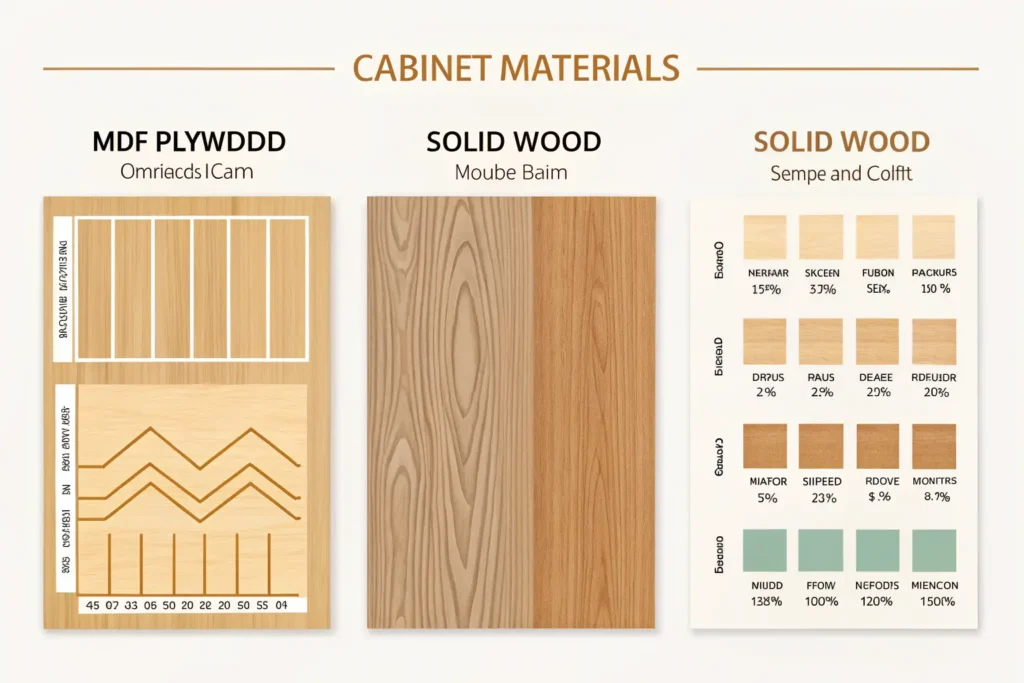
2. Cabinet Material Comparison (2025 Update)
Choosing the right material is the most important part of replacement. Here’s a quick comparison chart:
| Material | Pros | Cons | Best For |
|---|---|---|---|
| Solid Wood | Durable, premium feel, can be refinished | Expensive, sensitive to humidity | High-end kitchens |
| Plywood | Strong, stable, cost-effective | Visible edges need finishing | Mid-high quality cabinets |
| MDF | Smooth, great for painting, affordable | Not water-resistant | Painted cabinet doors |
| Particle Board | Cheapest option | Weak, short lifespan | Temporary or rental homes |
| Laminate | Easy to clean, modern look | Can chip | Modern style kitchens |
| Thermofoil | Seamless and affordable | Heat damage risk | Budget upgrades |
Recommendation: For most homeowners in 2025, MDF doors + plywood boxes provide the best balance of quality and cost.
3. Tools & Supplies You Will Need
Before starting your replacement, prepare these essential tools:
Tools
- Measuring tape (accurate to 1/16 inch)
- Cordless drill
- Screwdrivers (Phillips + flathead)
- Level
- Clamps
- Stud finder
- Pry bar (if removing boxes)
- Safety glasses and gloves
Supplies
- New cabinet doors
- Hinges (soft-close recommended)
- Mounting screws
- Wood filler
- Touch-up paint
- Shims for leveling
4. Measuring for New Cabinet Doors
Accurate measurements ensure your new doors fit perfectly.
4.1 Measure Opening Width & Height
- Open the cabinet door and measure the inside frame opening.
- Add the overlay based on your hinge selection (commonly ½ inch or 1 inch).
4.2 Choose Door Style and Overlay
Most homeowners choose:
- Full overlay for modern look
- Partial overlay for traditional look
4.3 Double-Check Before Ordering
A small mistake can result in costly re-orders.
Always confirm:
- Hinge type (frame / frameless)
- Overlay size
- Door thickness
- Handle hole placement (if pre-drilled)

5. Step-by-Step Cabinet Door Replacement Guide
This section covers the installation process used by professionals.
Step 1: Remove Old Doors
Unscrew hinges from the cabinet frame, then from the door.
Label each location if you plan to reuse hinges.
Step 2: Prepare the Cabinet Frame
Before installing new doors:
- Patch old screw holes
- Clean the surface
- Repaint or touch up if necessary
- Ensure the frame is completely dry
Step 3: Install New Hinges on the Door
- Attach the hinge cup into the drilled hole
- Secure with screws
- Test hinge movement before mounting
Step 4: Mount the Door to the Frame
- Hold the door in position
- Screw one hinge lightly
- Adjust the door, then tighten
Step 5: Adjust the Door Alignment
Use hinge adjustment screws to fine-tune:
- Up/Down
- Left/Right
- In/Out
Proper alignment ensures even spacing and smooth closing.
6. Installing New Cabinet Boxes (Full Replacement)
If you’re doing a complete replacement, here is the simplified guide:
6.1 Remove Old Cabinets
6.2 Prepare the Wall
- Patch holes
- Mark stud locations
- Snap a level line at 54″ for upper cabinets
6.3 Install Upper Cabinets First
This prevents damage to lower cabinets.
Steps:
- Install a temporary ledger board
- Mount corner cabinet
- Install adjacent cabinets and clamp them
- Screw cabinets into wall studs
6.4 Install Base Cabinets
- Start with the corner
- Level side-to-side and front-to-back
- Shim as needed
- Screw into studs
6.5 Reinstall Countertops & Hardware
- Apply adhesive
- Add sink cut-outs
- Install backsplash
7. Cabinet Replacement Cost Breakdown (2025)
| Level | Average Cost | Includes |
|---|---|---|
| Budget | $1,000–$3,000 | MDF doors, particle board boxes |
| Mid-Range | $3,000–$8,000 | Plywood boxes, soft-close hardware |
| Premium | $10,000–$25,000 | Solid wood, custom sizing, premium hardware |
8. Common Mistakes to Avoid
- Ordering wrong door overlay
- Failing to measure the frame properly
- Installing base cabinets before uppers
- Ignoring wall stud locations
- Buying cheap hinges that fail quickly
- Not leveling cabinets (causes countertop issues)
9. When to DIY vs. Hire a Professional
DIY if:
- You’re only replacing doors
- You have basic tools
- Your cabinet frames are in good condition
Hire a professional if:
- You’re replacing all cabinet boxes
- You need electrical or plumbing adjustments
- You’re installing stone countertops
- Your walls are uneven or out of square
10. Final Tips for a Long-Lasting Finish
- Use soft-close hinges to protect doors
- Wipe spills immediately to avoid moisture damage
- Avoid steam directly under upper cabinets
- Re-seal wood every 2–3 years
- Tighten hinge screws quarterly
Conclusion
Cabinet replacement doesn’t have to be overwhelming. Whether you’re upgrading doors or doing a full renovation, the right measurements, materials, and installation strategy will guarantee a professional result.
With this guide, you now have all the tools, steps, and knowledge needed to confidently transform your kitchen in 2025.
ЧАСТО ЗАДАВАЕМЫЕ ВОПРОСЫ
1. Is it cheaper to replace cabinet doors or the entire cabinets?
Replacing cabinet doors is much cheaper and usually costs 70% less than full cabinet replacement. It’s ideal when the cabinet frames are still in good condition.
2. How much does cabinet replacement cost in 2025?
Basic replacements start around $1,000, while full kitchen cabinet upgrades range from $3,000 to $20,000 depending on materials and layout.
3. What is the best material for cabinet doors?
MDF is best for painted doors, plywood for strong cabinet boxes, and solid wood for premium finishes.
4. Can beginners replace cabinet doors?
Yes. Replacing cabinet doors is beginner-friendly and requires minimal tools like a drill, level, and basic hinges.
5. How long does full cabinet replacement take?
A full project typically takes 2–5 days depending on the size of the kitchen and whether countertop removal is required.