

The 10 best types of stone for building houses, villas, and hotels include granite, marble, limestone, sandstone, slate, travertine, basalt, quartzite, stone veneer, and pumice. Stone for Building projects matters because each type offers unique durability, beauty, cost benefits, and low maintenance—key factors for long-lasting structures.
主要收获
Granite and quartzite are the most durable stones for building. They resist scratches and weather, making them ideal for high-traffic areas.
Consider the unique properties of each stone type, such as maintenance needs and aesthetic appeal, to match your project’s design and functional goals.
Request samples of stone materials before making a final decision. This helps visualize the finished space and ensures the best results.
Best Stone for Building Projects
1. Granite
Granite is a popular stone for building due to its strength and beauty.
Granite forms deep within the Earth’s crust as magma cools slowly over thousands of years.
This process creates large mineral crystals, giving granite its unique look.
Granite is found worldwide, with major sources in the United States, Brazil, India, China, and Scandinavia.
Property | 说明 |
|---|---|
Exceptional Durability | One of the hardest stones, resistant to scratches, chips, and cracks. |
Heat and Stain Resistance | Handles hot pots and acidic spills well, especially when sealed. |
Low Maintenance | Needs sealing every 1–2 years; easy to clean with mild soap and water. |
Wider Color Variety | Available in many colors and finishes, from neutrals to dramatic blacks and blues. |
Sustainable and Long-Lasting | Lasts for decades with minimal upkeep, lowering environmental impact. |
Pros:
Very durable and long-lasting
Wide range of colors and patterns
Low maintenance requirements
Cons:
Heavy and requires strong support
Can be expensive to purchase and install
Ideal Uses:
Granite is often used for kitchen countertops, flooring, exterior walls, and hotel lobbies. Its durability makes it a top choice for high-traffic areas in villas and hotels.
2. Marble
Marble is known for its elegance and timeless appeal.
Marble forms when limestone undergoes heat and pressure, creating a smooth, veined surface.
Each slab of marble is unique, adding luxury to any space.
Advantages of Marble | Disadvantages of Marble |
|---|---|
Natural and unique veining | Susceptible to staining and etching |
Reflects light, enhances space | Needs periodic sealing |
Classic, upscale ambiance | Can scratch or chip easily |
Easy to carve for decoration | Expensive, higher installation costs |
Common Applications:
Hotel lobbies and feature walls
Corridors and elevator halls
Guest room headboards and bathroom walls
Statement floors and luxury staircases
Kitchens and bathrooms in villas
Pros:
Adds luxury and elegance
Unique patterns and colors
Enhances light and space
Cons:
Prone to stains and scratches
Requires regular maintenance
Higher cost compared to other stones
3. Limestone
Limestone is a versatile stone for building, valued for its natural look and strength.
Mainly composed of calcium carbonate, often with fossils and shell fragments.
Limestone has high compressive strength, making it suitable for load-bearing walls and columns.
Pros:
Organic beauty and diverse colors
More affordable than marble
Used for flooring, fireplace surrounds, and facades
Cons:
Porous and can stain easily
Needs regular sealing and maintenance
Sensitive to acids, which can cause etching
Ideal Uses:
Limestone is used for both interior and exterior applications in houses, villas, and hotels. It is a classic choice for facades, garden walls, and elegant flooring.
4. Sandstone
Sandstone is a durable stone for building, especially for outdoor use.
Formed from compacted sand grains, sandstone is known for its weather resistance.
It can withstand freeze-thaw cycles, rain, wind, and sun exposure.
Key Features:
Absorbs and releases moisture, protecting against frost damage
Resists salt and pollution, ideal for coastal or urban settings
Reflects sunlight, helping prevent overheating in sunny climates
Material | Purchase Cost | Installation Cost | Maintenance Cost |
|---|---|---|---|
Sandstone | Lower | Lower | Low |
Limestone | Higher | Higher | Moderate |
Pros:
Budget-friendly
Low maintenance
Good for facades and landscaping
Cons:
Less dense than limestone
May erode over time in harsh environments
Ideal Uses:
Sandstone is used for building facades, garden paths, patios, and decorative walls in villas and hotels.
5. Slate
Slate is a preferred stone for building roofs and floors in luxury projects.
Slate forms from clay and volcanic ash under pressure, resulting in thin, flat sheets.
Known for its durability and energy efficiency.
特点 | 说明 |
|---|---|
Durability | Slate roofs can last up to 100 years or more. |
Energy Efficiency | Regulates indoor temperatures, reducing heat absorption. |
Aesthetic Appeal | Enhances the visual appeal of villas and hotels. |
Low Maintenance | Requires little upkeep over its lifetime. |
Maintenance Tips:
Clean with pH-neutral stone cleaners
Reseal every 12–18 months
Sweep or vacuum regularly
Blot spills quickly
Pros:
Long lifespan
Attractive appearance
Minimal maintenance
Cons:
Can be brittle if not installed properly
Higher initial cost
Ideal Uses:
Slate is ideal for roofing, flooring, and wall cladding in houses, villas, and hotels.
6. Travertine
Travertine is a luxury stone for building, valued for its layered texture and warm colors.
Formed from mineral-rich waters in hot springs and limestone caves.
Its porous texture and stratified layers add visual interest.
Drawbacks:
Drawback | 说明 |
|---|---|
Porosity | Needs regular sealing to prevent wear and tear. |
Susceptibility | Prone to staining from acids; spills must be cleaned quickly. |
Maintenance | Requires upkeep to maintain appearance, especially outdoors. |
Pros:
Elegant, natural look
Durable in indoor settings
Adds warmth to interiors
Cons:
Porous, needs sealing
Can stain easily
Requires regular maintenance outdoors
Ideal Uses:
Travertine is used for flooring, wall cladding, pool decks, and patios in villas and hotels.
7. Basalt
Basalt is a modern stone for building, favored for its strength and dark color.
Basalt forms from cooled lava, giving it high compressive strength and density.
It is resistant to scratches, cracks, and moisture.
Physical Properties:
Excellent durability for high-traffic areas
Sound insulation
Heat and acid resistance
Weather and wear resistance
Pros:
Hard and long-lasting
Maintains appearance over time
Suitable for humid and harsh environments
Cons:
Limited color range (mostly dark tones)
Heavy, needs strong support
Ideal Uses:
Basalt is used for facades, flooring, landscaping, and countertops in hotels and villas. Its thermal properties help with passive climate control in energy-efficient designs.
8. Quartzite
Quartzite is a premium stone for building, known for its hardness and beauty.
Quartzite forms from sandstone under heat and pressure, creating a dense, durable stone.
It is harder than granite and less prone to scratches and stains.
Material | Durability Characteristics | Maintenance Requirements |
|---|---|---|
Quartzite | Harder, more resistant to scratches and stains | Less frequent sealing required |
Granite | Highly durable, resistant to scratches, heat, and stains | Requires sealing for protection |
大理石 | Softer, prone to scratching and etching | Requires regular sealing |
Application Area | 说明 |
|---|---|
厨房台面 | Durable and attractive, ideal for busy kitchens. |
Bathroom Vanities | Water-resistant and easy to clean. |
Wall Cladding | Adds luxury and texture to living spaces. |
Exterior Facades | High-end look and durability for outdoor use. |
Pros:
Extremely hard and durable
Heat and stain resistant
Low maintenance
Cons:
Higher cost
Limited color range compared to marble
Ideal Uses:
Quartzite is used for countertops, vanities, wall cladding, and exterior facades in luxury homes and hotels.
9. Stone Veneer
Stone veneer is a manufactured stone for building, designed to mimic natural stone at a lower cost.
Made from Portland cement, aggregates, iron oxide pigments, and chemical additives.
The process involves mixing, molding, curing, and finishing.
特点 | Stone Veneer | Natural Stone |
|---|---|---|
费用 | $6–$20/sq ft | $35–$50/sq ft |
Installation Ease | Easier to install | Complex installation |
Weight | Lighter | Heavier, needs support |
Durability | May fade, needs maintenance | Highly durable, low maintenance |
Aesthetic | Attractive look | Premium aesthetic |
Pros:
Affordable and lightweight
Easy to install
Attractive appearance
Cons:
Less durable than natural stone
May fade over time
Needs regular maintenance
Ideal Uses:
Stone veneer is used for accent walls, fireplaces, exterior facades, and decorative features in houses, villas, and hotels.
10. Pumice
Pumice is a lightweight stone for building, ideal for special construction needs.
Formed from volcanic eruptions, pumice is full of air pockets, making it very light.
It provides excellent thermal and acoustic insulation.
Property | 说明 |
|---|---|
Low Density | Reduces structural load in buildings. |
High Porosity | Offers thermal and sound insulation. |
Abrasive Texture | Improves bonding in construction materials. |
Crush Resistance | Good strength when compacted. |
Chemically Inert | Durable in harsh environments. |
Fire-Resistant | Non-combustible, improves safety. |
pH Neutral | Does not affect soil or mortar chemistry. |
Pros:
Lightweight and easy to handle
Good insulation properties
Fire-resistant and durable
Cons:
Not suitable for load-bearing walls
Limited use in decorative applications
Ideal Uses:
Pumice is used for lightweight concrete blocks, insulation panels, and fireproofing in houses, villas, and hotels.
Tip: Choosing the right stone for building depends on your project’s needs for durability, aesthetics, cost, and maintenance. Consider the unique properties of each stone to match your design and functional goals.
Why Stone Selection Matters
Durability
Durability is a key factor when choosing stone for building. Stones like granite and quartzite offer high compressive strength, making them suitable for structural elements in houses, villas, and hotels. The ability of a stone to withstand pressure and resist wear ensures safety and longevity. The following table highlights important durability metrics:
Metric | 说明 |
|---|---|
Compressive Strength | Measures how well a stone resists pressing forces. |
Uniaxial Compressive Strength | Standard test for strength, shown in MPa or PSI. |
Impact of Porosity | Porosity affects strength; wet, porous stones may lose durability. |
Aesthetics
Aesthetics influence the atmosphere and style of any building. The choice of stone affects how guests feel and interact with the space. Natural stones such as marble and travertine create a sense of luxury and authenticity. Designers use different stones to tell stories and enhance the character of villas and hotels.
The appearance of stone for building can evoke emotional responses.
Natural stone connects people to the environment and adds a sense of permanence.
Maintenance
Maintenance requirements vary by stone type. Modern treatments have made natural stone easier to care for than many expect. Some options, like natural stone veneer, need little upkeep and do not require sealing. Manufactured stone veneer may need regular sealing and repairs. Cleaning is usually simple and inexpensive.
Tip: Regular cleaning helps maintain the beauty and function of stone surfaces.
费用
Cost is an important consideration for any project. The price of stone for building depends on type, installation, and maintenance needs. Natural stone often costs more upfront but offers lower long-term maintenance. Manufactured options may be cheaper but require more frequent care.
Type of Stone | Maintenance Costs |
|---|---|
Natural Stone Veneer | Minimal, no sealing needed, highly weather-resistant. |
Traditional Building Stone | Low, minimal upkeep required. |
Manufactured Stone Veneer | Higher, needs regular sealing and repairs. |
Stone for Building Comparison Table by Application
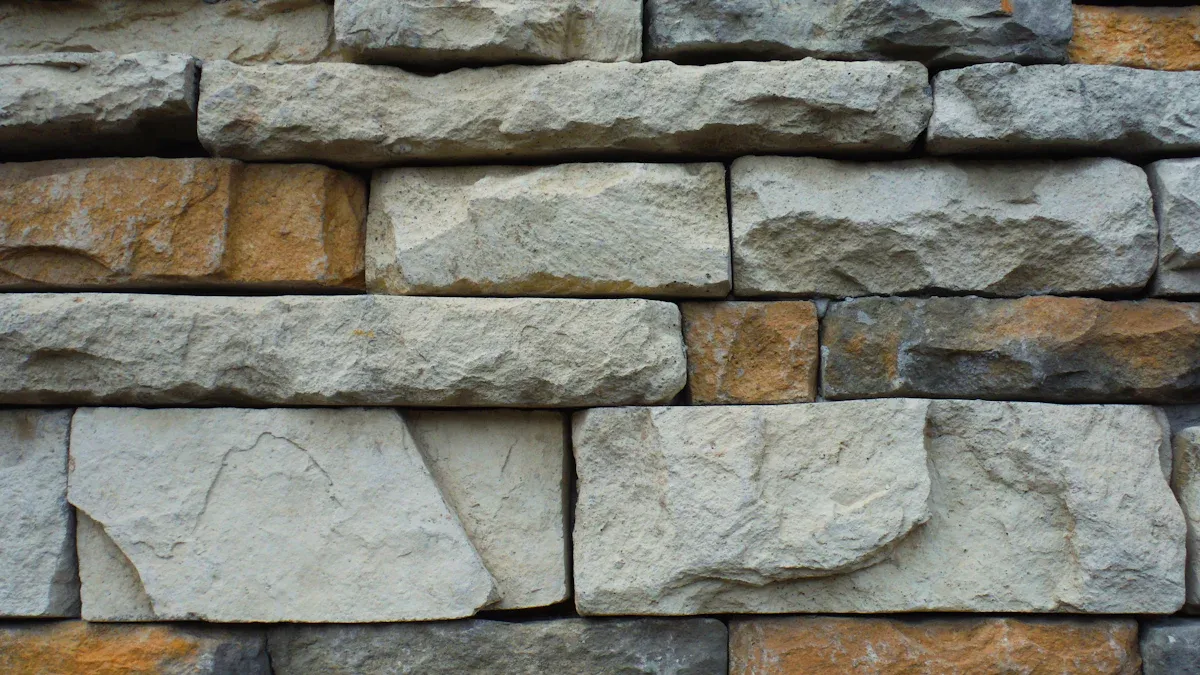
Selecting the right stone for building construction depends on understanding each stone’s unique properties and how they perform in real-world applications. The table below compares four popular stones used in houses, villas, and hotels:
Stone Type | Formation Type | Key Properties | Ideal Uses |
|---|---|---|---|
Granite | Igneous | High durability, low water absorption, minimal maintenance | Kitchen countertops, floors, building exteriors |
大理石 | Metamorphic | Soft, easily carved, visually stunning patterns | Floors, countertops, decorative columns, statues |
Limestone | Sedimentary | Moderate strength, ease of carving, warm and uniform color | Interior/exterior cladding, flooring, architectural detailing |
Sandstone | Sedimentary | Wide color range, decent strength, versatile texture | Façades, walkways, garden walls |
Note: Granite stands out for its strength and resistance to water, making it ideal for high-traffic and wet areas. Marble offers beauty and elegance but needs more care. Limestone and sandstone provide warmth and versatility for both indoor and outdoor spaces.
When considering insulation, strength, and weather resistance, keep these points in mind:
Stone for Building acts mainly as a thermal mass. It absorbs and stores heat but does not insulate well.
Most stones transfer heat and cold easily. Extra insulation is often needed for comfort.
Granite and quartzite offer the best strength and weather resistance. Sandstone and limestone work well in mild climates but may need protection in harsh weather.
Choosing the right stone helps balance durability, appearance, and maintenance for your project.
Building Stones Buying Guide
Selecting the right stone for building construction requires careful planning. Each project has unique needs based on location, climate, and design ideas. Builders and homeowners should start by defining the intended use and environmental conditions. For example, stone for exterior walls must withstand weather changes, while stone for hotel lobbies should highlight aesthetics and durability.
When evaluating stone building materials, consider these essential criteria:
Usage and Environment: Identify where the stone will be used and the climate it must endure.
Physical and Mechanical Properties: Check density, compressive strength, flexural strength, abrasion resistance, and freeze-thaw durability. These properties affect how the stone performs in different construction methods.
Surface Safety: Make sure the stone meets slip resistance standards, especially for flooring in villas and hotels.
Chemical and Salt Durability: Assess resistance to acids, alkalis, and salt, which is important for kitchens, bathrooms, and coastal projects.
Aesthetic Qualities: Review color, texture, patterns, and finishes to match your architectural stone options.
Installation Compatibility: Confirm the stone works with your chosen installation system.
Mock-Up and 质量控制: Use mock-ups to preview the final look and ensure quality during construction.
Sustainability: Look for environmental certifications and green standards.
Tip: Always request samples and documentation from suppliers. This helps verify stone properties and ensures the best results for your stone construction project.
Careful selection leads to beautiful, safe, and long-lasting structures.
Conclusion: Choosing Stone for Your Project
Selecting the right stone for building construction shapes the success of your house, villa, or hotel project. Each stone type offers unique properties, from granite’s strength to marble’s elegance. Builders and designers must consider stone uses, construction methods, and architectural stone options when planning.
Practical Steps for Stone Selection:
Define Project Needs:
Identify the main purpose for each area. Use durable stones like quartzite or granite for high-traffic zones. Choose limestone or sandstone for warm, inviting spaces.Evaluate Stone Properties:
Review compressive strength, porosity, and weather resistance. Match these features to your climate and design ideas.Balance Cost and Maintenance:
Compare initial costs with long-term upkeep. Stone veneer offers affordability and easy installation. Natural stone provides lasting value.Consider Aesthetics:
Select colors and textures that fit your vision. Marble and travertine add luxury. Slate and basalt create modern looks.
Tip: Request samples of stone building materials before making final decisions. This helps you visualize the finished space.
Stone Type | Best Use | Key Property |
|---|---|---|
Granite | Kitchens, exteriors | High durability |
大理石 | Lobbies, bathrooms | Elegant appearance |
Limestone | Facades, fireplaces | Warm texture |
Stone Veneer | Accent walls, facades | Lightweight, affordable |
Consulting with stone construction professionals ensures the best results. Experts can guide you through installation methods and help you select the most suitable stone for your project. Their advice protects your investment and brings your design ideas to life.
Selecting the right stone type shapes your building’s strength and style. Consider durability, aesthetics, cost, and maintenance for each stone property. Review the comparison tables and buying guide for practical advice.
For expert results, consult a stone construction professional.
Explore more design ideas and construction methods to match your project’s needs.
常见问题
What is the most durable stone for building construction?
Granite and quartzite are the most durable stone types. These stones resist scratches and weather, making them ideal for high-traffic areas in houses, villas, and hotels.
How do I choose the right stone for my project?
Tip: Match stone properties to your needs. Consider durability, maintenance, and design ideas. Request samples of stone building materials before making a final decision.
Can stone veneer be used outdoors?
Yes, stone veneer works well for exterior facades. It offers lightweight installation and mimics natural stone, making it a popular choice in modern stone construction methods.