
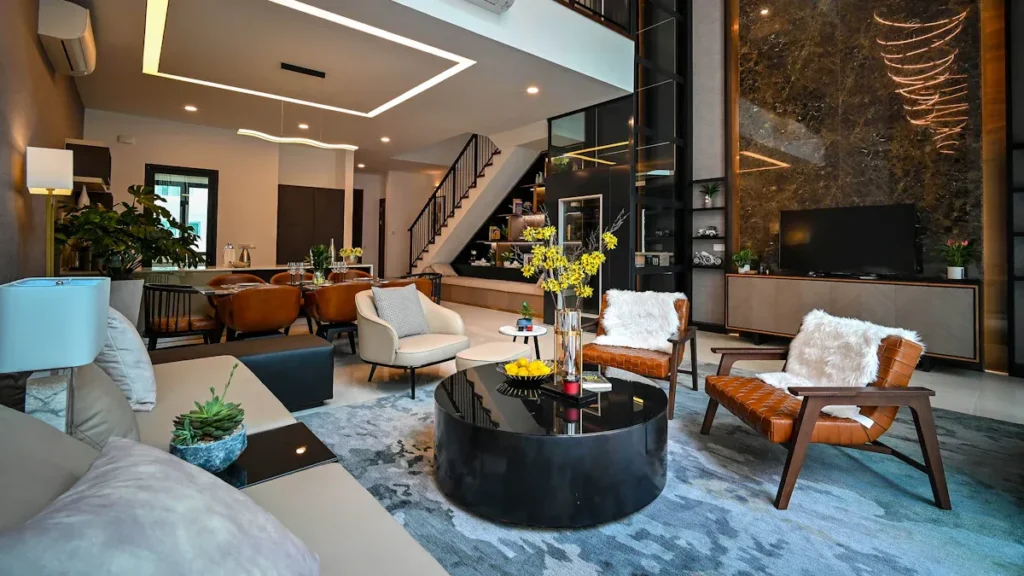
A luxury hotel room layout prioritizes spaciousness, premium materials, and intuitive design. Guests expect seamless comfort and style. Modern technology elevates the experience with features such as IoT controls, voice assistants, and smart locks.
- IoT enables guests to adjust room settings for personalized comfort.
- Automation streamlines tasks and enhances staff interaction quality.
- Smart systems optimize energy and wellness, creating memorable stays.
Designers seeking five-star comfort blend these elements to achieve exceptional guest satisfaction. Adapt these principles for your next Hotel Room Layout project.
Key Takeaways
- Prioritize guest comfort and privacy in hotel room layouts to enhance satisfaction.
- Incorporate luxurious materials and smart technology for a high-end experience.
- Utilize innovative design ideas to maximize space and functionality in every room.
- Adapt layouts to meet the needs of different guest profiles, such as families and business travelers.
- Invest in intuitive zoning and flow to create a seamless and enjoyable guest experience.
15 Best Hotel Room Layout Ideas for Luxury Comfort
1. Open-Concept Layout with Seamless Flow
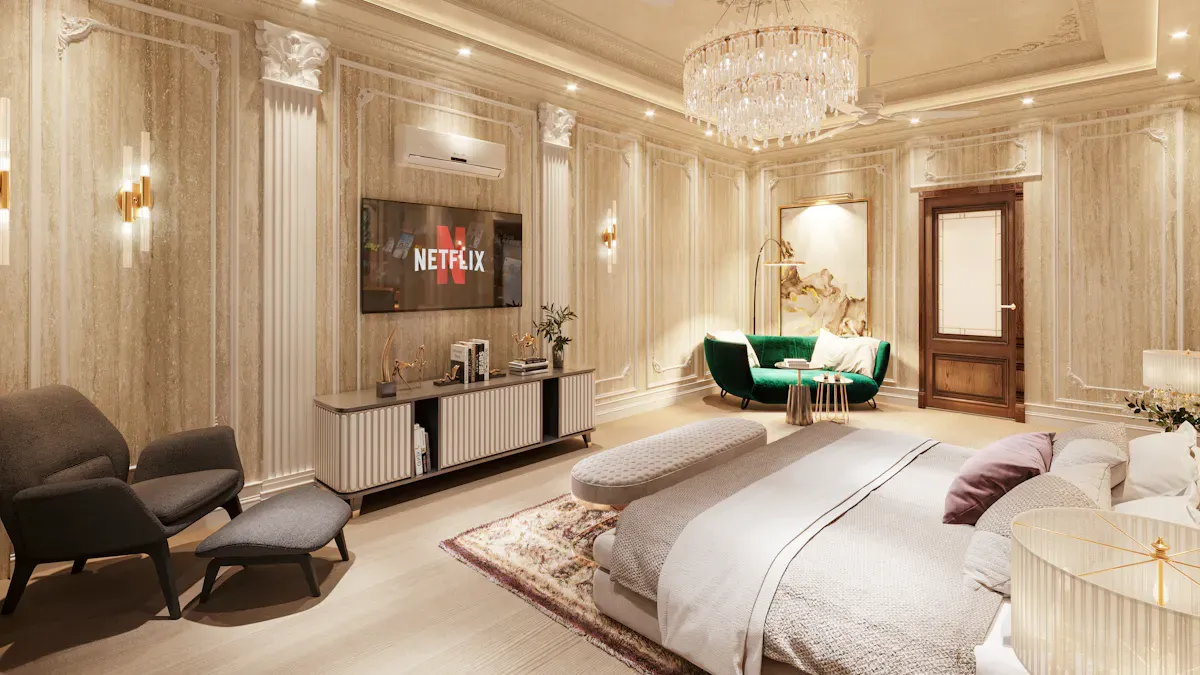
Open-concept hotel room layout designs create a sense of spaciousness and luxury. By removing unnecessary partitions, the luxury hotel room interior feels larger and more inviting. This approach optimizes space and allows for ergonomic furniture placement. Guests enjoy enhanced comfort and increased functionality. Minimal clutter and streamlined design promote relaxation and wellness.
| Core Principles of Ergonomic Hotel Room Layouts | Benefits of Ergonomic Hotel Room Layouts |
|---|---|
| Space Optimization | Enhanced Guest Comfort |
| Comfortable Furniture Placement | Increased Functionality |
| Minimal Clutter | Better Health and Wellness |
Luxury hotel room interior design often incorporates premium materials and tailored décor, ensuring every detail communicates prestige and comfort. This layout is ideal for 5-star hotel suites and presidential rooms, where seamless flow is essential.
2. Bedroom + Living Room Split Layout
A split layout separates the bedroom from the living area, maximizing space efficiency and privacy. This luxury hotel room layout enhances aesthetic appeal and creates distinct zones for sleeping, lounging, and working. Guests benefit from their own space away from the primary bedroom, which increases comfort and privacy.
| Advantage | Description |
|---|---|
| Maximizes space efficiency | Separates areas for sleeping, lounging, and working. |
| Enhances aesthetic appeal | Adds visual interest and depth to the room. |
| Improves guest privacy | Distinct zones ensure guests feel comfortable and not intruding on others’ space. |
3. Compact Smart Layout for Small Hotel Rooms
Compact smart layouts maximize space efficiency in small hotel room layouts without sacrificing comfort. Creative furniture arrangements define functional zones. Floating furniture and multi-functional pieces optimize every inch. Modular designs allow flexibility and customization. Natural light and mirrors make the space feel larger and more inviting. Sliding doors keep the room open and uncluttered.
- Creative furniture layouts define zones.
- Floating furniture creates open floor space.
- Multi-functional furniture optimizes use.
- Modular designs maximize flexibility.
- Natural light brightens the space.
- Mirrors add depth and increase perceived space.
- Sliding doors save space.
Small hotel room layout ideas often feature these strategies to deliver luxury hotel room interior design in compact spaces.
4. Suite-Style Layout with Separate Lounge Area
Suite-style hotel room layouts distinguish themselves with larger living spaces, separate bedrooms, and lounge areas. Kitchenettes add convenience and privacy. These layouts are more spacious and functional than standard hotel room floor plan layouts. Guests enjoy exclusive access to amenities, making the luxury hotel room interior ideal for extended stays and entertaining.
Luxury hotel room design in suites often includes high-quality bedding, curated décor, and tailored furniture. This approach is common in hotel presidential suite room layouts and 5-star hotel suite room layouts.
5. Window-Focused Layout with Scenic Views
Window-focused hotel room layouts prioritize floor-to-ceiling windows that frame scenic views and allow natural light. This luxury hotel room interior design enhances guest satisfaction and creates a luxurious atmosphere. The increased natural light improves mood and relaxation, leading to higher booking rates.
- Floor-to-ceiling windows frame scenic views.
- Natural light improves guest satisfaction.
- Luxurious feel increases booking rates.
Luxury hotel bedroom layouts often feature panoramic views, especially in penthouse suites and high-end properties.
6. Minimalist Layout with Hidden Storage
Minimalist hotel room layouts use hidden storage solutions to create a clean and orderly environment. Wall-mounted wardrobes maximize vertical space, making the luxury hotel room interior feel open and spacious. Smart storage reduces clutter and enhances guest enjoyment.
| Storage Solution | Benefit |
|---|---|
| Wall-mounted wardrobes | Maximizes vertical space |
| Hidden compartments | Keeps room clean and organized |
| Clever organization | Improves visual appeal and relaxation |
Luxury hotel room interior design relies on effective organization to improve guest experience and operational efficiency.
7. Dual-Function Furniture Layout
Dual-function furniture optimizes space in luxury hotel room layouts. Murphy beds and sofa beds transition between lounge and sleep spaces. Ottomans with hidden storage provide seating and keep clutter out of sight. Folding desks and extendable tables accommodate work and leisure. Convertible furniture maximizes functionality in smaller spaces.
- Murphy or sofa beds transition between lounge and sleep.
- Ottomans with hidden storage store blankets, pillows, or luggage.
- Folding desks and extendable tables support work and leisure.
- Convertible coffee tables transform into dining tables.
Luxury hotel room interior design often incorporates these elements for flexibility and comfort.
8. Bathroom-Centric Luxury Layout
Bathroom-centric luxury hotel room layouts feature spa-like bathrooms with wellness-focused designs. Rainfall showers, ambient lighting, and natural colors create a calming environment. Smart technology, such as smart mirrors and water monitoring systems, improves convenience and sustainability. Floating vanities and wet-room designs optimize space.
| Feature | Description | Enhancement to Guest Experience |
|---|---|---|
| Sustainability | Eco-friendly fixtures and materials | Promotes environmental responsibility |
| Wellness-focused designs | Spa-like showers and lighting | Enhances relaxation and comfort |
| Warm aesthetics | Natural colors and textures | Creates a calming, luxurious environment |
| Smart technology integration | Smart mirrors and water monitoring | Improves convenience and sustainability |
| Space optimization | Floating vanities and wet-room designs | Maximizes space and usability |
| Hybrid luxury | Premium design with low maintenance materials | Balances luxury with practicality |
Luxury hotel room interior design in bathroom-centric layouts elevates guest wellbeing and aligns with modern expectations.
9. Work-Friendly Layout with Dedicated Desk Area
A dedicated work area in hotel room layouts enhances business traveler satisfaction and productivity. Good lighting, comfortable seating, and reliable internet create an environment conducive to focus and efficiency. Luxury hotel room interior design integrates ergonomic desks and chairs, ensuring guests can work comfortably.
Business travelers in 5-star hotel rooms expect these features for a seamless experience. Hotel room layout ideas for work-friendly spaces are essential in luxury hotel bedroom suites.
10. Family-Friendly Connecting Layout
Family-friendly connecting hotel room layouts use adjoining rooms with interconnected doors for convenience and privacy. Each room has individual amenities, coordinated furniture, and shared spaces for family interaction. Soundproofing ensures comfort and privacy.
| Design Strategy | Description |
|---|---|
| Adjoining Rooms | Interconnected doors for convenience and privacy |
| Individual Amenities | Each room equipped with its own amenities |
| Coordinated Furniture | Cohesive design across rooms |
| Shared Spaces | Seating or dining areas for family interaction |
| Soundproofing | Ensures comfort and privacy for families |
Luxury hotel room interior design for families prioritizes comfort, privacy, and functionality.
11. Boutique Hotel Artistic Layout
Boutique hotel room layouts differentiate guest experiences with unique design and décor. Custom and vintage furniture, intimate spatial planning, and a philosophy of discovery set boutique hotels apart from traditional luxury hotel room interior design.
| Design Element | Boutique Hotels | Traditional Hotels |
|---|---|---|
| Room Count | 10-100 rooms | 100-500+ rooms |
| Furniture Sourcing | Custom and vintage | Catalog purchases |
| Design Philosophy | Uniqueness and discovery | Consistency and reliability |
| Spatial Planning | Intimacy prioritized | Efficiency optimized |
- 73% of boutique hotel guests prioritize unique design and décor.
- 67% are willing to sacrifice standard amenities for distinctive design and personalized service.
Luxury hotel room layout ideas for boutique hotels focus on individuality and memorable guest experiences.
12. Smart Room Layout with Tech Integration
Smart hotel room layouts integrate advanced technology for luxury accommodations. AI assistants, AR/VR entertainment, smart room keys, and automated check-in workflows enhance guest convenience and security. Personalized room adjustments for temperature, entertainment, and lighting improve comfort.
- AI-powered chatbots for 24/7 service requests.
- Automated check-in reduces wait times.
- Personalized room adjustments based on guest preferences.
- Predictive analytics for real-time booking and occupancy data.
- Service robotics automate high-volume tasks.
Luxury hotel room interior design in smart layouts delivers a modern, seamless experience for guests.
13. Spa-Inspired Relaxation Layout
Spa-inspired hotel room layouts promote guest relaxation and wellness. Steam showers, fitness options, sleep enhancements, mindfulness activities, and in-room spa services create a pampering environment.
| Feature | Benefit |
|---|---|
| Steam Showers | Improves circulation, detoxification, relaxation, and skin health |
| Fitness Options | Encourages physical activity and well-being |
| Sleep Enhancements | Promotes better sleep quality |
| Mindfulness Activities | Supports mental clarity and relaxation |
| In-room Spa Services | Provides massages and facials for guests |
Luxury hotel room interior design in spa-inspired layouts supports guest wellbeing and creates a memorable stay.
14. High-End Penthouse Layout Concept
High-end penthouse hotel room layouts feature split-level designs, expansive terraces, double-height ceilings, and panoramic views. Luxurious materials, custom furnishings, and private chef or butler services elevate the experience. Private basement entrances, grand foyers, and unique design elements blend modern and classic styles.
- Split-level design with multiple bedrooms.
- Over 5,000-square-foot terrace with infinity pool and outdoor kitchen.
- Double-height ceilings and floor-to-ceiling windows.
- Gold onyx marble and custom furnishings.
- Private chef and mixologist services.
- Expansive terraces and grand dining rooms.
- Private basement entrance and striking foyer.
- Custom-carved bathtubs and around-the-clock butler service.
- Emphasis on panoramic views and natural light.
- Selection of high-quality design brands.
- Low-profile furniture for unobstructed views.
Luxury hotel room interior design in penthouse layouts harmonizes aesthetics and functionality for ultimate comfort.
15. Eco-Friendly Sustainable Layout Design
Eco-friendly hotel room layouts prioritize energy efficiency, sustainability, and guest comfort. Improved comfort and reduced noise enhance the guest experience. Energy-efficient hotels offer long-term savings through water and energy management. These layouts align with guest values and attract budget-conscious travelers.
- Improved comfort and reduced noise in energy-efficient hotels.
- Long-term savings through energy and water efficiency.
- Energy management reduces operational costs.
Luxury hotel room interior design in sustainable layouts balances environmental responsibility with high-quality guest experiences.
Tip: Adapting these hotel room layout ideas can transform any space into a luxury hotel room interior. Focus on intuitive zoning, premium materials, and seamless technology integration for 5-star hotel comfort.
Hotel Room Layout Ideas by Room Size
Small Hotel Room Layout (20–30㎡)
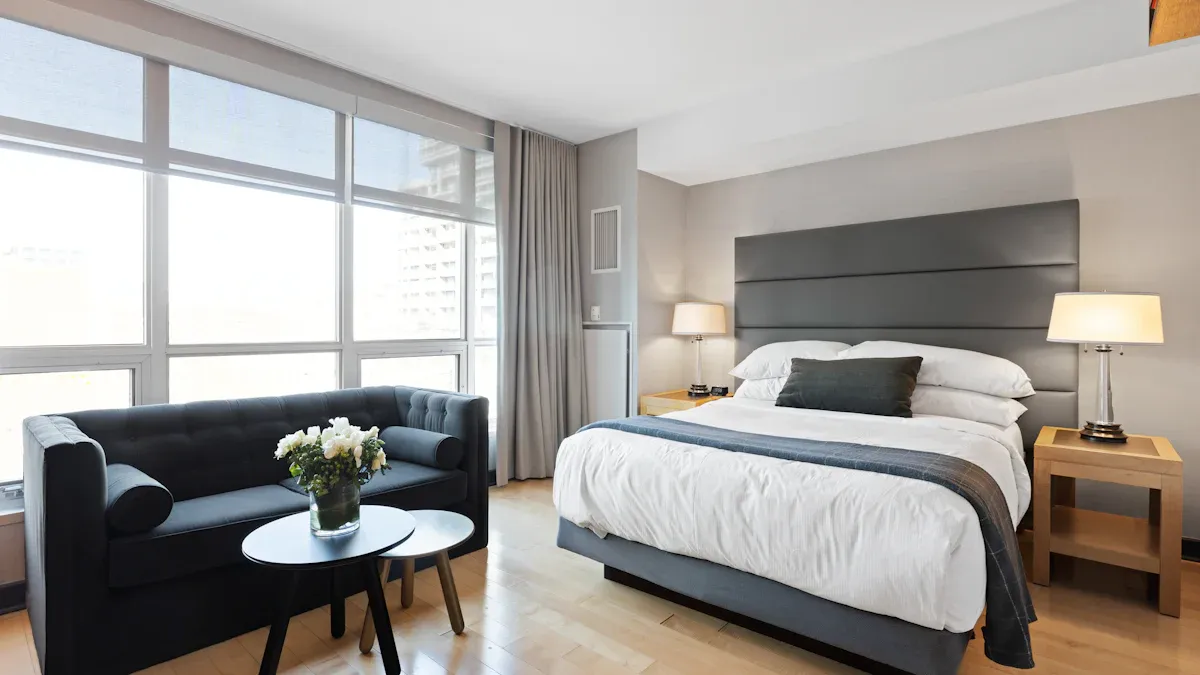
Small hotel room interior design requires creative solutions to maximize comfort and function. Designers often use a compact smart hotel room layout to make the most of every square meter. Floating beds, wall-mounted desks, and sliding doors help open up the space. Mirrors and glass partitions expand visual boundaries. Built-in wardrobes and under-bed storage keep the hotel room floor plan layout tidy. Natural light from large windows brightens the room and enhances the sense of space. Minimalist furniture with slim profiles maintains flow and avoids clutter. In a small hotel room layout, every detail matters for guest satisfaction.
Medium Room Layout (30–50㎡)
Medium-sized hotel room interior design balances luxury features with efficient use of space. The layout of a hotel room in this range often includes distinct zones for sleeping, working, and relaxing. Designers aim for a 65–70% room-to-corridor ratio, ensuring most of the area is guest-accessible. Ceiling heights between 2.7 and 3.0 meters improve airflow and perceived spaciousness. Bathrooms take up 15–20% of the total area, providing function without waste. Smart zoning uses lighting or material changes to define areas. Built-in wardrobes, under-bed drawers, and concealed minibars keep the hotel room layouts organized. Layered lighting adds depth and warmth. Mirrors and neutral palettes expand the visual space. Minimalist, multifunctional furniture supports a seamless hotel room layout.
| Design Strategy | Description |
|---|---|
| Room-to-Corridor Ratio | 65–70% efficiency for guest-accessible spaces |
| Ceiling Height | 2.7–3.0 meters for spaciousness and airflow |
| Bathroom Ratio | 15–20% of total room area |
| Zoning | Separate sleeping, working, and refreshment areas |
| Window-to-Floor Ratio | Minimum 15% glazing for natural light |
| Integrated Storage | Built-in wardrobes, under-bed drawers, concealed minibars |
| Lighting Layers | Ambient, task, and accent lighting for depth |
| Visual Illusion | Mirrors and neutral palettes to expand space |
| Minimalist Furniture | Slim, multifunctional pieces for flow |
Luxury Suite Layout (50㎡+)
Luxury suite hotel room interior design stands out with generous space and premium amenities. These hotel suite room layouts feature at least two rooms, often including a separate living area and a full kitchen. Guests enjoy high-end amenities such as large LCD TVs, daily newspaper delivery, in-room safes, private balconies, and fast WiFi. The hotel presidential suite room layout may offer a grand foyer, spa-inspired bathrooms, and custom furnishings. Service expectations rise to exceptional levels, with options like private butlers or chef services. The suite hotel room layout creates a true home-away-from-home experience, blending privacy, comfort, and style.
| Feature | Standard Hotel Room | Luxury Suite |
|---|---|---|
| Size | 200-400 sq ft | 430-4,000 sq ft |
| Number of Rooms | 1 | At least 2 |
| Living Area | No | Yes |
| Kitchen | No | Full kitchen |
| Enhanced Amenities | Basic | High-end amenities |
| Service Expectations | Standard | Exceptional |
- Separate living and sleeping areas
- Full kitchens with modern appliances
- Enhanced amenities: 40-in LCD TV, daily newspaper, in-room safe, private balcony, WiFi
Tip: For any hotel room interior design, matching the layout to the room size ensures guests experience both comfort and efficiency.
Why Hotel Room Layout Matters for Guest Experience?
First Impressions and Space Flow
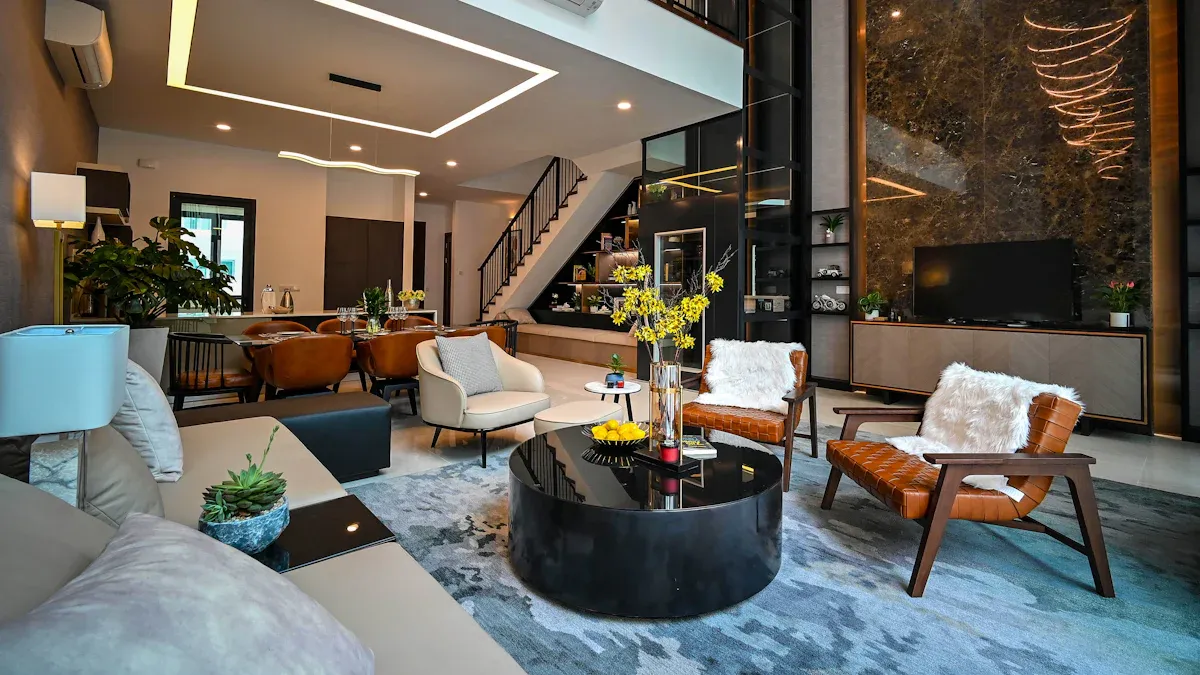
The layout of a hotel room shapes the first impression guests receive upon entering. A clear and intuitive flow allows guests to move easily between zones, such as sleeping, relaxing, and working. This immediate sense of order and openness signals a luxury environment. According to hospitality industry surveys:
- A well-designed room layout enhances comfort and usability.
- It reflects the hotel’s brand, leading to positive reviews.
- A clear layout affects how easily guests move around and use the furniture.
A thoughtful hotel room layout can leave a lasting impression, while a confusing setup may cause discomfort. Adjusting the layout to match guest needs and the function of each space is essential for a positive guest experience.
Impact on Guest Comfort and Reviews
The guest experience depends on how well the room supports comfort and convenience. A luxury hotel room layout increases the likelihood of positive reviews and repeat visits. Guests appreciate layouts that allow them to relax, work, and sleep without obstacles. The right arrangement boosts the hotel’s reputation and can lead to higher occupancy rates. When guests feel at ease, they are more likely to share their satisfaction online, which benefits the hotel’s long-term success.
- A well-designed room increases the likelihood of positive reviews.
- Guests are more likely to return for future stays.
- It boosts the hotel’s reputation and can lead to increased occupancy rates.
Layout vs. Interior Design: What’s the Difference?
The layout of a hotel room focuses on the spatial arrangement and flow, ensuring intuitive movement and comfort. Effective planning creates clear zones, such as calm sleeping areas and well-lit workspaces. This arrangement improves both guest experience and operational efficiency, making housekeeping and maintenance easier. Interior design, on the other hand, adds style and atmosphere through materials, lighting, and décor. Smart design choices can reduce maintenance costs and help staff focus on delivering a memorable guest experience. Both layout and interior design play vital roles in creating a true sense of luxury.
Common Hotel Room Layout Mistakes to Avoid
Poor Furniture Placement
Furniture placement plays a critical role in the layout of a hotel room. Poor arrangements can obstruct pathways, create congestion, and disrupt circulation. Guests may struggle to navigate the space, which detracts from the luxury hotel room layout experience. A well-structured hotel room floor plan layout enhances navigation and maintains visual calm. The following table illustrates the impact of furniture placement:
| Aspect | Impact on Guest Movement | Impact on Perceived Luxury |
|---|---|---|
| Poor Furniture Placement | Obstructs pathways, causes congestion, creates awkward circulation | Detracts from overall luxury experience |
| Well-Structured Arrangements | Enhances navigation, maintains visual calm | Signals investment and permanence, enhancing luxury impression |
Designers should prioritize ergonomic support and efficient layouts in hotel suite room layout and small hotel room layout concepts.
Lack of Functional Zoning
Functional zoning defines clear areas for sleeping, working, and relaxing. Without proper zoning, hotel room layouts feel cramped and lack privacy. Guests may find it difficult to distinguish between spaces, which reduces comfort and satisfaction. Efficient zoning is essential in luxury hotel room layout and 5 star hotel room layout designs. It also improves operational efficiency in properties like MGM Grand hotel room layout and Disneyland hotel room layout. Proper zoning supports guest needs and enhances the overall ideas.
Tip: Use lighting, furniture, and material changes to create distinct zones in suite hotel room layout and hotel presidential suite room layout.
Insufficient Lighting Planning
Lighting is a key factor in guest comfort. Poor lighting can frustrate guests and leave them feeling tired. It may negatively affect the perception of room size and decor. Insufficient lighting often results from cost-cutting or lack of design consideration. A well-lit hotel room layout feels welcoming and functional. Proper lighting is essential for enjoyable stays in any hotel room floor plan layout.
- Poor lighting leads to guest frustration and discomfort.
- Adequate illumination supports relaxation and productivity.
- Task lighting should address guest needs in luxury hotel room layout.
Ignoring Guest Privacy
Privacy is fundamental in hotel room layouts. Ignoring privacy can lead to noise disturbances and discomfort. Lack of soundproofing or poorly placed doors reduces guest satisfaction. Guests expect privacy in hotel suite room layout and hotel presidential suite room layout designs. Designers should incorporate soundproofing and thoughtful spatial planning to ensure a 5 star hotel room layout delivers a premium experience.
Note: Privacy features, such as connecting doors and acoustic insulation, are essential for family-friendly and luxury hotel room layout concepts.
How to Choose the Right Hotel Room Layout for Your Project?
Based on Hotel Type (Budget vs Luxury)
Selecting the right hotel room layout starts with understanding the property type. Budget hotels focus on affordability and essential amenities. These properties often use single-level or connecting rooms to maximize space and simplify navigation. In contrast, luxury hospitality design emphasizes sophistication, premium materials, and a sense of exclusivity. Duplex rooms and open-plan layouts are common in luxury hotels, offering guests more space and privacy. The table below highlights how different room types align with hotel categories:
| Room Type | Description |
|---|---|
| Single-Level Room | Traditional layout with all features on one level for easy access |
| Duplex Room | Two levels, separating living and sleeping areas for added sophistication |
| Connecting Rooms | Ideal for families, allowing movement between rooms for privacy and comfort |
| Open-Plan Room | Modern design blending sleeping, living, and dining areas for seamless flow |
A luxury hotel room layout often incorporates open-plan or duplex concepts to deliver a unique guest experience.
Target Guest Profiles (Business, Family, Couples)
Understanding your target guests is crucial for creating a functional layout. Business travelers need a dedicated workspace, high-speed internet, and ergonomic furniture. Families benefit from connecting or quad rooms, which provide space and privacy. Couples often prefer double rooms with flexible configurations. The table below outlines key features for each guest profile:
| Room Type | Suitable For | Key Features |
|---|---|---|
| Double Room | Couples, travel companions | Flexible configurations, main inventory for most hotels |
| Triple Room | Families, small groups | Affordable option for staying together |
| Quad Room | Families with kids | More space for families or groups without high costs |
| Business Room | Business travelers | Large desk, ergonomic chair, fast internet, business facilities |
A well-planned hotel room floor plan layout ensures each guest segment enjoys comfort and convenience.
Balancing Cost and Design Efficiency
Balancing cost with design efficiency is essential in any hotel project. Developers often use repetitive layouts to speed up construction and reduce labor costs. This approach supports a functional layout while maintaining quality. Brands like Hampton by Hilton optimize space, allowing more rooms within the same building footprint. Cost-effective solutions, such as modular furniture and smart zoning, help maintain style and comfort. In luxury hospitality design, it is possible to achieve elegance without overspending by focusing on efficient layouts and durable materials.
Tip: Prioritize layouts that streamline construction and operations while still delivering a memorable guest experience.
Conclusion: Designing Hotel Rooms for Comfort and Profitability
Creating a successful hotel room layout is about more than aesthetics—it’s a strategic balance between guest comfort and business performance. A well-planned layout enhances the guest experience by improving functionality, flow, and relaxation, which directly leads to better reviews, higher occupancy rates, and stronger brand loyalty.
At the same time, smart design decisions—such as efficient space planning, multifunctional furniture, and optimized zoning—help maximize room value and reduce operational costs. Whether you’re designing for a boutique hotel, a business property, or a luxury resort, the right layout can significantly impact both guest satisfaction and long-term profitability.
At George Group, we specialize in delivering one-stop furnishing and design solutions tailored to modern hospitality needs. By combining innovative design concepts with practical execution, we help hotel owners create spaces that are not only visually impressive but also highly functional and cost-efficient.
Tip:
Consistent attention to layout and materials ensures lasting value. Investing in quality design pays off through higher occupancy and guest satisfaction.
A successful hotel room layout ideas portfolio combines creativity with proven principles. Designers who focus on intuitive flow, privacy, and a luxurious feel achieve superior results. Every hotel presidential suite room layout and small hotel room layout can become a personal oasis with the right approach. The path to profitability starts with a commitment to excellence in design.
| Key Takeaways for Hotel Room Layout Success |
|---|
| Prioritize guest comfort and privacy |
| Use luxurious materials for a high-end look |
| Apply innovative design ideas |
| Adapt layouts for different guest profiles |
| Invest in intuitive zoning and flow |
FAQ
What defines a contemporary hotel room layout?
A contemporary hotel room layout features open spaces, clean lines, and functional zones. Designers use modern materials and technology to create comfort. Elegance comes from simplicity and thoughtful details. This approach ensures the hotel feels inviting and up-to-date for every guest.
How can elegance be achieved in a modern hotel room?
Elegance in a modern hotel room comes from high-quality finishes, balanced proportions, and subtle color palettes. Designers select contemporary furnishings and integrate smart technology. The layout of a hotel room should highlight comfort and sophistication, creating a refined atmosphere for guests.
Why is the layout of a hotel room important for guest satisfaction?
The layout of a hotel room impacts comfort, privacy, and usability. A well-planned hotel room floor plan layout supports relaxation and productivity. Contemporary design principles ensure smooth movement and clear zones. Elegance in arrangement leads to positive reviews and repeat visits.
What are the benefits of a contemporary suite hotel room layout?
A contemporary suite hotel room layout offers separate living and sleeping areas. This design provides privacy and flexibility. Modern amenities and elegant finishes enhance the guest experience. The hotel benefits from increased satisfaction and higher occupancy rates.
How do modern and contemporary hotel room layouts differ?
Modern hotel room layouts focus on minimalism and function, using materials like glass and steel. Contemporary layouts adapt current trends, blending elegance with comfort. Both styles prioritize open space, but contemporary design evolves with guest preferences and new technologies.