
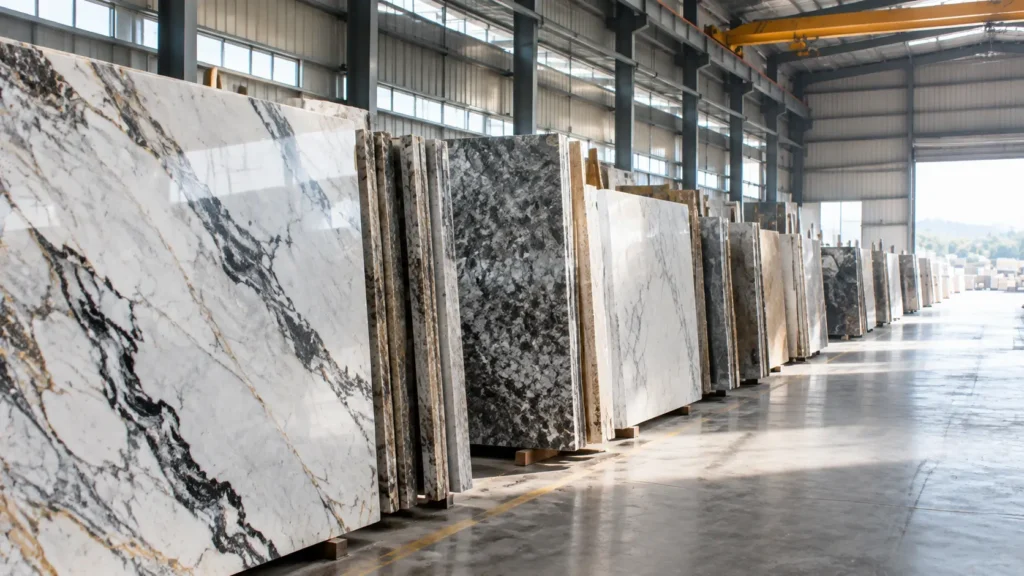
Finding a stone supplier in China is easy. Finding a supplier that can consistently deliver the right material, finish, and quality standards is much harder. Before placing a large order, buyers need to verify the supplier’s production capability, export experience, and quality control process.
Even experienced buyers need to verify stone suppliers carefully before placing large orders. Requesting samples, checking production capability, and reviewing quality control procedures can help reduce sourcing risks.
Key Takeaways
- Define your stone needs first to find suppliers that match your project.
- Use trusted platforms and trade shows to discover potential suppliers.
- Verify suppliers with licenses, video calls, and customer references.
- Test samples and hire inspectors to ensure quality before bulk orders.
- Watch for red flags like very low prices or full upfront payment demands.
Sourcing Stone Suppliers in China
Define Your Stone Requirements
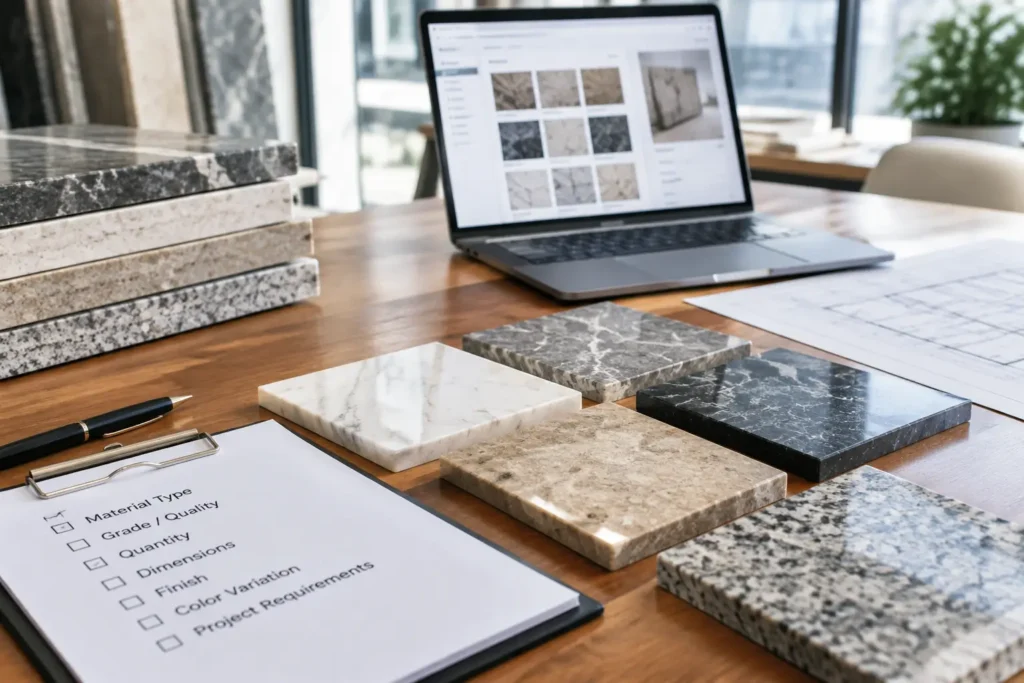
Every successful sourcing journey begins with precise specifications. Buyers must define the stone type, grade, quantity, and project requirements first. This clarity narrows the field of potential partners. The stone industry in China offers a remarkable variety of material options. Buyers who specify dimensions, finish, and acceptable color variation receive more accurate quotes.
This step reveals which companies handle custom orders effectively. Many suppliers showcase their material range and stone selection ability through online catalogs and product galleries. Professional stone suppliers in China often provide CAD drawing support. They also discuss processing capabilities, including edge profiling and surface treatment. Export experience matters equally. Buyers should request examples of past custom stone orders to evaluate craftsmanship. The best partners offer comprehensive stone solutions that cover both common and exotic materials. Their services extend beyond simple supply to include technical advice and logistics coordination. Defining requirements first ensures a focused search.
Top Platforms and Trade Shows
Three major online platforms dominate the search for stone suppliers in China. Alibaba, Made-in-China.com, and Global Sources list thousands of verified companies.However, online platforms should only be the starting point. Product photos and supplier badges cannot replace factory verification, sample testing, and direct communication. Buyers can filter by product category and trade capacity. These platforms display product photos and client reviews. They also offer direct messaging systems.
For face-to-face evaluation, nothing replaces a dedicated trade show. The Xiamen International Stone Fair attracts over 2,000 exhibitors and more than 150,000 attendees. This event showcases a wide variety of stone products across many price points and product types. Visitors examine these products from raw blocks to finished slabs. They discuss processing techniques and customization options with factory representatives. The fair provides access to an extensive range of stone solutions under one roof. Exhibitors demonstrate their stone product variety through live displays. Buyers can compare multiple suppliers in days rather than weeks. Attending such events builds relationships that facilitate a reliable supply of different stones over time. Many suppliers highlight their services and processing expertise at these venues. Factory representatives discuss tailored solutions for specific project requirements. This method helps buyers find stone solutions that match exact project specifications. Combining online research with event attendance creates a comprehensive sourcing strategy.
Vetting Natural Stone Suppliers in China
Licenses and Certifications
Verification begins with documents. A legitimate natural stone supplier in China should hold a valid business license. Buyers should request a scanned copy and cross-check the registration number on the National Enterprise Credit Information Publicity System. Export qualifications matter for international orders. The supplier must hold a valid import-export license. This document confirms legal authority to ship goods across borders.
Certifications provide additional assurance. Depending on the destination market and product type, buyers may also need to check relevant certifications or compliance documents. For example, ISO 9001 may indicate a supplier has a documented quality management process. Buyers sourcing from natural stone suppliers in China for regulated markets should confirm these credentials early. A china natural stone supplier for global projects typically maintains multiple certifications. These documents support smooth customs clearance and reduce compliance risk.
Before committing to a large order, request a small sample or trial order whenever possible. This allows buyers to evaluate material quality, processing accuracy, packaging standards, and communication efficiency before scaling up. This sample reveals actual quality. It also confirms the supplier’s willingness to serve small buyers. A confident provider accepts a trial order without hesitation. This step costs little and prevents costly mistakes later.
Video Calls and Customer References
Documents alone cannot confirm factory operations. A live video call lets buyers inspect the premises directly. Ask to see the production floor, the warehouse, and the quality control station. Request a walkthrough of the processing lines. Watch how workers handle materials. This visual check exposes whether the facility matches the supplier’s claims.
Customer references carry equal weight. Ethical providers willingly share testimonials. Buyers should ask for references from recent customers, especially for large projects. A reliable supplier should provide at least one relevant contact. Reluctance to share references is a warning sign. So is a vague response about past clients.
Several red flags deserve attention during vetting:
- Inability to provide references or credentials
- Evasive answers about sourcing, lead times, or minimum orders
- Vague scope language with no mention of required permits
- Pressure to pay the full amount upfront
- Pressure to place a large order before answering a smaller inquiry
Buyers should independently confirm a supplier’s track record. Do not rely only on the supplier’s claims. Check reviews across multiple platforms. Verify licensing records. A supplier who avoids giving any proof of recognized industry standing poses real risk. These natural stone suppliers in China may deliver substandard products or disappear after payment.
A thorough vetting process combines document checks, live factory tours, and reference calls. This layered approach protects buyers from fraud. It also identifies partners who offer genuine solutions and dependable services. The effort invested here pays off across the entire project lifecycle.
Factory vs. Trading Company: Which Supplier Model Fits Your Project?
When sourcing stone from China, buyers may work with direct manufacturers, stone factories, or trading companies. The right choice depends on project size, material requirements, customization needs, and the level of supplier coordination required.
Working With a Direct Stone Factory
A direct stone factory manages its own production process, from material selection and cutting to surface finishing and packing. This option is often suitable for buyers who need customized products, large quantities, or consistent specifications across multiple orders.
Key advantages include:
- Direct communication with the production team
- Better visibility into manufacturing processes
- More flexibility for custom sizes, finishes, and designs
- Easier quality control for large projects
For example, villa developments, hotels, commercial buildings, and large residential projects often require closer coordination between the buyer and production team.
However, working directly with a factory may require buyers to have clearer specifications and stronger project management capabilities. Some factories may also focus on specific stone types or production capabilities rather than providing a wide range of materials.
Working With a Stone Trading Company
A trading company works with multiple manufacturers and can help buyers source different materials through one supplier. This model can be useful for smaller projects, mixed-material orders, or buyers who need additional sourcing support.
Common advantages include:
- Access to a wider range of stone materials
- Easier communication for buyers unfamiliar with the Chinese market
- Ability to combine products from different factories
- Support with supplier coordination and export arrangements
The limitation is that buyers may have less direct control over the original production process. It is important to understand where materials are produced and how quality is managed before placing an order.
How Should Buyers Choose?
There is no single supplier model that works for every project. Before making a decision, buyers should consider:
- Project size and order volume
- Level of customization required
- Number of materials needed
- Required quality control involvement
- Experience with international sourcing
For large-scale or highly customized projects, direct factory cooperation may provide better production control. For smaller or multi-material projects, a reliable trading partner may offer more convenience and coordination support.
The key is not simply choosing between a factory or a trading company, but verifying whether the supplier can provide transparent communication, consistent quality, and reliable export support.
Quality Control for Stone Companies in China
Evaluate the Supplier’s Quality Control Process
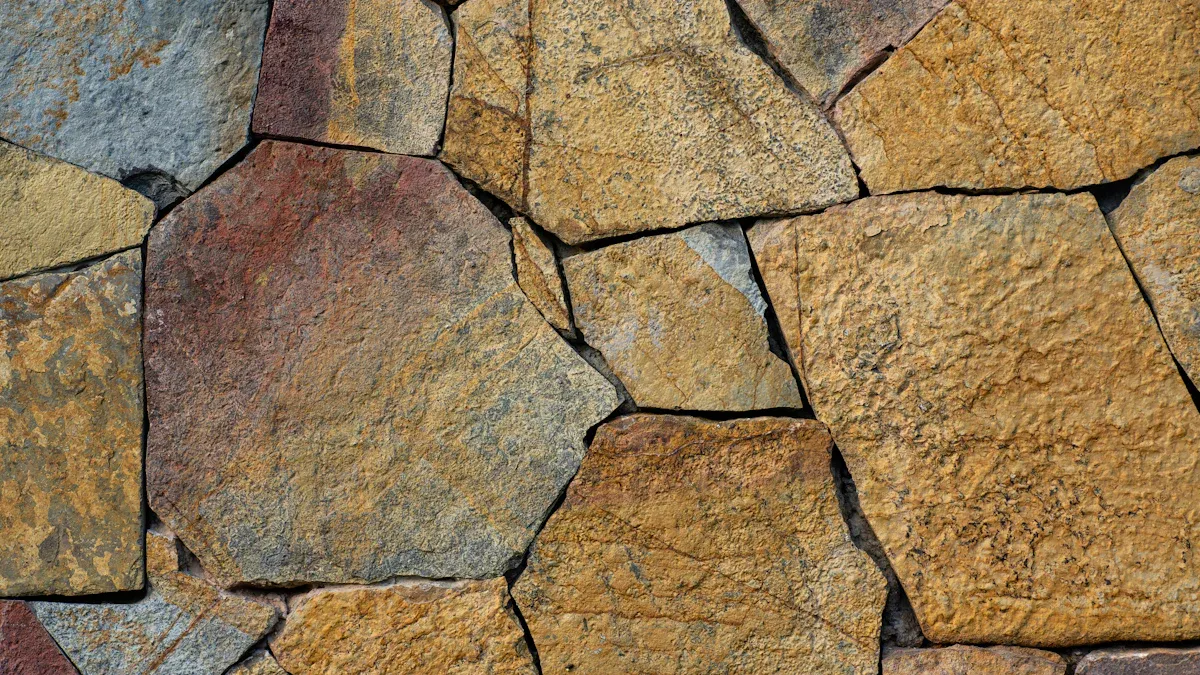
A reliable stone supplier should have a clear quality control process before products leave the factory. Buyers should ask how the supplier manages material selection, processing accuracy, surface finishing, and final inspection.
Instead of only checking the final product, evaluate whether the supplier has consistent procedures throughout production. A professional supplier should be able to explain:
- How raw stone materials are selected before processing
- How color variation is managed between different batches
- How dimensions and surface finishes are checked
- How finished products are inspected before packing
Suppliers with structured quality control processes are more likely to deliver consistent results, especially for large residential projects, commercial developments, or customized stone orders.
For larger projects, buyers may consider third-party inspections from organizations such as SGS or Bureau Veritas. This helps verify that the supplier follows agreed specifications before shipment.
A reliable supplier should not resist reasonable inspection requirements, especially for large-volume or customized orders. Their reports protect buyers from substandard shipments. Stone companies in China with high-standard production accept these inspections without resistance.
Shipping Terms and Contracts
Clear contract terms prevent disputes. Payment milestones, delivery dates, customs documentation, and penalty clauses all belong in writing. A typical structure uses a 30% T/T deposit before production begins. The remaining 70% balance is paid before shipment. Release the balance only after confirming container loading video, pallet-by-pallet photos, and the large-format layout. This 30/70 structure distributes risk fairly. The factory carries partial cutting costs via the deposit. The buyer pays against verified evidence rather than promises.
Incoterms shape risk and cost allocation. The right choice depends on buyer experience and order size.
| Buyer Scenario | Recommended Incoterm | Rationale |
|---|---|---|
| First import, order under $15K | CIF or DDP | Minimize risk and complexity |
| First import, order $15K–50K | CIF | Balance of cost control and simplicity |
| Regular importer with freight forwarder | FOB | Best value; buyer controls freight |
| Large volumes with China logistics agent | EXW | Maximum cost optimization |
| Sample or single-slab order | DDP | Not worth arranging freight |
| Multi-supplier consolidation | EXW | Combine loads from different suppliers |
FOB is the global industry default for most stone imports. The supplier handles Chinese-side logistics while the buyer controls freight rates and shipping schedule.
Demanding 100% prepayment is a red flag. So is delaying the balance past loading. Stone companies in China that refuse standard terms often hide quality problems. A supplier who provides quality stone products and dependable services will accept fair contract conditions. These natural stone suppliers in China understand that stringent quality control benefits both parties. Buyers who enforce stone product quality standards receive consistent products. This approach builds lasting partnerships with stone companies in China.
Red Flags and Common Pitfalls
Too-Good-to-Be-True Pricing
Low prices attract buyers. But extremely low quotes often hide serious problems. Some natural stone suppliers in China deliver substandard materials. Others substitute cheap alternatives for the agreed stone type. Scams also follow unrealistically low prices.
A reliable supplier charges fair market rates. These rates cover raw material costs, processing expenses, and reasonable profit margins. When a quote falls far below competitors, suspicion is warranted. The supplier may use thinner slabs or lower-grade material.
A wide variety of trusted stone suppliers in China operate at competitive price points. Legitimate stone companies in China offer quality stone products at those rates. They do not need to undercut the market drastically. Buyers should request detailed price breakdowns. Buyers should compare multiple quotes and verify products through sample testing. This step reveals whether the price reflects genuine value or hidden compromises.
Price alone should never drive the decision. The cheapest option rarely delivers consistent products. Investing in proper vetting prevents costly replacements later.
Warning Signs During Supplier Verification
Even well-known top natural stone suppliers in China can face quality issues. Some top natural stone suppliers in China develop problems over time. Management changes or cost pressures can reduce quality. Buyers must remain vigilant regardless of reputation.
Opaque communication signals trouble. A supplier who avoids detailed answers may hide production issues. Missing references raise questions. A provider with satisfied customers gladly shares contact information. Refusal to offer video calls is another warning. These calls confirm factory operations and material handling. Experienced natural stone suppliers in China welcome such requests.
Some natural stone suppliers in China push for full upfront payment. This practice removes buyer leverage. Standard terms protect both parties. A supplier demanding full prepayment often lacks confidence in their own products.
Absence of a physical factory address is unacceptable. Stone companies in China without verifiable premises may operate as brokers. Brokers add cost and reduce control over quality. Buyers should confirm the address through maps and video verification. Reputable stone companies in China provide complete contact details upfront.
These warning signs apply to all supplier sizes. Due diligence protects buyers from poor solutions and unreliable services. The effort spent on verification ensures access to genuine stone solutions and dependable processing. A cautious approach yields better long-term outcomes. Buyers who prioritize a variety of verification methods select better products and build stronger partnerships.
The journey to find a reliable stone supplier follows a proven path. Start with clear project requirements. Use verified platforms and trade shows for initial discovery. Vet candidates through video calls and sample orders. Enforce quality control with third-party inspections from firms like SGS or Bureau Veritas. Stay alert for red flags such as unrealistic pricing or opaque communication. Each step in this process reduces risk and builds confidence in your chosen partner. Begin with one small order to test the relationship. Scale up as trust builds. For international projects, working with a supplier that understands material selection, customization requirements, quality control, and export logistics can simplify the entire procurement process. This structured approach ensures consistent quality across every project.
FAQ
How do I verify a supplier before placing a large order?
Request the business license and cross-check the registration number on the National Enterprise Credit Information Publicity System. Confirm export qualifications and ISO or CE certifications. Schedule a live video call to inspect the production floor and warehouse. Ask for references from recent customers. When possible, start with a sample or small trial order before committing to a large purchase.
What should I check when testing stone samples?
Order 8–10 pieces from different warehouse positions, not a single showroom slab. Confirm color, thickness, and finish consistency. Ask the supplier to state finish depth in millimeters. A honed finish equals roughly 60–80 grit. A brushed finish carries 0.3–0.8mm texture depth. Photograph the reference sample in both natural and artificial light.
What payment terms are standard for stone orders?
A typical structure uses a 30% T/T deposit before production and a 70% balance before shipment. Release the balance only after reviewing container loading video and pallet-by-pallet photos.
Demanding 100% prepayment is a red flag. So is delaying the balance past loading.
When should I hire a third-party inspection agency?
Engage SGS or Bureau Veritas for bulk orders. These firms check batch consistency and production timelines. Their reports protect buyers from substandard shipments. Suppliers with high-standard production accept these inspections without resistance. Skipping this step saves little and risks costly replacements.
How can I tell if a stone supplier is a real factory?
Ask for a live factory video tour, production line photos, business registration details, and examples of recent projects. A genuine manufacturer should be able to explain its production process clearly.