
Choosing the right patio floor tiles can completely transform an outdoor space—whether it’s a cozy backyard, a luxury villa terrace, or a high-traffic hotel patio. From durability and slip resistance to style and climate performance, not all outdoor tiles are created equal. In this guide, we round up the best patio floor tiles for houses, villas, and hotel projects, helping you compare materials, designs, and practical features so you can make a confident, long-lasting choice.
Key Takeaways
- Choose durable materials like porcelain tiles for long-lasting outdoor flooring that withstands weather and wear.
- Prioritize slip resistance when selecting tiles, especially for patios near water features, to enhance safety.
- Consider the aesthetic appeal of your patio floor; vibrant tiles can create an inviting atmosphere for both homes and hotels.
- Evaluate maintenance needs; some materials require more upkeep than others, impacting long-term satisfaction.
- Plan your budget carefully, factoring in installation costs and future maintenance to avoid unexpected expenses.
1. Best Patio Floor Tiles for Outdoor Projects
Choosing the right patio floor tiles can make a big difference in both style and function. Many homeowners and hotel designers look for patio floor ideas that balance beauty, safety, and durability. Outdoor flooring options today offer a wide range of choices, from classic natural stone patio floor tiles to modern patterned tile flooring.
Tip: Modular pavers and interlocking deck tiles allow for easy installation and creative patterns. You can change the look of your patio by using different laying styles, such as Stack Bond or Pinwheel.
Here is a quick comparison of popular outdoor tile types:
Tile Type | Characteristics |
|---|---|
Porcelain | Durable and resistant to moisture, making it ideal for outdoor use. |
Ceramic | Offers a variety of designs and is cost-effective for outdoor spaces. |
Natural Stone | Provides an organic feel and is popular for its aesthetic appeal. |
Eco-friendly | Made from sustainable materials, contributing to environmental conservation. |
Textured Tiles | Enhance slip resistance, crucial for safety in wet conditions. |
Many people now prefer tiles that mimic wood or stone. Durability and slip resistance are also top priorities for outdoor flooring. Some patio floor ideas use eco-friendly materials to help protect the environment.
Modular pavers offer flexibility in design and color.
Interlocking deck tiles are DIY-friendly and easy to replace.
Concrete patio flooring can be painted for a custom look.
Painted concrete patio floor designs add color and personality.
1.1 Outdoor Wood Patio Floor Tiles
Outdoor wood patio floor tiles bring a warm, natural look to outdoor spaces while maintaining durability. Typically made from treated hardwood or wood-plastic composite (WPC), they resist moisture, insects, and UV exposure. These tiles are ideal for residential patios, balconies, and villa terraces where a cozy, organic aesthetic is desired with easy installation.
1.2 Interlocking Patio Deck Tiles
Interlocking patio deck tiles are designed for fast, tool-free installation, making them a popular choice for renovation projects. Their modular structure allows water drainage and airflow underneath, reducing mold and water damage. Suitable for houses, apartments, and hotel outdoor areas, they offer flexibility, easy replacement, and low maintenance.
1.3 Ceramic Patio Floor Tiles
Ceramic patio floor tiles provide a cost-effective solution with a wide range of colors, textures, and patterns. When rated for outdoor use, they offer good resistance to moisture and temperature changes. These tiles are commonly used in covered patios, balconies, and low-traffic outdoor areas where style and affordability matter.
1.4 Non-Slip Stone Patio Tiles
Non-slip stone patio tiles are designed for safety without sacrificing appearance. With textured surfaces or natural finishes, they reduce slip risks in wet environments such as poolside patios and hotel walkways. Their strength and weather resistance make them a reliable option for both residential and commercial outdoor projects.
1.5 Porcelain Patio Paver Tiles
Porcelain patio paver tiles combine modern aesthetics with exceptional durability. They are dense, frost-resistant, stain-resistant, and suitable for heavy foot traffic. Square porcelain pavers are widely used in villas, hotels, and public outdoor spaces, offering a clean, contemporary look with long-term performance.
1.6 Spanish Style Patio Floor Tiles
Spanish-style patio floor tiles are known for their decorative patterns and Mediterranean charm. Often used to create statement outdoor spaces, they add character to courtyards, garden patios, and villa terraces. These tiles work especially well in warm climates and projects that emphasize traditional or artistic design.
1.7 Saltillo Patio Floor Tiles
Saltillo patio tiles are handmade clay tiles with warm earth tones and a rustic appearance. They are popular for back patios and garden areas where a natural, traditional look is preferred. With proper sealing, Saltillo tiles perform well outdoors and age beautifully over time.
1.8 Travertine Patio Floor Tiles
Travertine patio floor tiles offer a refined, natural stone look that fits modern and luxury outdoor designs. Naturally slip-resistant and cool underfoot, travertine is commonly used in villa patios, pool decks, and hotel resorts. Its neutral tones blend easily with contemporary landscaping and architecture.
1.9 Dark Grey Outdoor Patio Tiles
Dark grey patio floor tiles deliver a sleek, modern appearance ideal for minimalist and urban outdoor spaces. Often made from porcelain or stone, they hide stains well and pair easily with metal, wood, and glass elements. These tiles are a popular choice for modern houses, rooftop patios, and hotel terraces.
1.10 Solar-Powered Interlocking Patio Tiles
Solar-powered interlocking patio tiles combine flooring and lighting into one smart solution. Integrated LED lights improve nighttime visibility and ambiance while reducing energy costs. These innovative tiles are well-suited for pathways, hotel patios, and outdoor entertainment areas where functionality and visual impact matter.
2. How to Choose the Right Patio Floor Tile
2.1 Material & Durability
Selecting the right material is essential for long-lasting outdoor flooring. Porcelain tiles offer high durability and resist scratches, making them reliable for both residential and hotel patios. Stone options, such as concrete pavers and bricks, provide strength but may need sealing to prevent erosion and stains. Wood tiles look attractive but can rot and require frequent replacement in wet climates. Travertine, marble, and slate are natural choices that blend well with landscapes and architectural styles. Porcelain stands out for its low porosity and ability to handle freeze-thaw cycles, while softer stones like limestone and terracotta may show wear after repeated exposure to moisture.
Porcelain: Lasts for decades, minimal maintenance.
Stone: Strong, needs sealing.
Wood: Beautiful, but less durable outdoors.

2.2 Slip Resistance & Safety
Safety is a top priority for any patio. Tiles with textured surfaces help prevent slips, especially in wet conditions. The industry uses the Dynamic Coefficient of Friction (DCOF) to measure slip resistance. For exterior wet areas, tiles should have a DCOF of at least 0.60. Pool decks and patios exposed to water require surfaces that meet this standard. Proper maintenance keeps tiles safe and reduces the risk of accidents.
Product Use Classification | Example Area | DCOF per ANSI A326.3 |
|---|---|---|
Exterior Wet (EW) | Patios, walkways | ≥ 0.60 Wet |
Pool Decking (IW+) | Poolside areas | ≥ 0.60 Wet |
Tip: Always choose non-slip tiles for patios near water features or in rainy climates.
2.3 Weather & Climate Resistance
Outdoor tiles must withstand harsh weather, including heavy rain, snow, and intense sunlight. Porcelain maintains its color and structure under extreme conditions. Slate and travertine are durable when sealed properly. Materials like brick and porcelain resist chipping, fading, and cracking. Regular sealing protects natural stone from water penetration and staining. Choosing weather-resistant flooring saves money on repairs and replacements.
Porcelain: Handles UV rays and moisture.
Slate: Durable, needs sealing.
Brick: Resists fading and chipping.
2.4 Installation & Maintenance
Installation and maintenance costs vary by material. Concrete tiles are affordable, ranging from $1 to $15 per square foot. Ceramic and porcelain tiles cost between $2 and $30 per square foot. Natural stones like slate, travertine, and granite can cost up to $83 per square foot. Maintenance depends on the material. Porcelain requires little upkeep, while stone and wood need regular sealing or replacement. Consider your budget and the size of your patio when choosing the best patio floor ideas.
Tile Type | Cost per Square Foot |
|---|---|
Concrete | $1 – $15 |
Ceramic | $2 – $20 |
Porcelain | $2 – $30 |
Slate | $4 – $22 |
Travertine | $4 – $83 |
3. Patio Floor Tile Design Ideas (Designer-Approved)
3.1 Modern & Minimalist Patios
Modern patios often feature clean lines and simple shapes. Designers recommend cement tiles for urban and industrial looks. These tiles come in many shades and add a sleek touch to any outdoor space. Hydraulic flooring brings retro charm with geometric or floral patterns. Non-slip porcelain tiles work well near water features, improving safety. Many homeowners choose natural designs that mimic stone or wood for a minimalist effect. These patio floor ideas create a calm and inviting atmosphere.
Cement tiles: Urban style, many colors.
Hydraulic flooring: Retro patterns, geometric or floral.
Non-slip porcelain: Safe for wet areas.
Natural design: Stone or wood look, fits minimalist themes.
3.2 Rustic & Mediterranean Styles
Rustic patios use materials that blend with nature. Travertine and terracotta tiles offer warmth and texture. Spanish-style tiles add vibrant color and pattern, perfect for Mediterranean-inspired outdoor flooring. Designers often select natural stone for its timeless appeal. Wood-look tiles also fit rustic settings, providing durability and easy maintenance. These choices give the patio a cozy and welcoming feel.
Tip: Mix different tile shapes and sizes for unique design inspiration.
3.3 Luxury Villa & Hotel Patios
Luxury patios in villas and hotels often use poured concrete, stamped concrete, or concrete pavers. These options offer flexibility in design and suit various styles. Stamped concrete is popular for its affordable patio flooring and ability to mimic stone or brick. Concrete pavers provide durability and easy replacement, making them ideal for high-traffic areas.
Type of Concrete | Initial Cost | Long-term Cost | Design Versatility |
|---|---|---|---|
Stamped Concrete | Lower | Higher due to resealing and repairs | High |
Concrete Pavers | Higher | Minimal replacement cost | Moderate to High |
Stamped concrete allows for creative patterns and colors. Concrete pavers offer a premium look and last for years. These floor options help transform any patio into a stylish retreat.
Bonus: Patio Floor Tile Buying Tips for House & Hotel Projects
Choosing the right tiles for your patio can make a big difference in the look and function of your outdoor space. Whether you are planning a residential upgrade or a hotel renovation, understanding the main buying factors helps you avoid costly mistakes and ensures long-lasting results.
Here is a comparison of important factors for residential and hotel projects:
Factor | Residential Considerations | Hotel Considerations |
|---|---|---|
Durability | Avoid glazed tiles in wet areas to reduce slippage risks. | Tiles must meet DCOF and breaking strength standards for safety. |
Maintenance | Look for tiles that are easy to clean and may need sealing. | Regular maintenance is crucial due to high foot traffic. |
Aesthetics | Match tiles to personal taste and home design. | Align tile style with hotel branding and guest experience. |
When exploring patio floor ideas, keep these practical tips in mind:
Outdoor tiles should be easy to clean and maintain.
Stain resistance and special treatments can help tiles last longer.
Evaluate the total cost, including installation and ongoing maintenance.
Note: Always check local building codes before installing outdoor flooring. Climate matters too. Select tiles that can handle your area’s weather conditions.
Common mistakes can affect the quality of your patio floor:
Prepare the surface properly to avoid uneven tiles.
Try different layouts before finalizing your design, especially with diy stenciled tiles.
Check existing pavers for stability.
Use the correct trowel size for your tile.
Apply thinset evenly to prevent cracking.
Choose the right grout for a clean finish.
Diy patio flooring projects offer flexibility and creativity. Many homeowners enjoy experimenting with patterns and materials. Hotels often require professional installation to meet safety standards. The right outdoor flooring can transform any patio into a welcoming retreat.
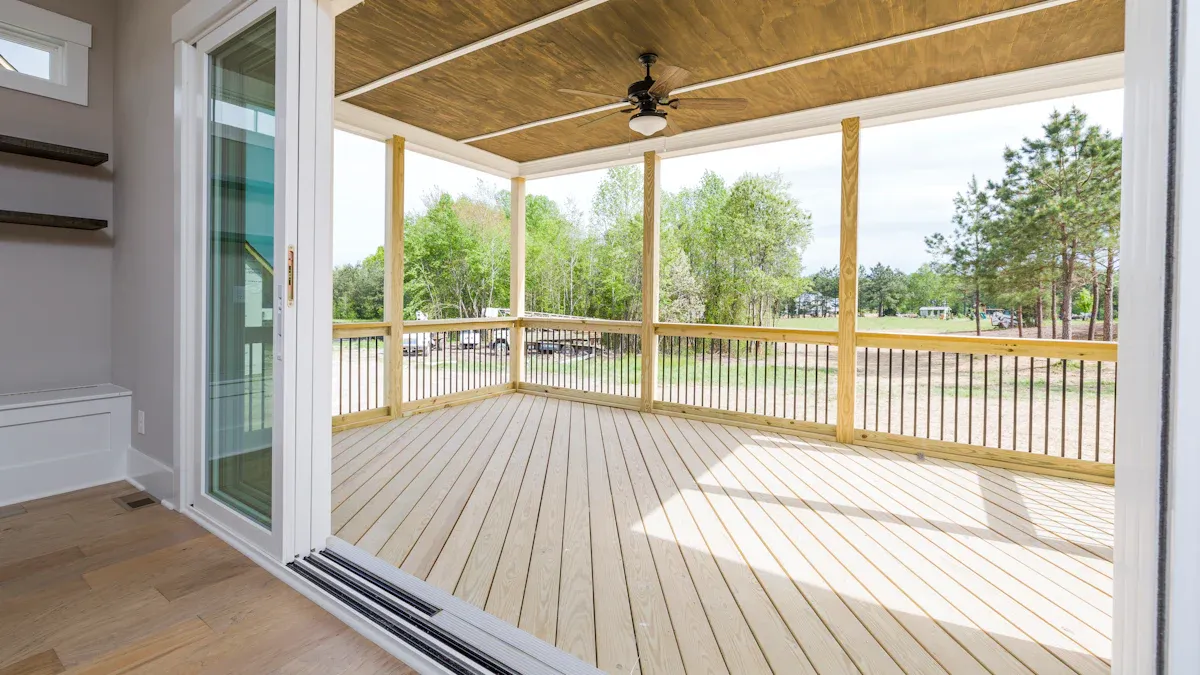
Wood and Composite Decking
Features
Wood and composite decking are popular choices for outdoor spaces. Natural wood decking uses real timber, such as cedar or pressure-treated pine. Composite decking combines wood fibers with plastic to create a durable material. Both options offer a smooth, comfortable surface for walking and relaxing. Many homeowners and hotels choose these materials for their classic look and versatility.
Benefits
Wood decking brings a warm, natural appearance to any patio. It can be stained or painted to match different styles. Composite decking resists moisture and pests, making it a strong choice for long-lasting patios. Composite boards do not splinter, which improves safety for guests and children. Both materials can be installed over most surfaces, creating a level floor for outdoor furniture.
Drawbacks
Wood decking can warp, crack, or rot over time, especially in wet climates. It needs regular staining, sealing, and treatment to prevent damage from insects and moisture. Composite decking costs more at first, but it lasts longer and needs less care. Some people find that composite boards can get hot in direct sunlight.
Note: Choosing between wood and composite depends on your climate, maintenance preferences, and budget.
Feature | Wood Decking | Composite Decking |
|---|---|---|
Durability | Prone to warping, cracking, and rotting | More durable, lasts for decades |
Maintenance Requirements | Requires regular staining, sealing, and treatment for pests | Minimal maintenance, only semi-annual cleaning needed |
Environmental Resistance | Susceptible to moisture and insect damage | Resistant to moisture and pests |
Long-term Cost | Higher ongoing maintenance costs | Better long-term investment with warranties of 25 to 50 years |
Cost
Initial Costs: Natural wood decking is usually less expensive to install, with prices from $15 to $25 per square foot. Composite decking ranges from $30 to $45 per square foot.
Long-Term Value: Composite materials often last twice as long as wood and may come with a 20-year warranty.
Maintenance Costs: Wood decks need regular upkeep, costing $400 to $1,000 each year. Composite decks require only occasional cleaning.
Suitability
Wood and composite decking work well for both homes and hotels. Natural wood decking fits traditional patios and rustic designs. Composite decking suits modern spaces and high-traffic areas, such as hotel patios, because it stands up to heavy use and weather. Both options create a comfortable, attractive floor for outdoor living.
Brick Patio Floor Ideas
Features
Brick patio floors offer a classic look that suits many outdoor spaces. Bricks come in different colors and textures, which allows for creative designs. Homeowners and hotel designers often choose outdoor brick flooring for its timeless appeal and ability to blend with gardens or courtyards. Popular patterns include:
Basketweave: Bricks are laid horizontally and vertically in pairs, creating a woven effect.
Herringbone: Bricks form a zigzag pattern, giving a traditional and formal style.
Running Bond: Rows of bricks are offset, making a simple and familiar layout.
Jack-on-Jack (Stacked Bond): Bricks are placed in even rows and columns, creating a gridlike look.
These patterns help break up large areas and add visual interest to any patio.
Benefits
Outdoor brick flooring is durable and can last for decades with proper care. Bricks resist fading and withstand heavy foot traffic, making them ideal for hotel patios and busy residential areas. The surface stays cool in summer and provides good traction, which helps prevent slips. Brick paver patio floor designs also allow for easy repairs since damaged bricks can be replaced individually. Many people appreciate the eco-friendly nature of bricks, as they are made from natural clay.
Tip: Choose a herringbone brick patio for extra strength and a striking visual effect.
Drawbacks
Brick tile patio floor installations require a stable base to prevent shifting. Bricks can crack in areas with freeze-thaw cycles if not installed correctly. Moss and weeds may grow between bricks, which means regular cleaning is needed. Some patterns, like running bond, may need more cuts and careful planning. Brick patios can become uneven over time if the foundation settles.
Cost
The cost of installing outdoor brick flooring is higher than gravel or concrete but less than natural stone. Brick pavers usually cost $14 to $24 per square foot, including installation. This price reflects the labor needed for pattern layouts and the quality of materials.
Types of patio materials | Cost per square foot (with installation) |
|---|---|
Gravel (2 to 3 inches thick) | $2.35 – $6.20 |
Concrete slab (smooth/brushed) | $4 – $9 |
Concrete slab (stained/acid finish) | $5.50 – $12.50 |
Concrete slab (stamped finish) | $8 – $16 |
Concrete pavers | $8.70 – $16.70 |
Brick pavers | $14 – $24 |
Natural stone pavers | $15 – $31 |
Flagstone pavers | $13.65 – $31.65 |
Suitability
Brick paver patio floor designs work well for both homes and hotels. They suit traditional, rustic, and formal outdoor spaces. Outdoor brick flooring is a good choice for patios that need durability and style. Brick tile patio floor patterns can make small areas feel larger and add charm to large courtyards. Choose bricks for patios where long-term value and classic design matter most.
Non-Slip Stone Tiles for Outdoor Flooring
Features
Non-slip stone tiles are designed to improve safety in outdoor spaces. These tiles have textured surfaces that help prevent slips, especially when the patio gets wet. The most common materials include slate, travertine, and porcelain stoneware. Each tile has a unique texture, ranging from subtle bumps to deep ridges, which increases grip underfoot. Matte finishes are often used because they reduce slipperiness compared to glossy surfaces. Some tiles have higher porosity, which helps absorb water and reduces puddles, but these may need sealing to stay in good condition.
Aspect | Description |
|---|---|
Texture | Subtle bumps or pronounced ridges for better grip |
Finish | Matte finish lowers slipperiness |
Porosity | Absorbs water, may require sealing |
Maintenance | Needs regular cleaning and inspection |
Benefits
Non-slip stone tiles offer several advantages for outdoor areas:
The non-slip surface enhances safety, especially in wet conditions.
Durable materials like slate and travertine withstand harsh weather.
Natural textures and colors add beauty and complement many patio designs.
Every porcelain stoneware ceramic surface has specific technical properties that contribute to its success across various applications. The surface’s unique grip significantly lowers the risk of slipping in wet conditions or when water is present.
Drawbacks
Some drawbacks exist with non-slip stone tiles. Tiles with high porosity can absorb stains if not sealed properly. Regular cleaning is important to keep the surface safe and attractive. Moss or algae may grow in damp areas, which can make the tiles slippery if not removed. Installation costs can be higher than other patio materials.
Periodic washing with mild detergent and water removes dirt and grime.
Specialized tile cleaners help with stubborn stains.
Promptly address spills to prevent permanent marks.
Inspect for cracks or loose tiles to maintain safety.
Cost
The price of non-slip stone tiles varies by material and finish. Slate and travertine tiles usually cost between $10 and $30 per square foot, including installation. Porcelain stoneware tiles can range from $8 to $25 per square foot. Maintenance costs are moderate, mostly involving cleaning and occasional sealing.
Suitability
Non-slip stone tiles are ideal for patios in homes and hotels where safety is a priority. They work well around pools, walkways, and any outdoor floor that may get wet. These tiles suit both modern and traditional designs, making them a flexible choice for many projects.
Outdoor Spanish and Decorative Tiles
Features
Outdoor Spanish and decorative tiles stand out for their vibrant patterns and rich colors. These tiles often feature hand-painted designs inspired by Mediterranean and Moorish traditions. Many are made from dense materials that resist moisture and stains. Their surfaces are designed to handle heavy use and changing weather. The following table highlights the main features:
Feature | Description |
|---|---|
Durability and Resistance | Highly resistant to wear, scratches, chips, and cracks; suitable for high-traffic areas. |
Maintenance and Aesthetics | Low maintenance, easy to clean, available in various styles and colors. |
Moisture and Stain Resistance | Completely waterproof, denser than ceramic tiles, highly resistant to stains. |
Eco-friendliness | Incorporates recycled materials, reducing environmental impact. |
Weather Resistance | Designed to withstand harsh weather conditions, ensuring longevity and sustainability. |
Benefits
Spanish and decorative tiles bring a unique personality to any patio. Their bold patterns create a lively atmosphere, making outdoor spaces feel inviting. These tiles are easy to clean and require little upkeep. Many are made with eco-friendly materials, which helps reduce environmental impact. Their durability means they can handle frequent gatherings and heavy foot traffic. Waterproof surfaces prevent stains and make them ideal for outdoor use.
Tip: Use decorative tiles as borders or accents to highlight specific areas of your patio.
Drawbacks
Some Spanish tiles are handmade, which can lead to slight variations in color and size. This adds charm but may not suit those who prefer uniformity. Installation can be more complex, especially with intricate patterns. Decorative tiles may cost more than standard options, and some designs can fade if exposed to direct sunlight for many years.
Cost
Traditional Spanish tiles are handmade and can vary in price based on size and design.
Decorative tiles are suitable for various outdoor applications, but prices depend on the complexity of the pattern and material.
These tiles often cost more than basic ceramic or concrete options.
Suitability
Spanish and decorative tiles work well for patios in both homes and hotels. They suit Mediterranean, Spanish, and eclectic design styles. Their durability and weather resistance make them a smart choice for outdoor floor surfaces that see frequent use. These tiles help create a memorable and stylish patio that stands out.
Gravel and Artificial Grass
Features
Gravel and artificial grass offer two distinct options for outdoor surfaces. Gravel consists of small stones that create a permeable layer, allowing water to drain easily. Artificial grass uses synthetic fibers designed to mimic the look and feel of real turf. Both materials require a level base for proper installation. Artificial grass often needs a layer of crushed stone or gravel underneath to support drainage and prevent water pooling. Many installers use a weed cloth to stop unwanted growth. An infill layer helps artificial grass maintain its shape and comfort.
A level surface prevents stagnant water.
Weed cloth reduces maintenance.
Infill keeps artificial grass upright and soft.
Benefits
Gravel provides a natural look and is easy to install. It allows rainwater to pass through, reducing puddles on the patio. Artificial grass stays green year-round and does not need mowing or watering. It is durable and withstands heavy use, making it suitable for busy outdoor areas. Many people choose artificial grass for allergy relief, as it contains no pollen. Both options work well for creating a low-maintenance floor.
Tip: Artificial grass is available in many styles and colors, so you can match it to your patio design.
Drawbacks
Gravel can shift over time, creating uneven surfaces. Weeds may grow through if the weed cloth is not installed properly. Artificial grass has a higher initial cost due to preparation and materials. It can become hot in direct sunlight and may require frequent cleaning to remove debris. Poor installation can lead to drainage problems or visible seams.
Pros of Artificial Grass | Cons of Artificial Grass |
|---|---|
Easy to find professionals for installation. | High initial installation cost due to preparation and materials. |
Low lifetime cost compared to natural grass maintenance. | Requires proper planning and base preparation to avoid drainage issues. |
Durable and withstands significant wear and tear. | Can become hot to touch in high temperatures. |
No need for watering, mowing, or pesticides. | May require frequent cleaning to remove debris. |
Available in various styles and colors. | Can harbor bacteria if not maintained properly. |
Ideal for allergy sufferers due to zero pollen. | Damage can be noticeable when patching. |
Provides a natural look and feel. | Installation can create seams that pose tripping hazards. |
UV stable and resistant to fading. | Not immune to static electricity buildup. |
Cost
Gravel is one of the most affordable patio materials. Installation costs range from $2 to $6 per square foot. Artificial grass costs more, with prices from $8 to $14 per square foot, including base preparation. Maintenance costs for both options remain low over time. Artificial grass saves money by eliminating the need for watering and mowing.
Suitability
Gravel and artificial grass suit many outdoor spaces. Gravel works well for informal patios, garden paths, and areas with good drainage. Artificial grass is ideal for patios where a green look is desired without the upkeep of real turf. Both materials fit residential and hotel projects, especially where low maintenance and durability are important.
Outdoor Carpet and Rugs
Features
Outdoor carpet and rugs offer a flexible way to add comfort and style to any patio. These products come in many colors, patterns, and sizes. Most outdoor rugs use synthetic materials that resist moisture and fading. Some options include recycled plastic, which is lightweight and eco-friendly. Others use natural fibers, best for covered spaces. The table below shows common materials and their performance in different weather conditions:
Material Type | Weather Resistance | Best Use Cases |
|---|---|---|
Polypropylene Rugs | Resists fading, stains, and moisture | Outdoor rugs, decks, pool areas |
Recycled Plastic Rugs | Eco-friendly, lightweight, often reversible | Pool deck rugs, casual backyard setups |
Natural Fiber Rugs | Best for covered areas, not rain-resistant | Covered porches, shaded patios |
Polyester Rugs | Fade-resistant, soft underfoot | Semi-sheltered outdoor spaces |
Performance Rugs | Resistant to mold, mildew, heavy traffic | High-use areas, durable outdoor rugs |
Benefits
Outdoor carpet and rugs create a soft surface underfoot, making the patio more inviting. They help define seating or dining areas and add color to the space. Many outdoor rugs resist stains and dry quickly after rain. These products can cover rough or uneven surfaces, improving safety and comfort. Some rugs are reversible, offering two looks in one.
Tip: Choose a rug with a non-slip backing to keep it in place during windy days.
Drawbacks
Outdoor rugs may need regular cleaning to prevent mold or mildew, especially in damp climates. Natural fiber rugs do not handle rain well and may wear out faster if left uncovered. Some lightweight rugs can shift or blow away in strong winds. Over time, colors may fade with constant sun exposure.
Cost
Outdoor carpets are usually more affordable than permanent patio flooring. Synthetic materials keep costs low and make these rugs easy to replace. Their durability means fewer replacements, which saves money in the long run. Most outdoor rugs require only simple cleaning, reducing maintenance expenses.
Suitability
Outdoor carpet and rugs work well for both homes and hotels. They suit patios where comfort and style matter. These products fit spaces that need a quick update or where permanent changes are not possible. Rugs can also protect the floor underneath from scratches and stains.
When exploring patio floor ideas, consider these priorities for your patio:
Durability: The material should last and handle weather.
Safety: Slip resistance helps prevent accidents.
Style: The right look creates an inviting space.
Budget: Balance quality with cost.
Material | Benefits | Considerations |
|---|---|---|
Natural Stone | Durable, unique, low maintenance | Higher cost, needs sealing |
Reclaimed Wood | Sustainable, unique character | Needs care, possible pests |
Recycled Composite Decking | Eco-friendly, easy to clean | Not real wood, can get hot |
Permeable Paving | Prevents flooding, eco-friendly | Higher installation costs |
Choosing the best floor for your patio can increase property value and appeal. Professional installers offer design expertise and support for large projects. The right patio floor transforms outdoor spaces into beautiful retreats.
FAQ
What is the most durable material for outdoor flooring?
Porcelain tiles offer high durability and resist moisture. They last for years with minimal maintenance. Many designers choose porcelain for hotel and residential patios.
How do I maintain my patio floor tiles?
Sweep regularly to remove debris. Wash with mild soap and water. Seal natural stone tiles every year. Check for cracks or loose tiles to keep the surface safe.
Are non-slip tiles necessary for a patio near a pool?
Non-slip tiles help prevent accidents in wet areas. They provide extra grip and improve safety for patios near pools or water features.
Can I install patio floor tiles myself?
Many interlocking deck tiles and modular pavers are DIY-friendly. Follow manufacturer instructions for best results. Complex patterns or heavy materials may need professional installation.
What is the best way to choose a patio floor design?
Consider climate, budget, and style preferences. Look at samples in person. Ask for expert advice if you plan a large or commercial patio project.