
Ask three flooring contractors what wood flooring costs and you’ll get three different answers, and all of them will be technically true. That’s because “wood flooring” covers everything from a $4 utility-grade oak plank to $16-a-foot American walnut, and the material is only about half the bill. Labor, subfloor work, trim, and waste quietly double the number most people have in their head when they walk into a showroom.
This guide puts real numbers on the table: installed costs per square foot, how species and construction change the price, the line items that inflate quotes, and when the investment pays you back. Whether you’re flooring one living room or speccing an entire development, the math below is the math contractors and suppliers actually use.
The Short Answer: What Wood Flooring Costs Right Now
For most projects in the US, expect these installed ranges:
| Type | Material only (per sq ft) | Installed (per sq ft) |
| Engineered hardwood | $5 to $11 | $9 to $20 |
| Solid hardwood | $5 to $16 | $11 to $25 |
| High-end engineered (thick wear layer, wide plank) | $8 to $15+ | $14 to $25+ |
| Labor only | $4 to $9 |
These figures line up with national cost surveys like Angi’s hardwood flooring cost data. For a 1,000-square-foot project, that works out to roughly $9,000 to $20,000 for engineered wood and $11,000 to $25,000 for solid hardwood. A full 2,000-square-foot home in solid hardwood typically lands between $18,000 and $50,000 depending on species and layout complexity.
Why such wide ranges? Because the wood itself is only the starting point. Let’s break down what moves the number.
What Actually Drives the Price
1. Species
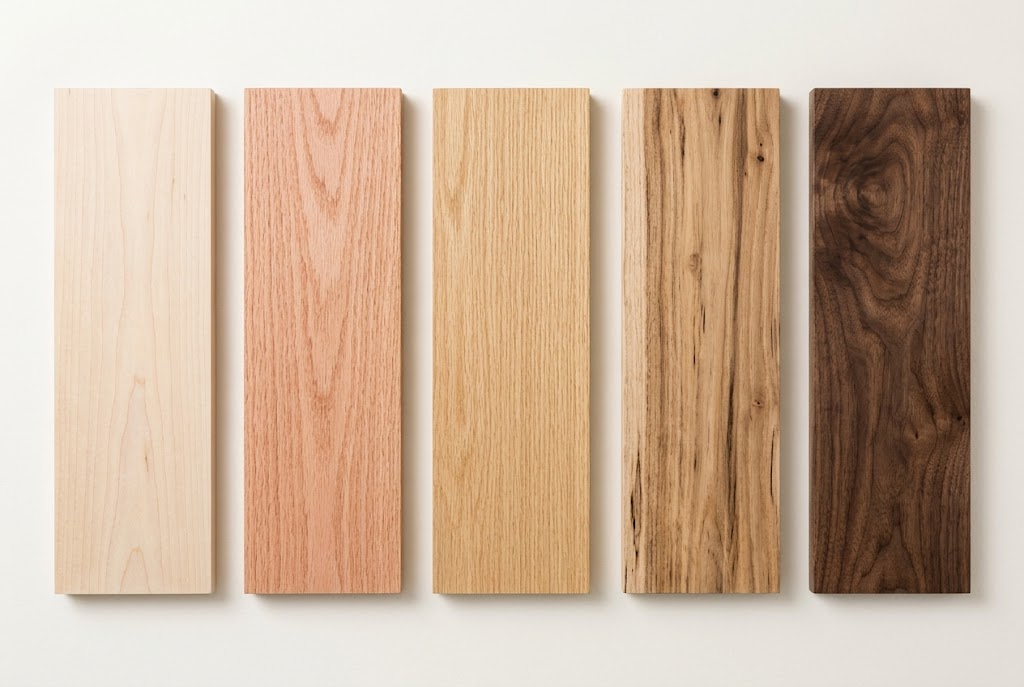
The wood you choose is the single biggest material variable. Current material pricing by species:
| Species | Material cost (per sq ft) | Character |
| Red or white oak | $5 to $12 | The benchmark. Hard, stable, takes stain evenly, suits almost any interior |
| Maple | $4 to $15 | Hard and pale, clean modern look, can blotch with dark stains |
| Hickory | $5 to $13 | One of the hardest domestic options, strong grain variation, great for busy households |
| Walnut | $8 to $16 | Rich dark tone, softer than oak, shows dents more easily |
| Exotics (Brazilian cherry, teak) | $9 to $15 | Dramatic color and hardness, longer lead times |
Oak dominates the market for a reason. According to Grand View Research, red oak alone accounts for about 35% of North American wood flooring revenue, and the region’s overall market was worth $7.3 billion in 2025, heading toward $10.6 billion by 2033. When in doubt, white oak is the safe long-term choice: it’s the species buyers and appraisers consistently reward.
2. Solid vs engineered construction
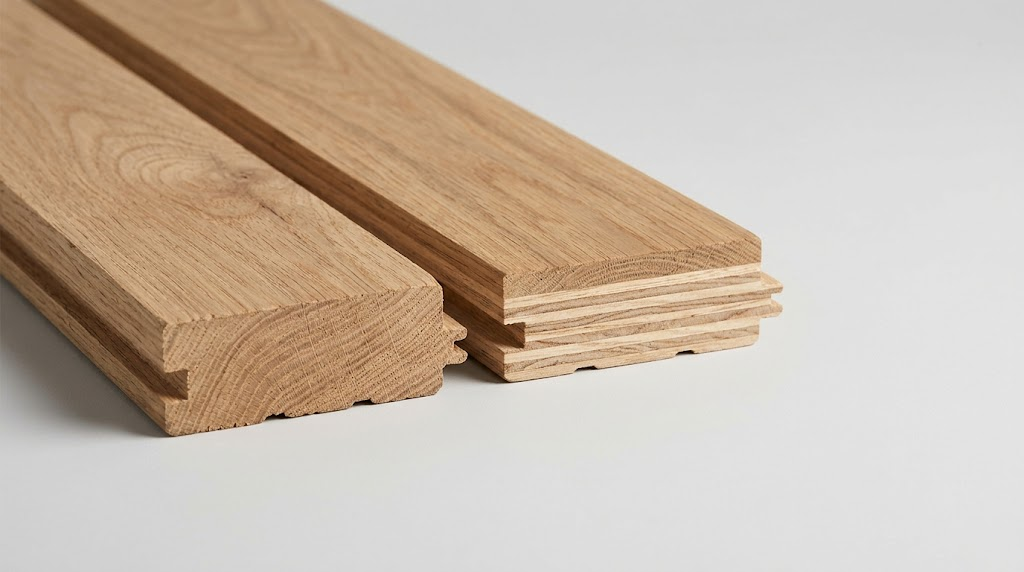
Solid hardwood is one piece of timber, usually 3/4 inch thick. It can be sanded and refinished multiple times over a lifespan that genuinely stretches past 100 years. Engineered hardwood is a real wood veneer bonded to a plywood or HDF core. It’s more dimensionally stable, handles humidity swings better, and can go over concrete slabs where solid wood can’t.
Engineered wood is no longer the “budget alternative.” It now makes up just over half of North American wood flooring revenue, per the same Grand View Research report, largely because modern construction favors concrete slabs, open-plan spaces, and wide planks, all of which suit engineered construction. If you’re still weighing the two against each other (or against SPC and laminate), our flooring buyer’s guide comparing engineered wood, solid hardwood, SPC and laminate walks through the trade-offs in detail.
One spec matters more than any other on engineered flooring: wear layer thickness. Below about 2mm, the floor can never be sanded, so when the finish wears through, you replace it. At 3 to 4mm, you get one or two refinishes and a realistic 20 to 30 year service life. Two boards can look identical in a showroom and differ by a decade of usable life based on this number alone. Always ask.
3. Plank width, grade, and finish
Wide planks (5 inches and up) cost more to produce and generate more installation waste. Clear-grade boards with uniform color cost more than character grades with knots and variation, though character grades hide scratches far better in homes with kids and dogs. Prefinished boards carry a factory-cured aluminum oxide finish that installers can’t match on site, and they save you days of sanding dust. Site-finished floors look more seamless and allow custom stain colors, but add labor and a week of cure time.
4. Installation method
Floating click-lock floors are cheapest to install. Glue-down costs more in adhesive and demands a flatter subfloor. Nail-down is the traditional method for solid hardwood over plywood and sits at the top of the labor range. And if you’re continuing wood onto a staircase, budget that separately: stairs are priced per tread and the work is fiddly. Our staircase cost guide covers what to expect there.
The Costs That Ambush People
The per-square-foot quote is rarely the final invoice. These are the line items that show up later, and they’re all legitimate:
- Old floor removal and disposal. A few dollars per square foot, more for tile.
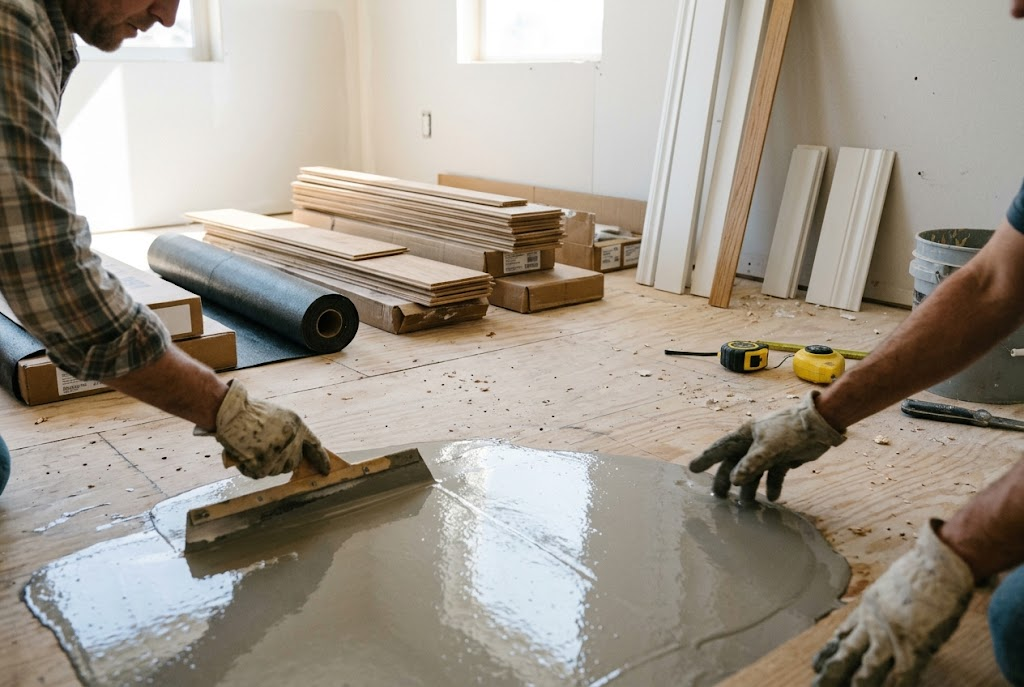
- Subfloor preparation. Leveling compound, plywood repairs, moisture barriers. On older homes this regularly adds $1 to $3 per square foot, and skipping it is how you get squeaks and gaps within a year.
- Waste. Order 5 to 10% more material than your measured square footage, more for diagonal or herringbone layouts. If you order exactly to measure, you will come up short.
- Trim and transitions. Baseboards, shoe molding, reducers, thresholds. Small money per piece, real money across a whole house.
- Stairs. As mentioned, priced separately, per tread.
- Acclimation time. Not a dollar cost, but a schedule cost. Solid hardwood needs several days in the house before installation. Rush this and the floor moves after it’s nailed down.
A fair rule of thumb: take the material price you fell in love with, multiply by 1.8 to 2.2, and you’re close to the honest installed number.
Is Wood Flooring Worth It? The ROI Case
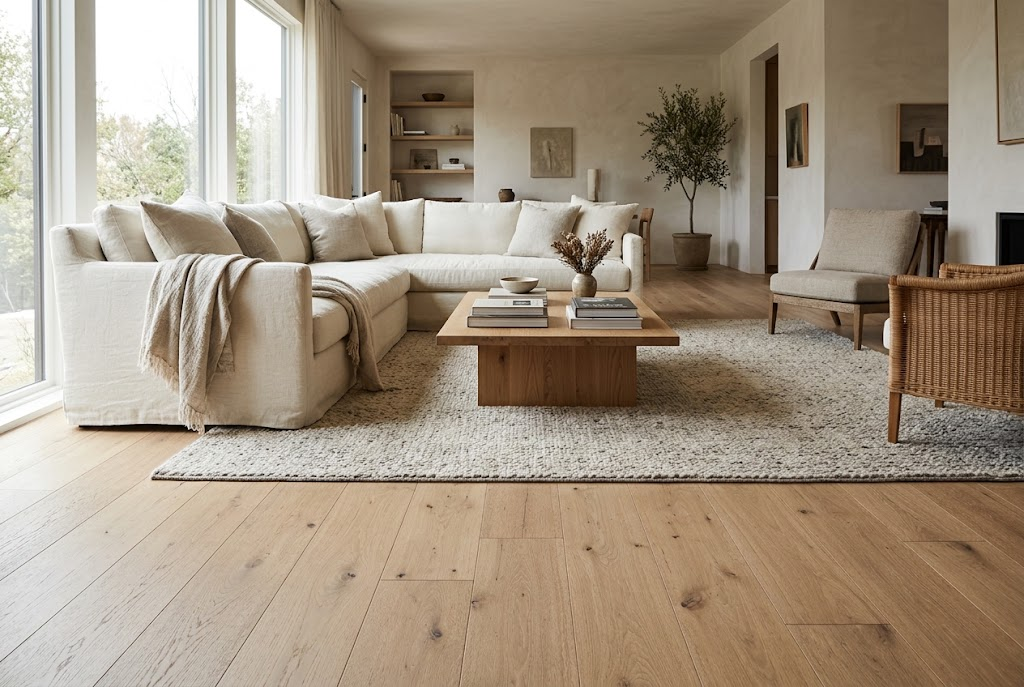
Here’s where wood separates itself from every other flooring category. According to the Remodeling Impact Report from the National Association of Realtors and the National Association of the Remodeling Industry, refinishing existing hardwood floors recovers about 147% of its cost at resale, and installing new wood flooring recovers 118%. Those are the two highest-return interior projects in the entire report, well ahead of kitchen remodels.
There’s a second layer to it. Surveys of real estate agents cited by the National Wood Flooring Association consistently find that homes with wood floors sell faster and for more money, in some cases up to 10% more than comparable homes without them. Even discounting the optimistic end of that range, wood flooring is one of the few renovation expenses that behaves like an investment rather than a consumable.
The caveat: ROI assumes the floor suits the house. Hardwood in a high-moisture bathroom or a below-grade basement is a maintenance problem, not an upgrade. In wet rooms, tile is still the right answer (see our bathroom floor tile ideas if that’s the space you’re working on), and engineered construction or SPC handles basements better than solid planks.
Solid or Engineered: A Quick Decision Framework
Choose solid hardwood if you’re on a plywood subfloor above grade, plan to stay long-term, and want the option to refinish for decades. It’s the forever floor.
Choose engineered hardwood if you’re over a concrete slab, in a humid or coastal climate, installing over radiant heating, want wide planks, or need a faster, cleaner installation. Just hold the line on a 3mm-plus wear layer.
Choose neither if the room gets standing water. Bathrooms and laundry rooms belong to tile or waterproof products.
A Note for Project Buyers and Importers
If you’re sourcing wood flooring at project scale rather than for a single home, the pricing logic above inverts. Instead of paying retail material plus local labor, you’re buying at factory pricing and paying freight, duty, and local installation. The gap between the two models is where whole-project savings of 30 to 50% typically come from, but only if the specification is tight before you request quotes.
The specs that matter on a factory order: species and grade, wear layer thickness (for engineered), core construction, moisture content matched to your destination climate, finish system, plank dimensions and tolerance, and packaging for container transit. A vague “oak engineered flooring” inquiry gets you quotes that aren’t comparable across factories. A one-page spec sheet gets you quotes you can actually line up.
The landed-cost mechanics are the same ones we break down in our furniture from China price and duty guide and our step-by-step guide to importing home materials from China. Freight, insurance, duty, and local delivery routinely add 40 to 70% on top of FOB pricing, and flooring is dense and heavy, so container loading efficiency matters more than with furniture.
At George One-Stop Furnish, we supply engineered and solid wood flooring as part of consolidated whole-house orders, which means your flooring ships in the same container as your cabinets, doors, and tiles, with one QC standard and one point of contact. If you’re pricing a project, send us your square footage and spec and we’ll come back with a factory quote and a landed-cost estimate.
Frequently Asked Questions
How much does it cost to install hardwood floors in a 1,500 sq ft house? Budget $13,500 to $30,000 for engineered wood and $16,500 to $37,500 for solid hardwood at current rates, including materials, labor, and typical prep. Stairs, complex layouts, and premium species push toward the top of each range.
Is engineered wood flooring real wood? Yes. The top layer is genuine hardwood, which is why it looks and feels identical to solid wood underfoot. The core underneath is plywood or HDF, which is what gives it stability over concrete and in humid climates.
How many times can you refinish hardwood floors? Solid 3/4-inch hardwood can typically be sanded four to six times over its life, which is why well-kept oak floors survive a century. Engineered floors with a 3 to 4mm wear layer can usually be refinished once or twice. Below 2mm, never.
Does wood flooring work with underfloor heating? Engineered wood, yes, within the temperature limits the manufacturer specifies. Solid hardwood is generally not recommended over radiant heat because the repeated expansion and contraction opens gaps.
What’s the best wood floor for dogs? Hickory or white oak with a matte, wire-brushed finish and a character grade. Hardness resists dents, and the texture and grain hide the scratches that will happen anyway. Dark glossy floors show everything.
The Bottom Line
Real wood flooring runs $9 to $25 per square foot installed, and the honest all-in number is roughly double the material price that caught your eye. Choose engineered for slabs, humidity, and wide planks; choose solid for longevity and refinishing depth; hold a 3mm wear layer as your floor either way. Do it right and it’s one of the only renovation line items with a documented track record of paying back more than it costs.
Sources: Angi hardwood flooring cost data, Grand View Research North America Wood Flooring Market Report, National Association of Realtors / NARI Remodeling Impact Report via the National Wood Flooring Association (woodfloors.org).