
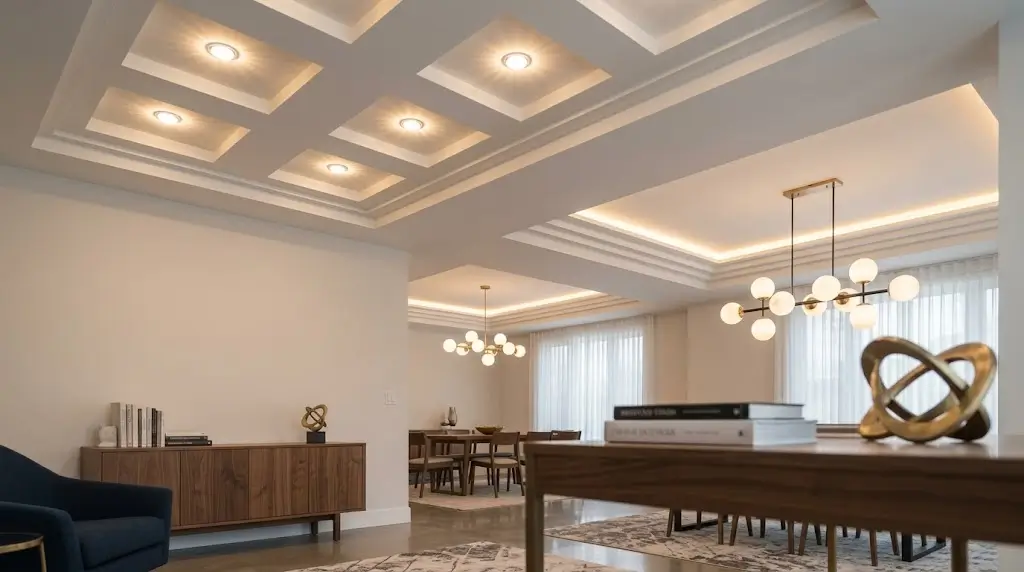
The decision between recessed fixtures and traditional ceiling lights fundamentally alters a room’s electrical layout and ceiling structure. While recessed fixtures are embedded directly into the drywall for a flush profile, surface-mounted ceiling lights anchor to a central junction box. Before mapping out a room’s electrical plan, it is necessary to evaluate the distinct wiring requirements, spatial clearance impacts, and light dispersion patterns of each fixture type.
Principales conclusiones
- Recessed lighting offers a sleek, modern look that saves space and enhances room aesthetics.
- Ceiling lights provide decorative variety and can serve as focal points in a room, adding character.
- Consider installation complexity; recessed lights require more planning and effort compared to ceiling lights.
- Evaluate your budget; recessed lighting often costs more to install than traditional ceiling fixtures.
- Choose lighting based on room function; recessed lights work well for even illumination, while ceiling lights can create ambiance.
What Is Recessed Lighting?
Appearance And Style
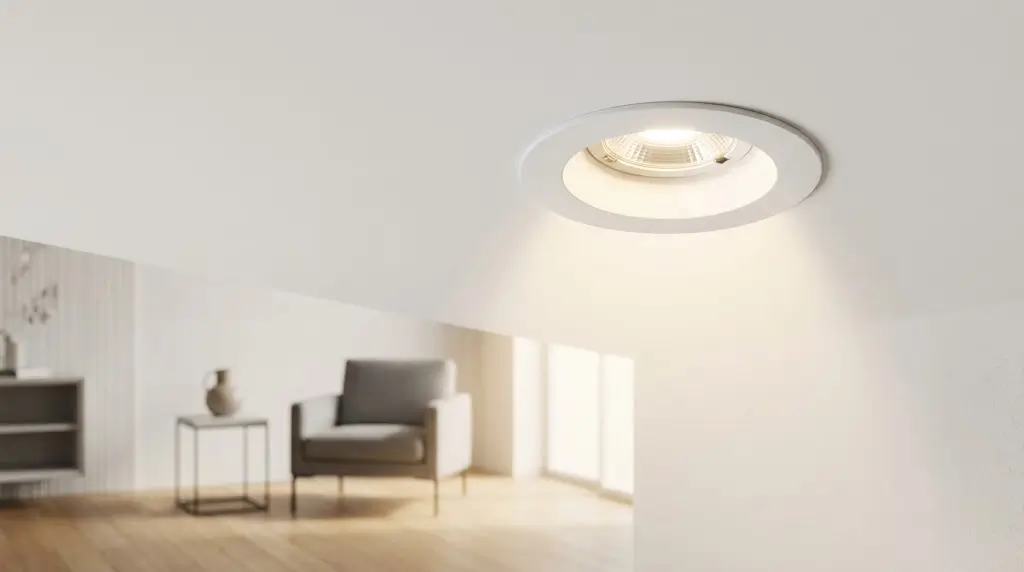
Recessed lighting is a popular choice in modern homes. It refers to light fixtures that sit flush with the ceiling, creating a smooth and clean look. Many homeowners prefer this style because it does not take up space or draw attention away from other design features. Recessed lights are often called “can lights” due to their shape and installation method.
Tip: Recessed lighting works well in rooms where you want a sleek, uncluttered ceiling.
The main visual characteristics that set recessed lights apart from other ceiling lights can be seen in the table below:
| Característica | Descripción |
|---|---|
| Unobtrusive Design | Recessed lights have a subtle appearance that does not dominate the ceiling space. |
| Aesthetic Enhancement | They enhance the overall look of a room, allowing other design elements to stand out. |
| Versatility in Placement and Function | Can be arranged in various configurations for focused or ambient lighting, adaptable to different needs. |
| Customizable Trims and Finishes | Available in multiple styles and sizes to match various interior designs seamlessly. |
| Creates Visual Interest and Depth | Strategically placed recessed lights can highlight architectural features and artwork. |
Recessed lights are versatile. They can provide general lighting, highlight artwork, or add depth to a room. Their adaptability makes them suitable for kitchens, living rooms, and bathrooms.
Types Of Recessed Lights
There are several types of recessed lights used in homes. Each type serves a different purpose and fits different installation needs.
- New construction fixtures: These are installed during the building process or major renovations.
- Remodel fixtures: These work well for updating existing spaces and can be added through a small hole in the ceiling.
Recessed lights are also popular because they save space. They fit flush with the ceiling, which is helpful in rooms with low ceilings or limited space. Many modern recessed lighting options use energy-efficient LED technology, making them both stylish and practical.
What Are Ceiling Lights?
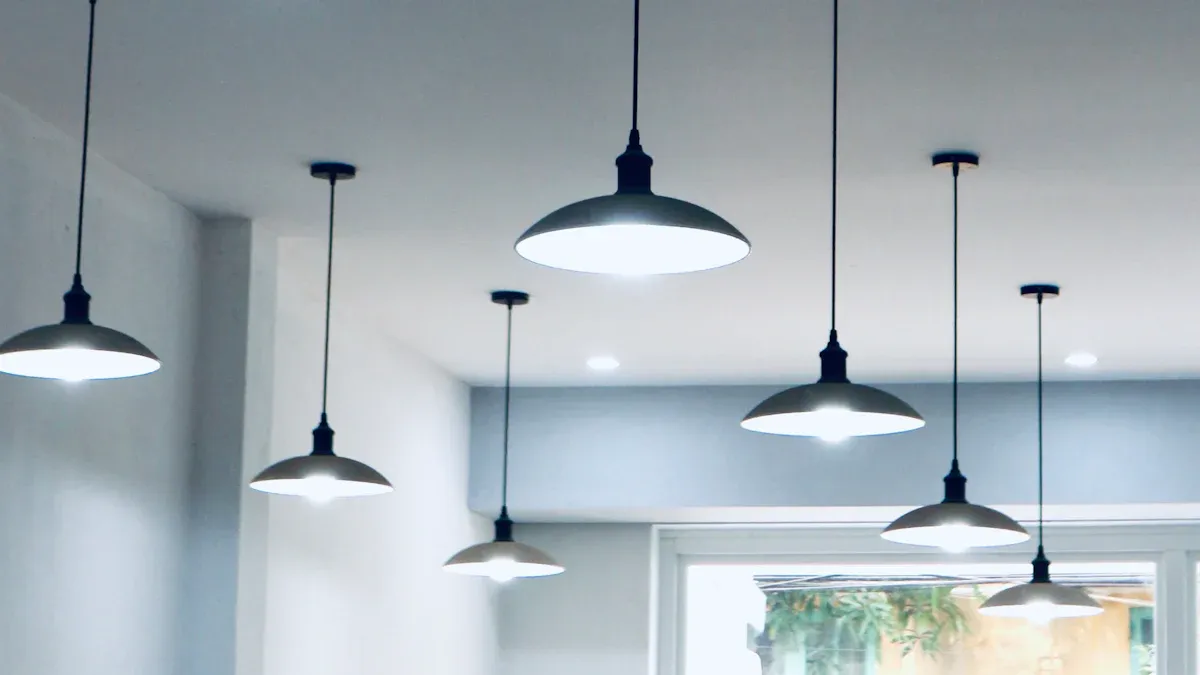
Ceiling lights mount directly to the ceiling structure, acting as both a primary light source and a decorative focal point. These fixtures attach directly to the ceiling, providing light for everyday activities and enhancing the look of a space. Homeowners often choose ceiling fixtures based on the room’s size, ceiling height, and desired style.
Common Types
Many homes feature several types of ceiling fixtures. Each type serves a unique purpose and fits different spaces. Here are some of the most common ceiling lights found in residential settings:
- Flush mounts: These fixtures sit directly against the ceiling. They work well in rooms with low ceilings and offer bright, general illumination.
- Semi-flush mounts: These hang slightly below the ceiling. They add visual interest and are popular in living rooms and dining areas.
- Chandeliers: Decorative ceiling fixtures that make a statement. Chandeliers often appear in entryways and dining rooms.
- Pendant lights: These fixtures hang down from the ceiling. They provide focused light and are ideal for kitchen islands or breakfast bars.
- Recessed lighting: Installed within the ceiling, these fixtures create a sleek look and distribute light evenly.
The table below shows how ceiling fixtures are categorized in residential lighting:
| Fixture Type | Mounting Location | Purpose |
|---|---|---|
| Chandeliers | Ceiling-mounted | Decorative statement illumination |
| Pendant Lights | Ceiling-mounted | Task functional illumination |
| Flush Mount | Ceiling-mounted | Ambient general illumination for low ceilings |
| Semi-Flush Mount | Ceiling-mounted | Ambient general illumination |
| Recessed Lights | Recessed-embedded | Ambient general illumination |
| Track Lights | Ceiling-mounted | Accent highlight illumination |
| Ceiling Fans with Lights | Ceiling-mounted | Ambient illumination with airflow |
Note: Ceiling fixtures come in many shapes and sizes. Choosing the right lighting fixtures can help set the mood and improve functionality in each room.
Visual Differences
Ceiling lights offer a wide range of visual styles. Flush and semi-flush mounts provide a simple, clean look. Chandeliers and pendant lights add elegance and personality. Track lights and ceiling fans with lights combine function and style. Ceiling fixtures can be bold or subtle, depending on the design. Homeowners can select lighting fixtures that match their decor and meet their needs. The variety of ceiling lights allows for creative choices in every room.
Recessed Lighting vs. Ceiling Lights: Core Differences
1. Structural Integration and Space
- Recessed Lighting: Installed directly inside the ceiling cavity, these fixtures sit flush with the drywall. This embedded design eliminates physical obstructions, making it optimal for rooms with low clearance (under 8 feet) or narrow dimensions. However, its concealed nature means it does not serve as a decorative element.
- Ceiling Lights: Surface-mounted to a junction box, these fixtures hang below the ceiling plane. While they consume physical airspace, their visible hardware (glass, metal finishes, fabrics) acts as a primary architectural focal point in a room.
2. Installation and Wiring Requirements
- Recessed Lighting: The installation process is highly invasive. It requires cutting multiple precise circular holes (typically 4 or 6 inches) into the ceiling, routing new wiring through joists to connect multiple fixtures in a series, and strictly adhering to insulation compatibility (IC-rated vs. Non-IC).
- Ceiling Lights: Installation is generally confined to a single, pre-existing junction box in the center of the room. The process involves basic wiring connections and mounting the fixture’s canopy to the box, requiring no structural modifications to the ceiling itself.
3. Illumination Pattern (Light Distribution)
- Recessed Lighting: Casts light downward in concentrated, conical beams. To avoid harsh shadows or dark spots, a grid layout is required (e.g., placing a fixture every 4 to 6 feet). It is highly effective for direct task lighting over specific areas like kitchen counters.
- Ceiling Lights: Typically utilizes diffusers or omnidirectional bulbs to broadcast ambient light outward across the entire room from a single central source.
4. Initial and Maintenance Costs
- Recessed Lighting: Carries a significantly higher initial installation cost due to the labor involved in mapping layouts, cutting drywall, and running extensive wiring. Maintenance can also be restrictive, as the fixtures are harder to reach.
- Ceiling Lights: Generally more cost-effective to install, especially when replacing an existing fixture. Components and bulbs are easily accessible for routine cleaning and maintenance.
Best Rooms For Each Lighting Type
Where Recessed Lighting Works Best
Recessed lighting fits well in rooms that need a clean look and even light. Many homeowners choose recessed fixtures for spaces with low ceilings. These lights do not hang down, so they help maximize headroom. Bathrooms often benefit from recessed lighting. Fixtures rated for wet locations can be installed over showers. Modern canless LED recessed lights handle humidity and moisture. Kitchens also work well with recessed lighting. The fixtures provide bright, focused light for cooking and cleaning. Living rooms with open layouts use recessed lights to spread light evenly. Hallways and entryways gain a sleek appearance with recessed fixtures.
- Bathrooms: Use recessed lights for ambient and task lighting. Wet-rated fixtures are safe over showers.
- Kitchens: Install recessed lights for bright, focused illumination.
- Living rooms: Choose recessed fixtures for even light and a modern look.
- Hallways: Recessed lights create a clean, uncluttered ceiling.
- Entryways: These lights help make spaces feel larger.
Tip: Follow spacing rules based on ceiling height. For example, a bathroom with an 8-foot ceiling may need two to four recessed fixtures for balanced light.
Where Ceiling Lights Work Best
Ceiling lights suit rooms where style and decoration matter. Chandeliers and pendant lights add character to dining rooms and entryways. Bedrooms often use flush or semi-flush mounts for soft, general light. Ceiling fans with lights work well in family rooms and bedrooms. These fixtures combine airflow and illumination. Track lights highlight artwork or specific areas in home offices. Decorative ceiling lights fit spaces with higher ceilings. They become focal points and enhance the room’s design.
| Room Type | Recommended Ceiling Light Fixture |
|---|---|
| Dining Room | Chandelier or pendant light |
| Dormitorio | Flush mount or ceiling fan with light |
| Entryway | Statement chandelier |
| Home Office | Track lighting or semi-flush mount |
| Family Room | Ceiling fan with integrated light |
Note: Ceiling lights offer many styles. Choose fixtures that match your décor and ceiling height for the best effect.
How To Choose The Right Lighting
Homeowner Checklist
Selecting the right lighting options for your home starts with a simple checklist. Homeowners can use this list to make sure each room gets the best light for its purpose.
- Ambient Lighting: Use ceiling fixtures or wall sconces to provide overall illumination.
- Task Lighting: Add focused lights for areas like reading nooks or kitchen counters. Table lamps or adjustable recessed fixtures work well.
- Accent Lighting: Highlight artwork or architectural features to add visual interest.
Calculate the total lumens needed for each room. Lumens measure the amount of visible light. For living rooms, aim for 100 to 150 lumens per square foot. This helps ensure the space feels bright and comfortable.
Consider color temperature when choosing bulbs. Warmer temperatures (2700K to 3000K) create a cozy atmosphere. Cooler temperatures (3500K to 4100K) give rooms a modern feel.
Tip: Review your checklist for each room before buying new lighting options. This helps avoid mistakes and ensures every space meets your needs.
Key Factors To Consider
Homeowners should look at several factors before deciding between recessed lighting and ceiling lights. The table below shows important points to review:
| Factor | Descripción |
|---|---|
| Installation Type | Pick new construction or remodel housings for recessed lights based on your ceiling type. |
| Spacing | Space recessed lights 4 to 6 feet apart for even illumination and to avoid dark spots. |
| Electrical Considerations | Make sure your electrical system can handle the load; ask a professional if unsure. |
| Professional Installation | Hiring a professional ensures safety and enhances the ambiance. |
| Aesthetic Preferences | Ceiling lights act as decorative focal points; recessed lights offer a minimalist look. |
| Functional Differences | Ceiling lights provide general illumination; recessed lights offer unobtrusive, directed lighting. |
| Budget | Ceiling lights are usually easier and cheaper to install than recessed lighting. |
| Desired Ambiance | Ceiling lights can create dramatic effects; recessed lighting provides subtle, even illumination. |
Homeowners should match lighting options to their style, budget, and the function of each room. Careful planning leads to a comfortable and attractive home.
Choosing between recessed lighting and ceiling lights depends on your goals for each space. The table below highlights the main differences:
| Característica | Recessed Lighting | Ceiling Lights |
|---|---|---|
| Aesthetic | Sleek, modern | Decorative, varied styles |
| Light Distribution | Even, reduces shadows | May cause glare or shadows |
| Space Consideration | Space-saving | Can make rooms feel smaller |
| Installation | More complex | Easier, often DIY |
| Cost | Higher | Lower |
| Maintenance | Less frequent | May need more cleaning |
To make the best choice, consider this checklist:
- Match lighting to room size and ceiling height.
- Think about your budget and style preferences.
- Choose energy-efficient options for savings.
Both recessed and ceiling lights can work well. Combining them often creates the most comfortable and functional home.